AI Image
Earth's Mysterious Black Diamonds May Have Begun With an Ancient Cosmic Impact
ScienceAlert • • science
Key Points:
- Carbonado, a porous black diamond found in Brazil and Central Africa, consists of tightly packed miniature diamonds and has a glassy surface that puzzled researchers about its origin.
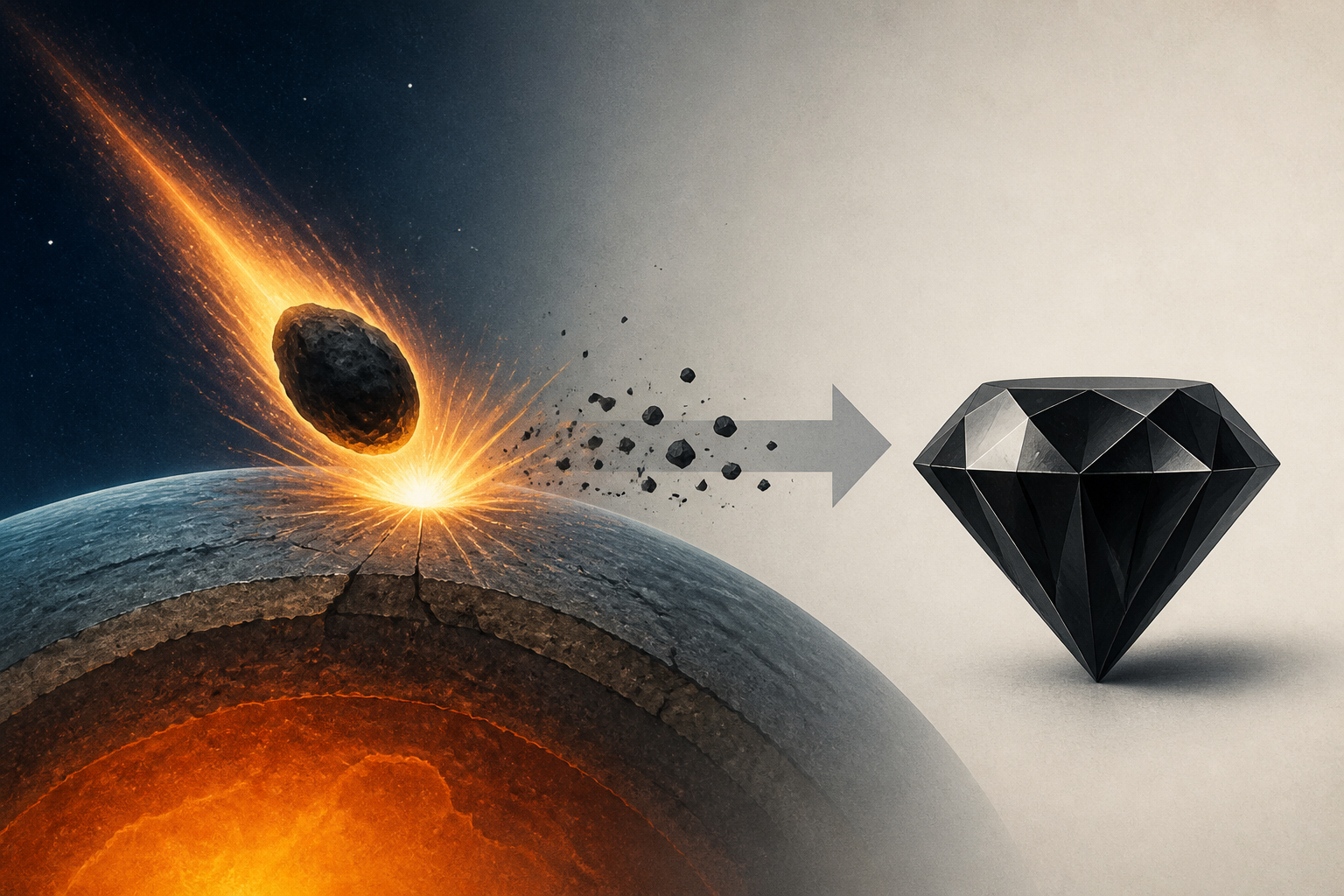
- A new study suggests carbonado formed deep in Earth's mantle from carbon-rich material rapidly subducted following a large ancient impact, rather than being directly created by the impact itself.
- Analysis showed no shock-related structures in the diamond grains, and the glassy surface likely resulted from later fluid dissolution after a titanium dioxide mineral coating formed.
- Carbon isotope measurements indicate the diamonds' carbon mostly resembles ancient organic material, supporting the idea that surface carbon was transported deep into the mantle via rapid subduction.
- While the study links carbonado's features to this impact-driven subduction model, direct evidence such as trapped crustal minerals or a known associated impact remains lacking, leaving some aspects of the formation hypothesis unconfirmed.


