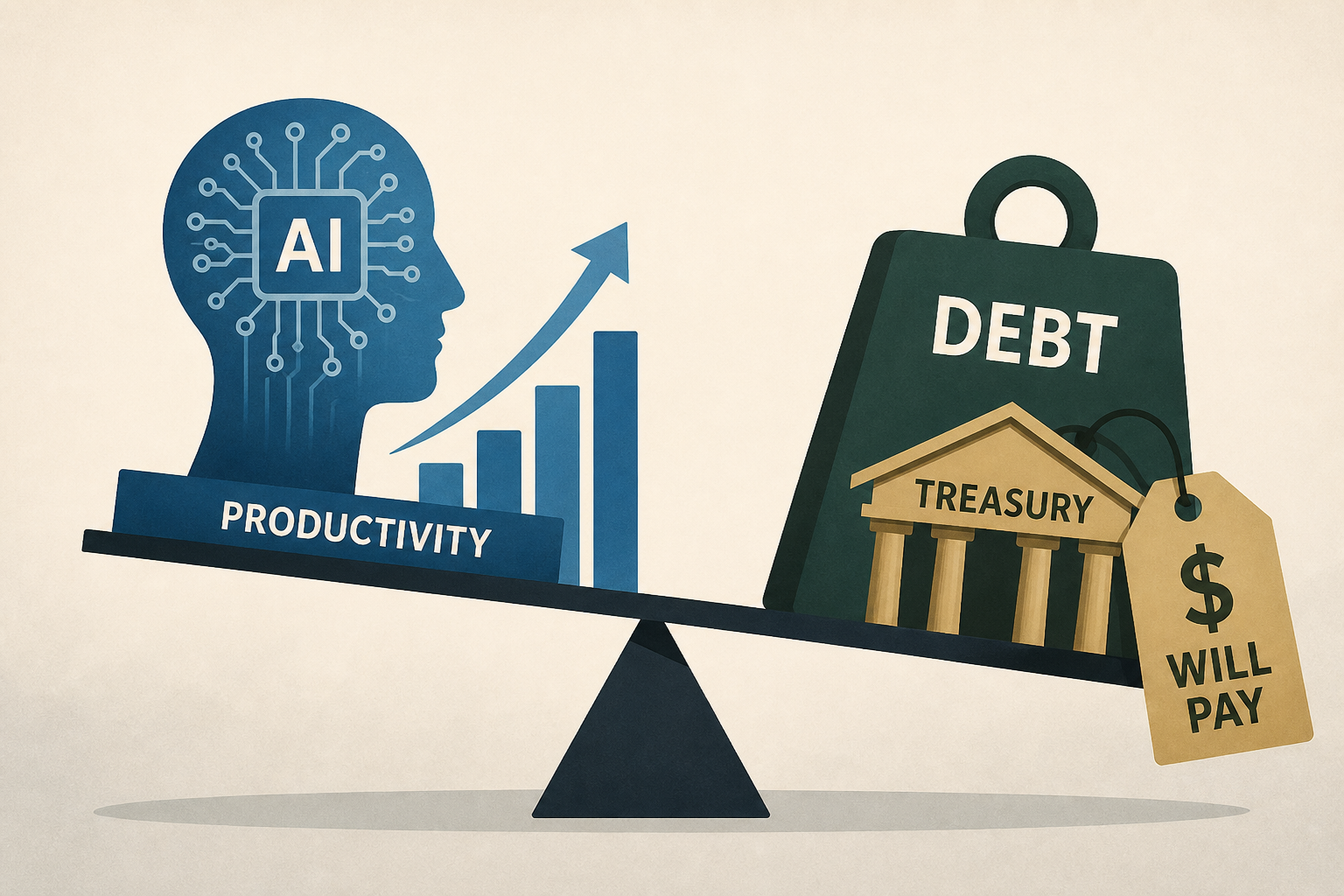
AI Generated Image
Elon Musk says AI may solve debt crisis with productivity-but study suggests the Treasury wil pay
Fortune • • business
Key Points:
- New research from Brookings indicates that while AI-driven economic growth could significantly reduce U.S. fiscal deficits, it is unlikely to fully close the gap even in optimistic scenarios.
- AI investment is accelerating productivity growth, particularly in high-skill services and finance, with expected labor productivity gains of around 1.8% in 2026, positively impacting GDP growth estimates.
- AI could improve efficiency in costly sectors like healthcare and expand the taxable workforce, potentially increasing tax revenues and reducing government outlays for Medicare and Medicaid.
- However, the report warns that AI’s transformative effects may also increase social support demands due to longer lifespans, labor market disruptions, higher defense spending, and shifts in the tax base away from labor income.
- Overall, while AI may improve the fiscal outlook, its benefits could be offset by these factors, reducing its potential deficit reduction impact by half to two-thirds, meaning it cannot be relied upon as a sole solution to the U.S. fiscal challenges.


