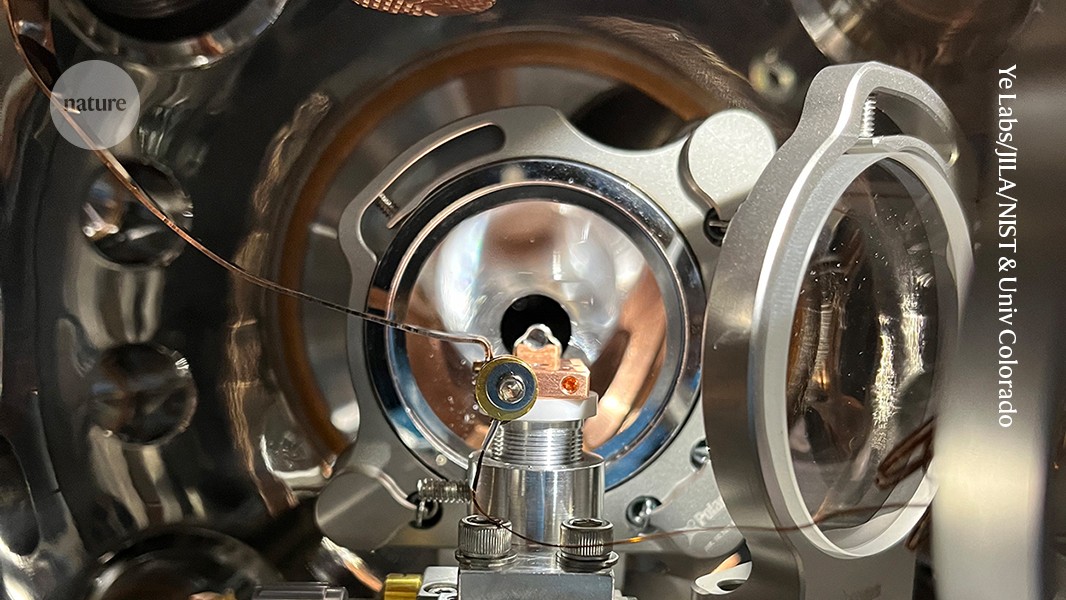
Elusive ‘nuclear clocks’ tick closer to reality - after decades in the making
Nature • • science
Key Points:
- Physicists are nearing the development of a nuclear clock, which would measure time based on energy transitions in atomic nuclei, potentially becoming the most precise clock on Earth.
- The isotope thorium-229, predicted decades ago as suitable for such a clock, had its unusual nuclear energy transition precisely identified in 2024 using a laser, marking a key breakthrough.
- Multiple international research teams are working to assemble the necessary components, including a thorium-229 source and a continuous-wave ultraviolet laser around 148 nanometres, which has yet to be created.
- Nuclear clocks promise greater resilience to noise and compact designs for practical use beyond laboratories, potentially surpassing the precision of current optical atomic clocks that lose only one second every 40 billion years


