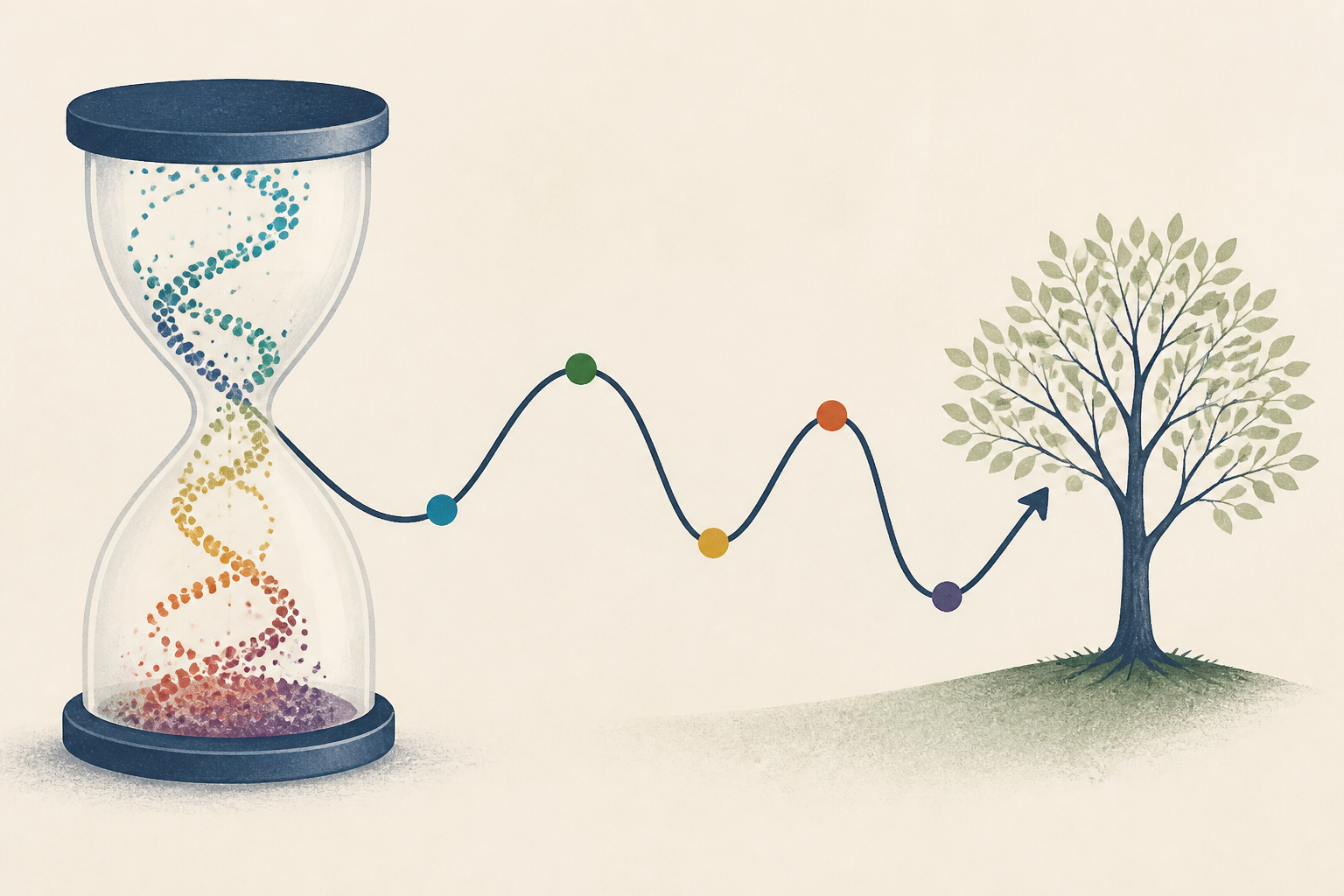
AI Generated Image
Embracing non-linearity in human ageing
nature.com • • science
Key Points:
- Recent advances in aging research highlight the development and application of biomarkers, particularly DNA methylation-based epigenetic clocks, to quantify biological age and evaluate longevity interventions (Moqri et al., 2023; Horvath & Raj, 2018; Levine et al., 2018).
- Aging is characterized by complex, nonlinear biological changes across multiple organs and systems, including epigenetic drift, gene expression variability, and proteomic alterations, which can be tracked using multi-omics and machine learning approaches (Schaum et al., 2020; Shen et al., 2024; Oh et al., 2023).
- Theoretical frameworks such as reliability theory and dynamical systems models describe aging as a progressive loss of physiological resilience and redundancy, with critical transition points or tipping points identified in midlife that may offer windows for intervention (Gavrilov & Gavrilova, 2001; Pyrkov et al., 2021; Antal et al., 2025).
- Sex-specific differences and life-stage transitions, including puberty and menopause, significantly influence biological aging trajectories and associated molecular signatures, affecting health outcomes and disease risk (Hägg & Jylhävä, 2021; Levine et al., 2016; Gunter-Rahman et al., 2025).
- Emerging computational methods, including deep learning and interpretable machine learning models, are enhancing the accuracy and mechanistic understanding of aging biomarkers, enabling personalized assessments and the identification of potential therapeutic targets (Li et al., 2025; Teschendorff & Horvath, 2025; de Lima Camillo et al., 2022).


