AI Image
Engineered protein that cuts Alzheimer's-linked brain deposits opens potential therapeutic avenue
Medical Xpress • • science
Key Points:
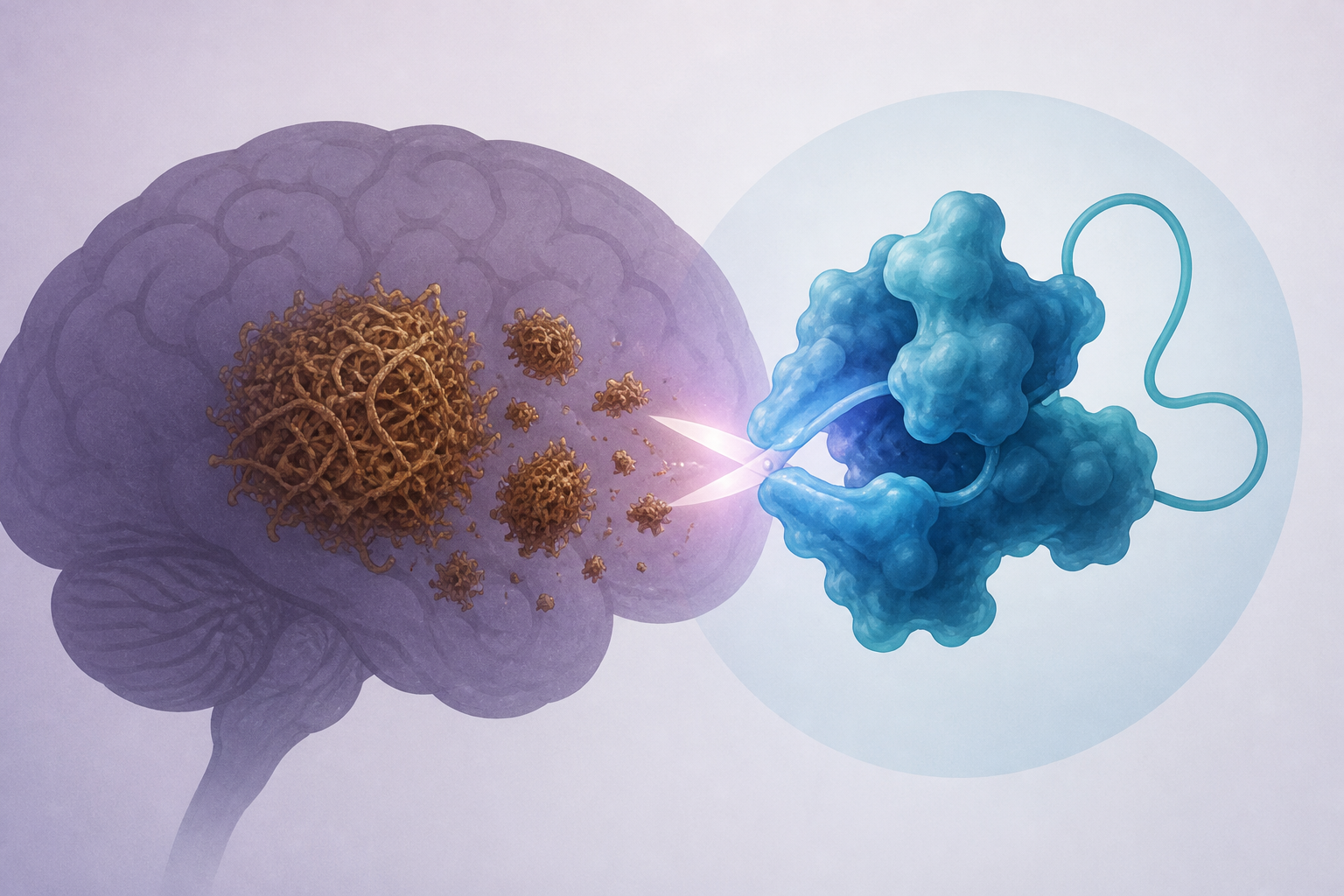
- A KAIST-led research team discovered that a zinc finger protein segment (ZF2–4) can bind directly to amyloid-beta, suppressing its harmful aggregation and reducing toxicity in Alzheimer's disease models.
- The team engineered a brain-penetrant variant (ZF2–4–P9) capable of crossing the blood-brain barrier, which significantly decreased amyloid-beta deposits and microglial activation in a transgenic Alzheimer's mouse model.
- Treated mice exhibited improved recognition memory, though no significant gains were observed in other cognitive tests, indicating the need for further research to assess therapeutic efficacy and safety in humans.
- The findings highlight a novel protein-based therapeutic approach for Alzheimer's by targeting amyloid-beta aggregation through engineered zinc finger proteins, potentially advancing disease-specific treatments.
- The study was a collaborative effort involving KAIST, Jeonbuk National University, KRIBB, KBSI, and IBS, and was published in the journal Advanced Science.


