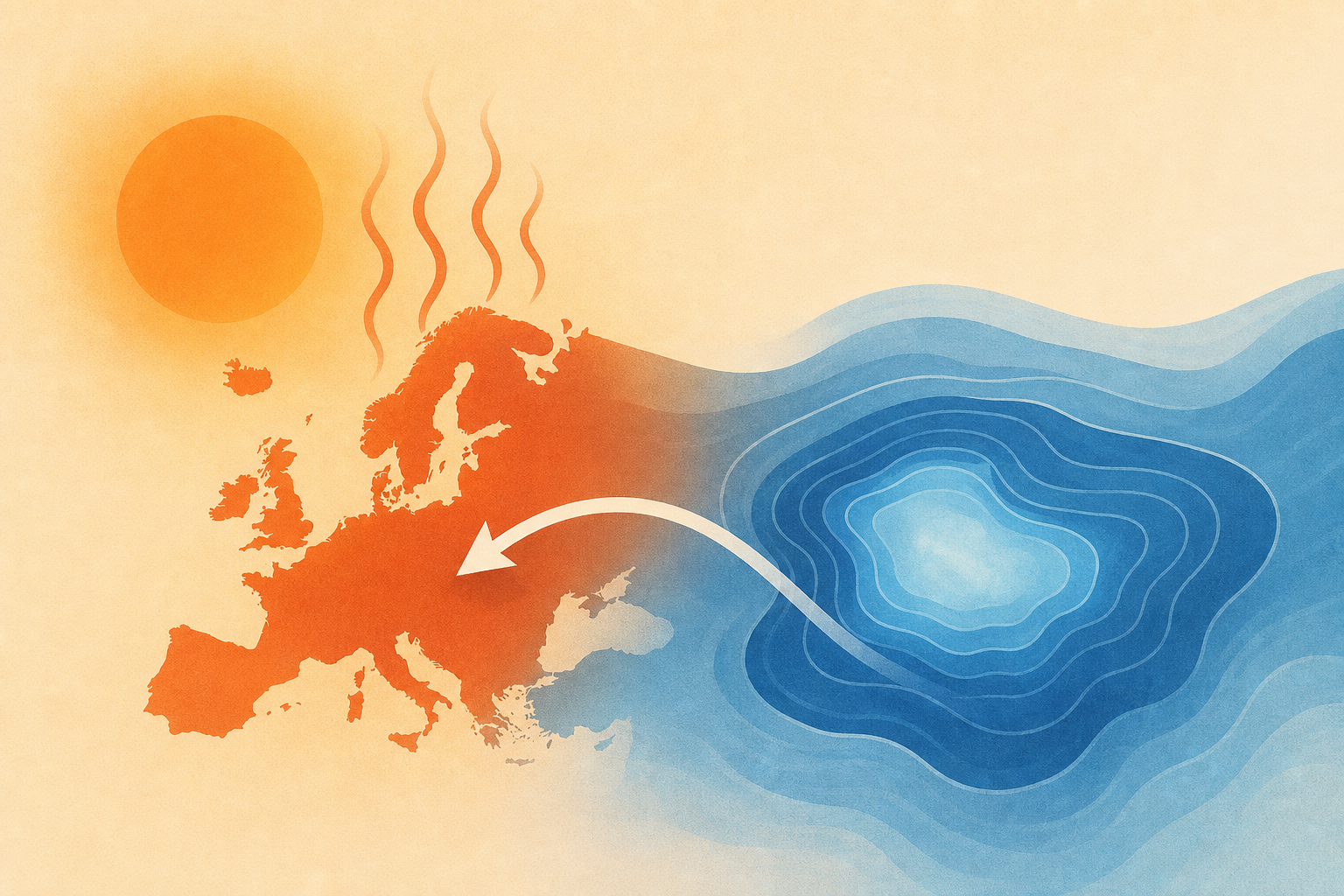
AI Generated Image
European heatwave's unlikely accomplice: an ocean 'cold blob'
Yahoo • • science
Key Points:
- A persistent cold patch of ocean water south of Iceland and Greenland, known as the "cold blob," is linked to both the ongoing European heatwave and concerns over a weakening Atlantic Meridional Overturning Circulation (AMOC), a critical ocean current system regulating climate.
- The cold blob, caused by reduced heat transport from ocean currents and fresh meltwater from Greenland, alters atmospheric circulation by affecting the jet stream's path, leading to prolonged and intense heatwaves in Europe through the formation of high-pressure "heat domes."
- Studies indicate that while global sea surface temperatures have risen, the cold blob region has cooled by up to 0.9°C, which exacerbates heat extremes in Europe rather than mitigating them.
- Scientists warn that a potential shutdown of the AMOC, which is already weakening due to climate change, could result in severe consequences including harsher European winters, droughts in South Asia and Africa, and rising sea levels around the North Atlantic.
- Experts like Stefan Rahmstorf express increasing concern, estimating over a 50% chance of an AMOC collapse this century, emphasizing the global risks associated with this ocean circulation disruption.


