AI Image
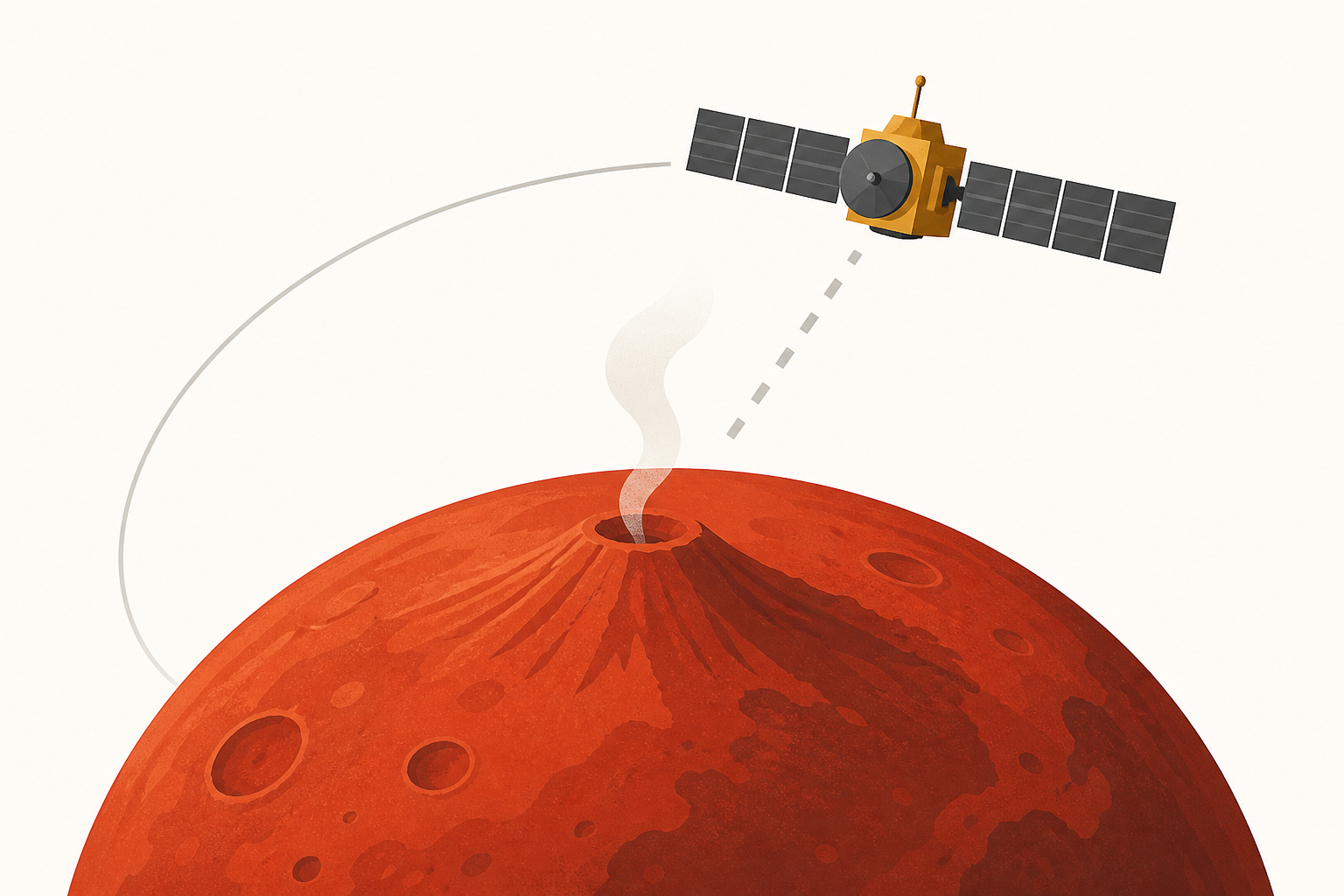
European orbiter detects fresh hints of volcanic activity on Mars
Phys.org • • general
Key Points:
- New evidence from gas emissions above volcanic rifts on Mars, particularly hydrogen chloride detected by the ExoMars Trace Gas Orbiter (TGO), suggests that Mars is not geologically dead but dormant, with active magmatic processes beneath the surface.
- Fresh fissures observed in the Alba Mons region, along with seasonal spikes of hydrogen chloride gas, indicate the presence of a dormant magma chamber releasing gases through these cracks, similar to fumaroles on Earth.
- The seasonal variation of hydrogen chloride, peaking in early summer above volcanic fissures, is linked to the sublimation of ice blocking gas release during the Martian winter, supporting the idea of intermittent volcanic activity.
- These findings imply that Mars retains enough internal heat to support volcanic activity, which could have contributed to a thicker atmosphere and warmer climate in the past, potentially creating habitable niches for microbial life in hydrothermal systems.
- The discovery marks a significant achievement for the TGO mission, offering new insights into Mars' geological activity and its potential for hosting life beneath the surface.


