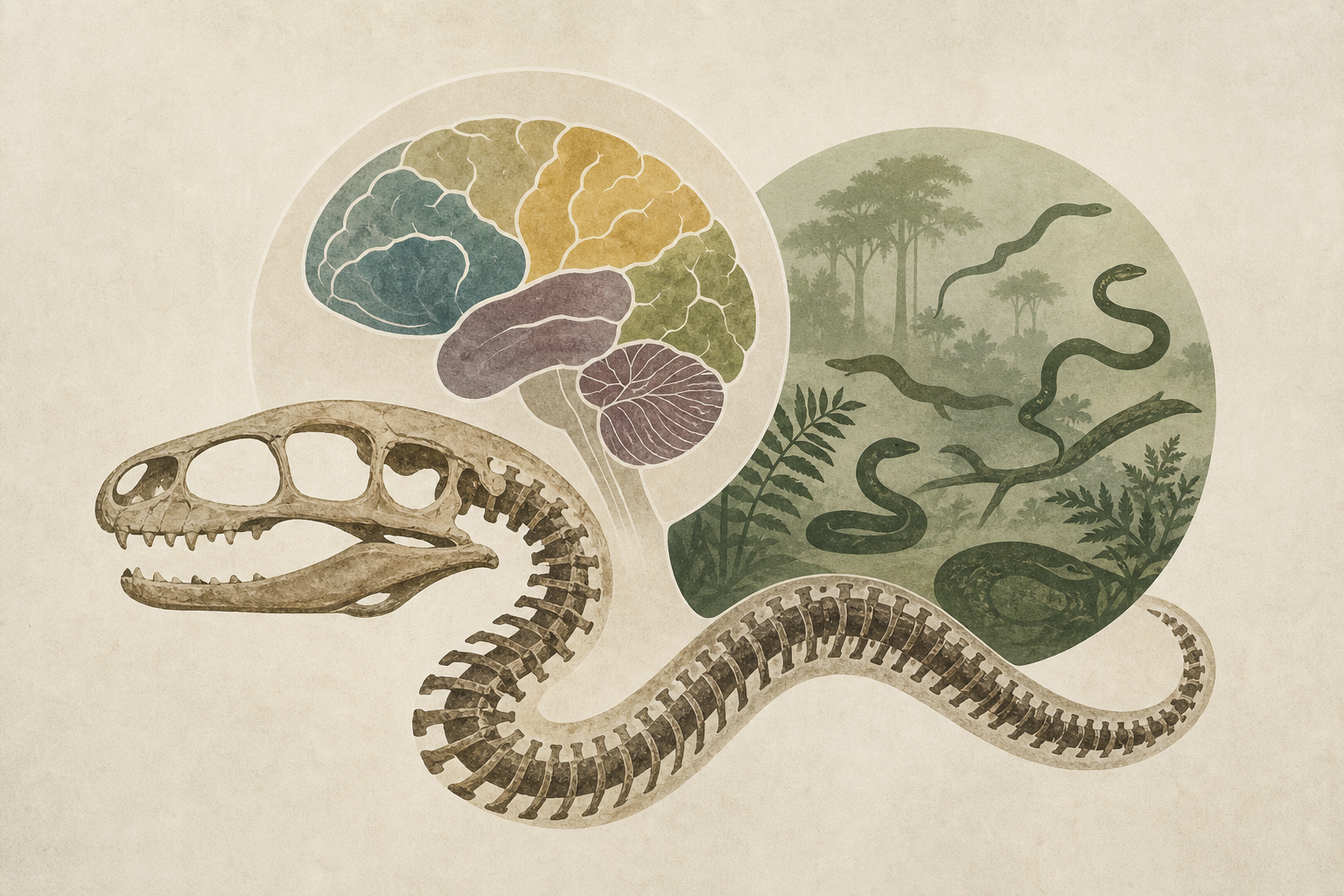
AI Generated Image
Exceptional brain and ecological diversity in the earliest snakes
Nature • • science
Key Points:
- The holotype of T. mirim was scanned using a Zeiss Xradia Versa XRM-510 Scanner in three parts, and digital reconstructions were performed with specialized software, enabling detailed morphological analysis.
- A comprehensive phylogenetic dataset including 166 squamate species and 394 morphological characters was used alongside molecular data from 11 genetic markers to assess the evolutionary placement of Tametara and its impact on snake divergence times.
- Phylogenetic analyses employed maximum parsimony and Bayesian inference methods, with Bayesian total evidence dating (TED) using a fossilized birth–death model under an independent lognormal clock model, providing robust divergence time estimates.
- Geometric morphometrics of brain endocasts from 60 squamate species, including fossils, were analyzed to infer habitat preferences, using landmark-based shape analysis and phylogenetically informed statistical methods.
- Bone microstructure of cranial elements was analyzed in 108 squamate species, including fossils, to reconstruct lifestyle and habitat affinity, employing quantitative measures of bone compactness, thickness, and overlap combined with phylogenetic comparative methods.


