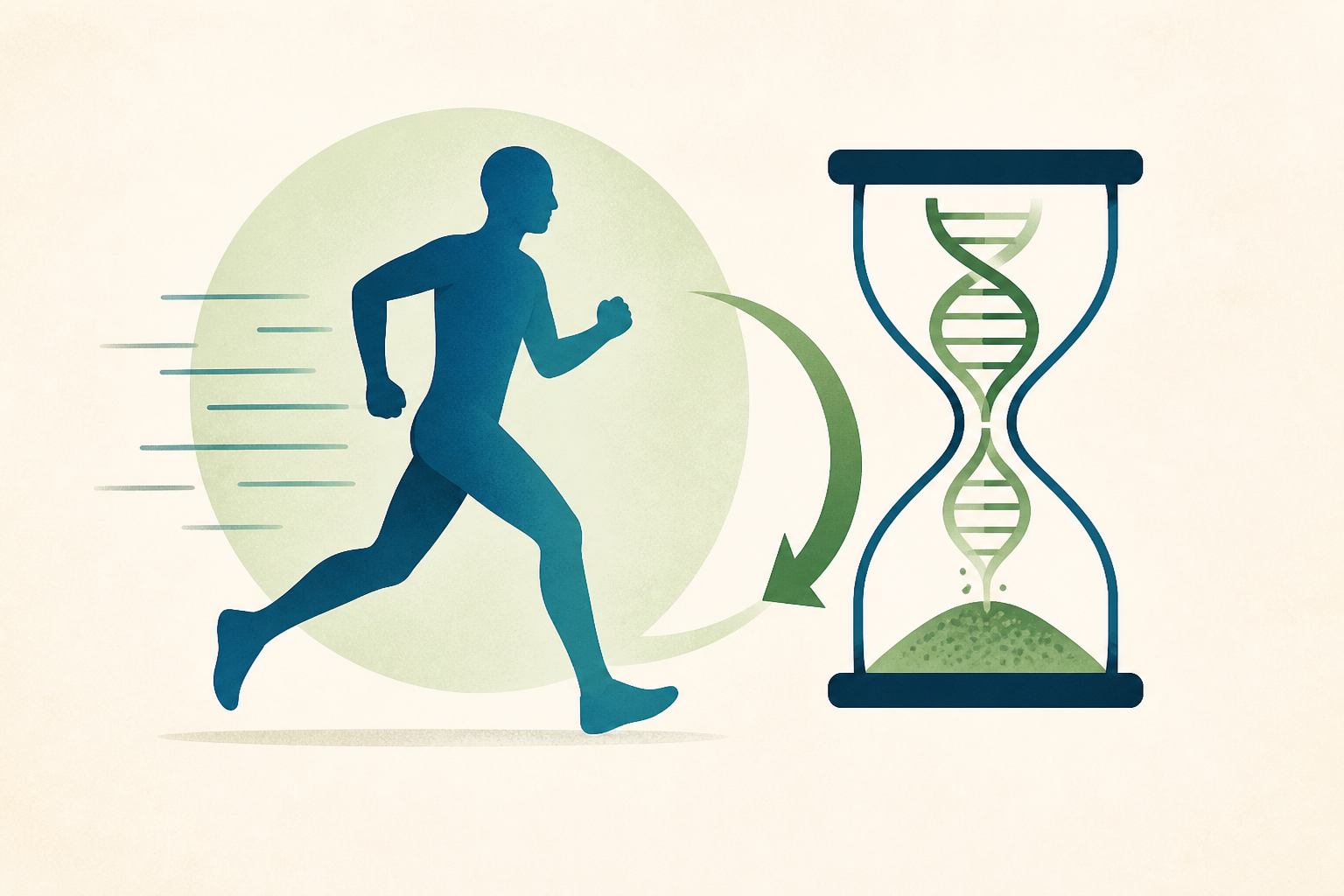
AI Generated Image
Exercise May Slow Aging in This Very Specific Way, Scientists Say
AOL.com • • health
Key Points:
- A new study published in Nature Aging found that older adults who exercise regularly have muscles that appear biologically younger, showing about 50% fewer age-related gene expression changes compared to less active peers.
- The research involved 47 adults, including those under 30 and over 65, with the older group split by activity level; muscle biopsies taken before and after exercise revealed that regular exercisers maintained healthier mitochondrial function and NAD+ metabolite levels.
- While the study shows a strong association between high physical activity and preservation of muscle health at the molecular level, it does not prove causation or link these findings directly to clinical outcomes like reduced disability or longer lifespan.
- Participants in the exercise group averaged about 14,000 steps daily, indicating that maintaining muscle youthfulness may require higher-than-average activity levels in older age, which might not be feasible for all seniors, especially those with mobility issues.
- Experts emphasize that exercise remains a vital intervention for combating age-related muscle decline and recommend structured aerobic and strength training as part of routine care for older adults to preserve muscle function and overall health.


