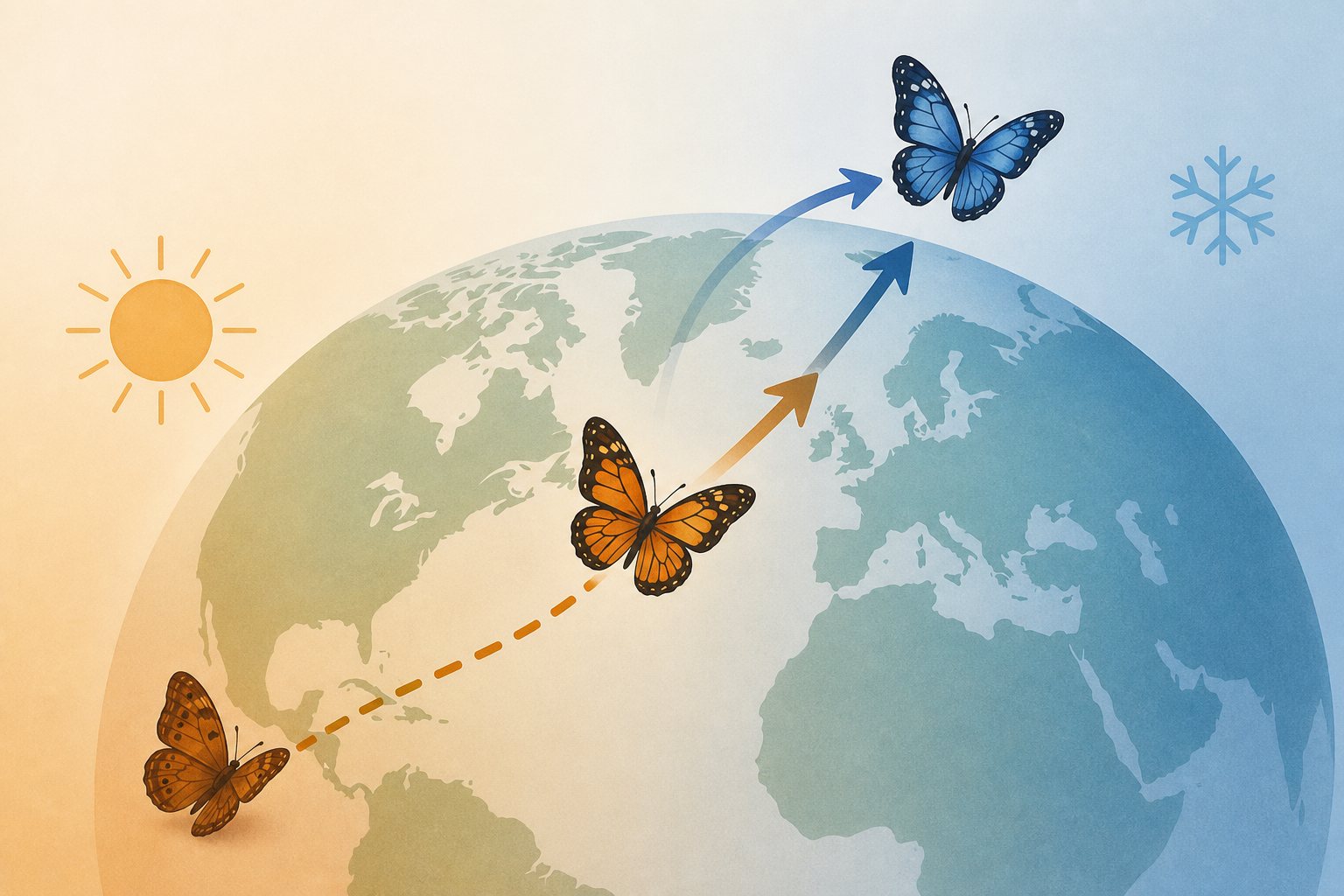
AI Generated Image
Extensive climate-induced range shifts in butterflies across the globe
Nature • • world
Key Points:
- Anthropogenic pressures, notably land-use and climate changes, are causing global shifts in butterfly species distributions, with horizontal range expansions being most commonly reported, especially in tropical regions, while range contractions and elevational shifts are more frequently documented in temperate areas such as Europe and North America.
- This comprehensive study compiled 6,182 range shift reports from 567 studies and 68 expert assessments across 105 countries, covering 1,758 butterfly species (about 10% of known species), integrating data from 15 languages to reduce geographic and taxonomic biases prevalent in previous research.
- Climate change and severe weather emerged as the primary drivers behind butterfly range shifts, particularly linked to horizontal expansions and elevational shifts, whereas land-use changes, including habitat loss and human disturbances, were mainly associated with range contractions.
- The research highlights significant gaps in monitoring and reporting, especially in biodiverse tropical regions like Central Africa, Southeast Asia, and the Amazon Basin, emphasizing the need for equitable, standardized, and multilingual data collection to fully understand and conserve butterfly biodiversity under global change.
- Conservation strategies should integrate climate mitigation with habitat protection and restoration, focusing on maintaining ecological connectivity, protecting microrefugia, and managing landscape heterogeneity to support butterfly populations facing multidirectional and context-dependent range shifts.


