First detailed ‘smell maps’ reveal how noses track odours
Nature • • general
Key Points:
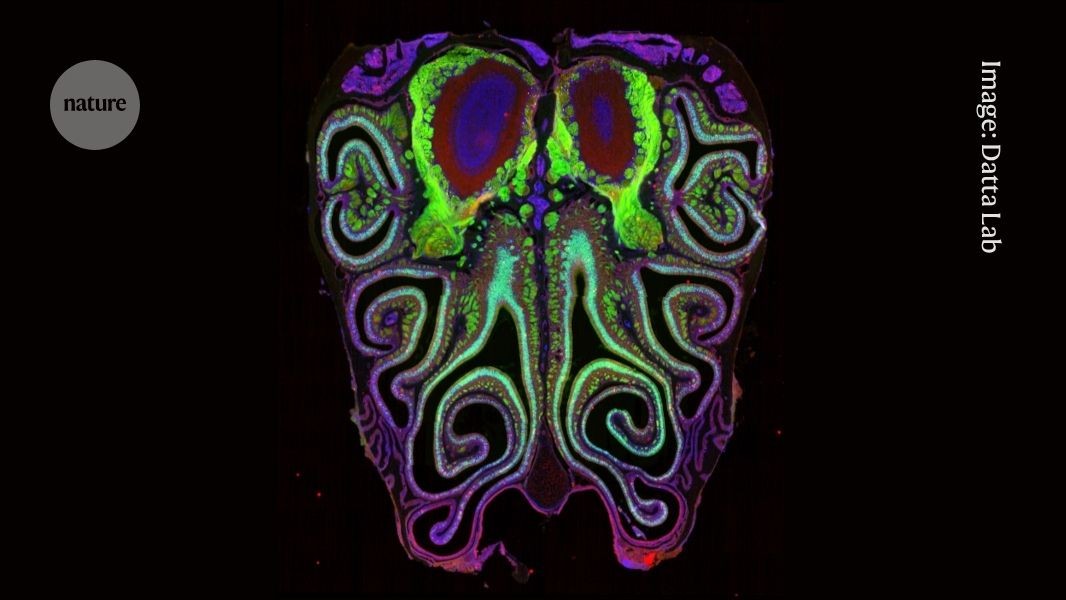
- Researchers have mapped olfactory receptors in the mouse nose with unprecedented detail, revealing that about 1,100 receptors are organized in precise horizontal stripes across the nasal epithelium, overturning the previous belief that receptor distribution was random within broad zones.
- The study used single-cell sequencing and spatial transcriptomics on millions of neurons from hundreds of mice to identify receptor expression and spatial arrangement, showing overlapping stripes of receptor expression running from the top to the bottom of the nose.
- The spatial organization of receptors is developmentally controlled by gene activity influenced by a gradient of retinoic acid in the nasal tissue, which guides neurons to express specific receptors based on their location.
- This discovery challenges a foundational textbook model of olfactory organization and provides new insights into how the olfactory system is mapped, with experts highlighting its significance in solving a longstanding problem in the field.


