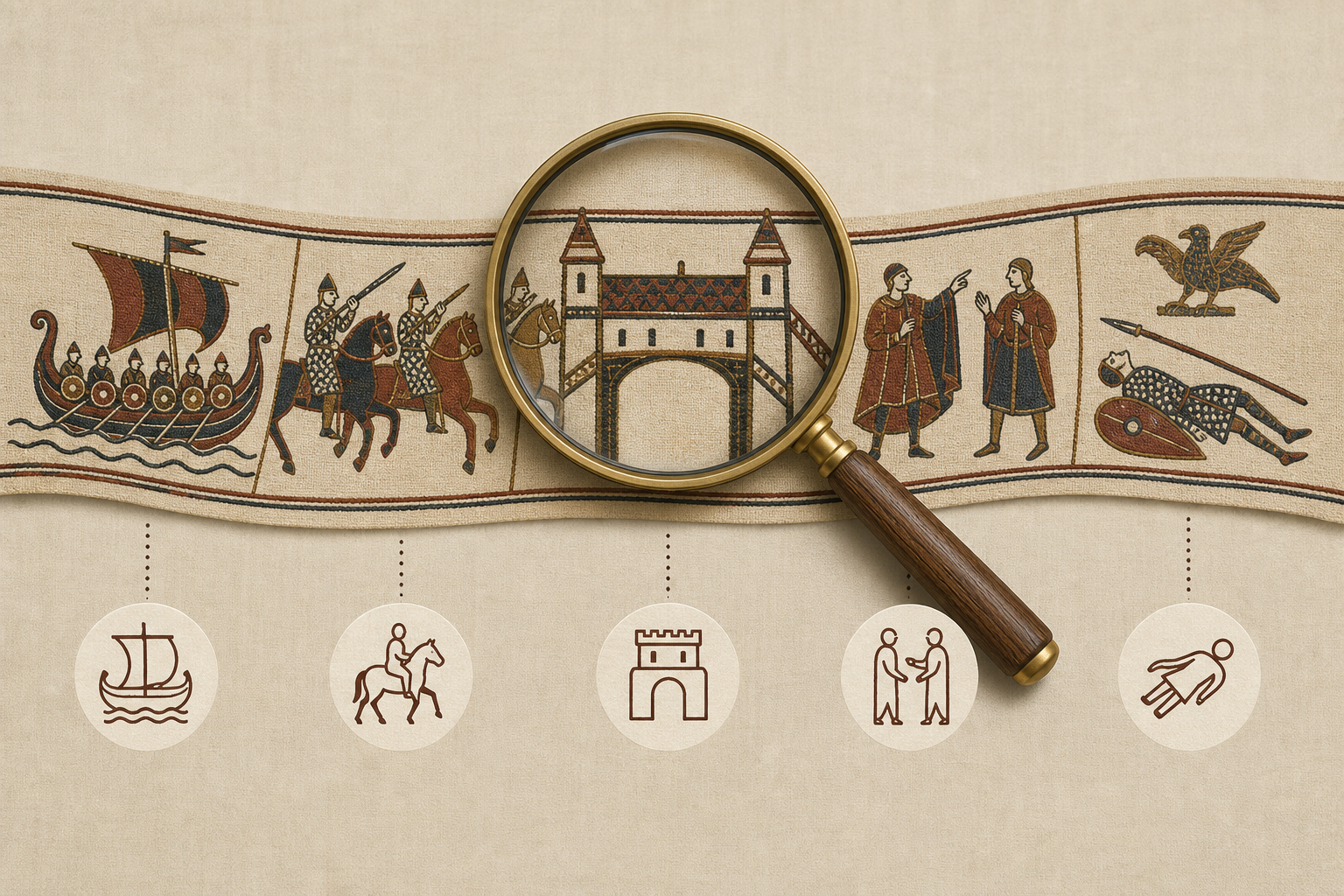
AI Generated Image
Five key images from the Bayeux Tapestry, and the story they tell
BBC • • world
Key Points:
- The Bayeux Tapestry, nearly 1,000 years old and 70 meters long, visually narrates the Norman conquest of England and the Battle of Hastings in 1066, highlighting power struggles and betrayal.
- Early scenes depict Harold, Earl of England, positively as a heroic figure honored by William of Normandy during a battle in Brittany around 1064-65.
- A pivotal moment shows Harold swearing an anguished oath on holy relics to support William’s claim to the English throne, marking a shift from hero to antagonist in the story.
- After King Edward the Confessor’s death in 1066, Harold claims the throne, breaking his oath, which the tapestry portrays as a betrayal leading to doom, symbolized by the appearance of Halley’s Comet.
- The final key scene depicts Harold’s death at the Battle of Hastings, traditionally shown as being struck by an arrow in the eye, though historians debate the accuracy and details of this depiction.


