AI Image
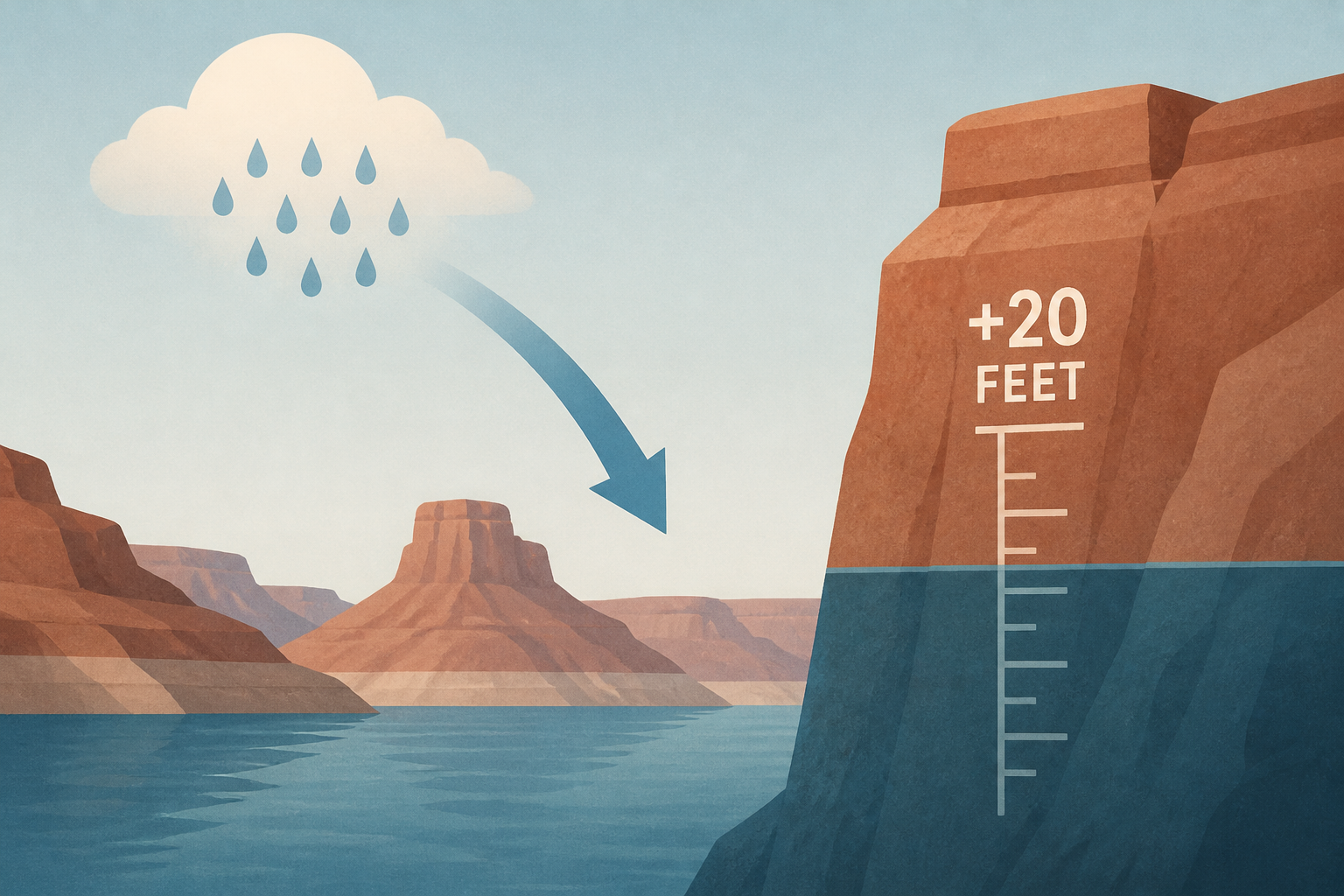
Floods bring rare relief to U.S. Southwest reservoirs as Lake Powell rises 20 feet
PBS • • nation
Key Points:
- Recent flooding in the U.S. Southwest has brought rare relief to reservoirs severely depleted by a prolonged megadrought, replenishing lakes and underground aquifers despite causing local evacuations and damage.
- Lake Powell, a critical reservoir on the Arizona-Utah border, rose over 20 feet since mid-September due to heavy rains, though it remains just over a quarter full with many boat launches still unusable.
- Cities like Pagosa Springs, Colorado, and Flagstaff, Arizona, experienced some of their wettest weather in decades, lifting water restrictions and significantly boosting local water supplies.
- Despite the temporary improvements, the Southwest remains in drought, and federal water management decisions, including mandated cuts to Colorado River water use by California, Nevada, and Arizona, are unlikely to change until snowpack data is clearer in spring.
- Efforts to adapt to a drier future include plans by some Arizona cities to reduce reliance on the Colorado River by expanding local reservoirs, highlighting ongoing challenges in regional water resilience.


