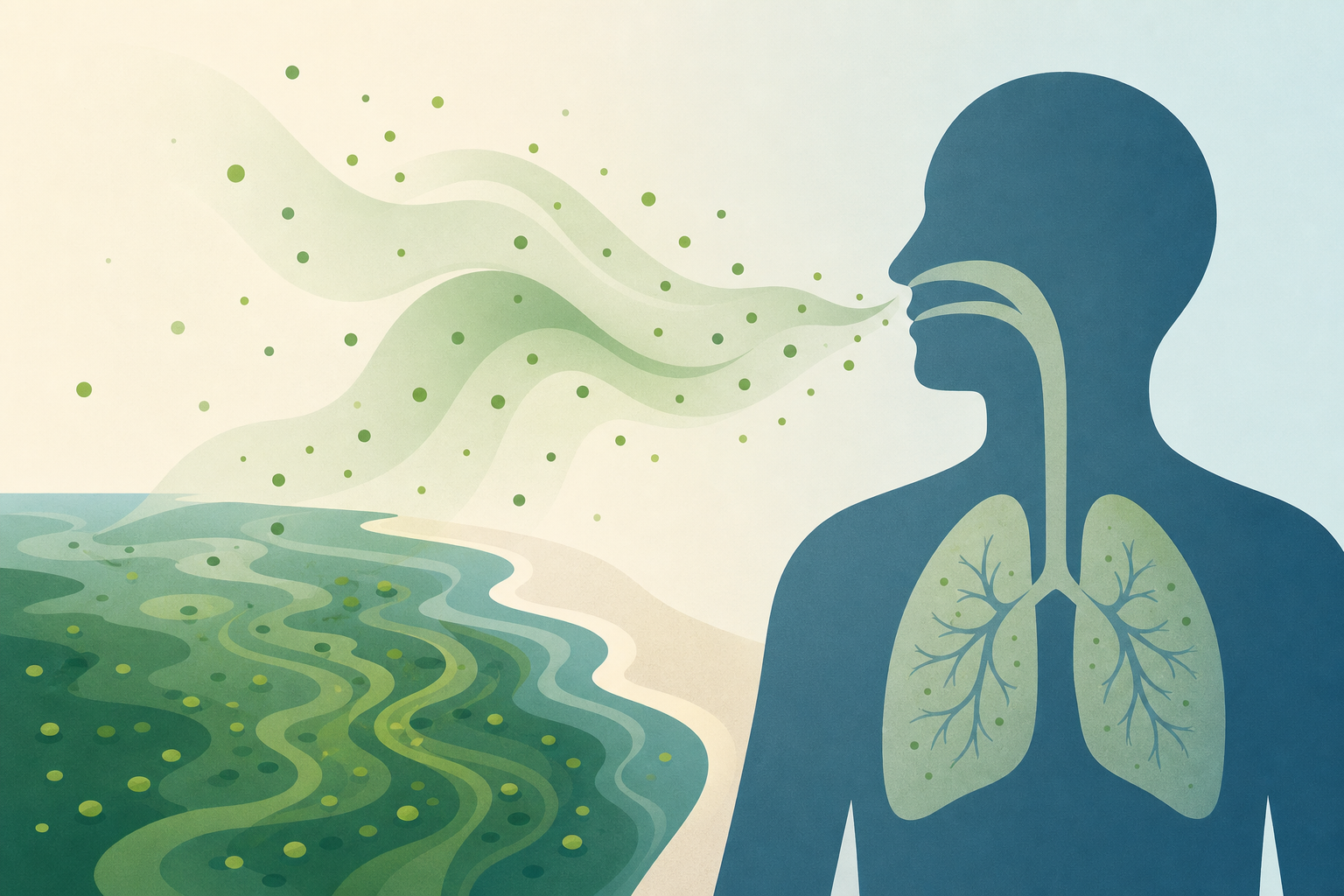
AI Generated Image
Florida bloom toxins turn up in air, suggesting inhalation risk beyond shorelines
Phys.org • • health
Key Points:
- Research in Southwest Florida has found that cyanobacterial toxins, specifically the neurotoxin 2,4-DAB, can become airborne and inhaled by people far from contaminated water bodies, posing a potential health risk.
- Cyanobacteria blooms, fueled by excess nitrogen and phosphorus from agricultural runoff and sewage, release toxins linked to neurodegenerative diseases such as ALS and Alzheimer's, as evidenced by studies on beached dolphins and human populations.
- The nonprofit Brain Chemistry Labs, in collaboration with several research institutes, detected airborne cyanobacterial toxins in multiple locations in Southwest Florida using specialized detectors, highlighting chronic low-level exposure risks.
- Prior research indicates a connection between inhalation of cyanobacterial toxins and increased incidence of ALS, including a noted rise among veterans exposed to desert dust containing these toxins during military deployment.
- Experts emphasize that while avoiding contaminated food and water is possible, preventing inhalation exposure to airborne cyanobacterial toxins remains a significant challenge for public health.


