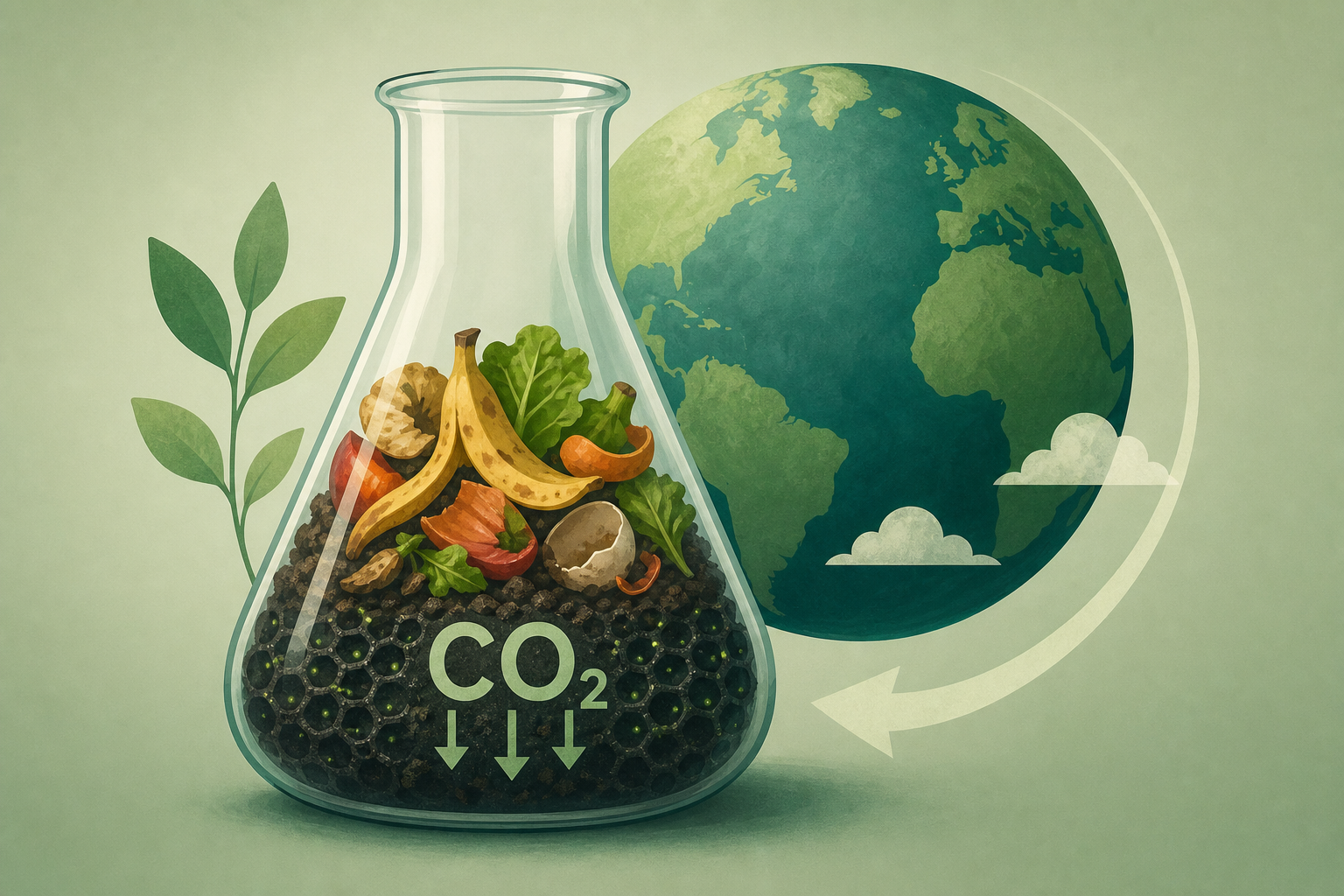
AI Generated Image
Food Waste Becomes a Powerful Carbon Trap in Climate Breakthrough
SciTechDaily • • science
Key Points:
- Researchers at ETH Zurich have developed a new direct air capture (DAC) technology using protein-rich waste from dairy and tofu production to create porous beads that absorb CO2 from the atmosphere more efficiently than conventional methods.
- These protein-based beads capture CO2 by reacting with potassium hydroxide inside the beads, converting CO2 into hydrogen carbonate, and can absorb 10 to 50 percent more CO2 per gram than existing DAC materials.
- Unlike traditional DAC systems that require high energy input for heat to release captured CO2, the new method uses mild acid and base sprays at room temperature to regenerate the beads, significantly lowering energy consumption.
- The protein beads are biodegradable, non-toxic, and potentially reusable as agricultural fertilizer or biofuel after their carbon capture lifespan, aligning with a circular economy model and reducing environmental impact.
- While still tested only at lab scale, the researchers are optimistic about industrial scalability and cost-effectiveness, suggesting this sustainable approach could become a game changer for large-scale atmospheric CO2 removal.


