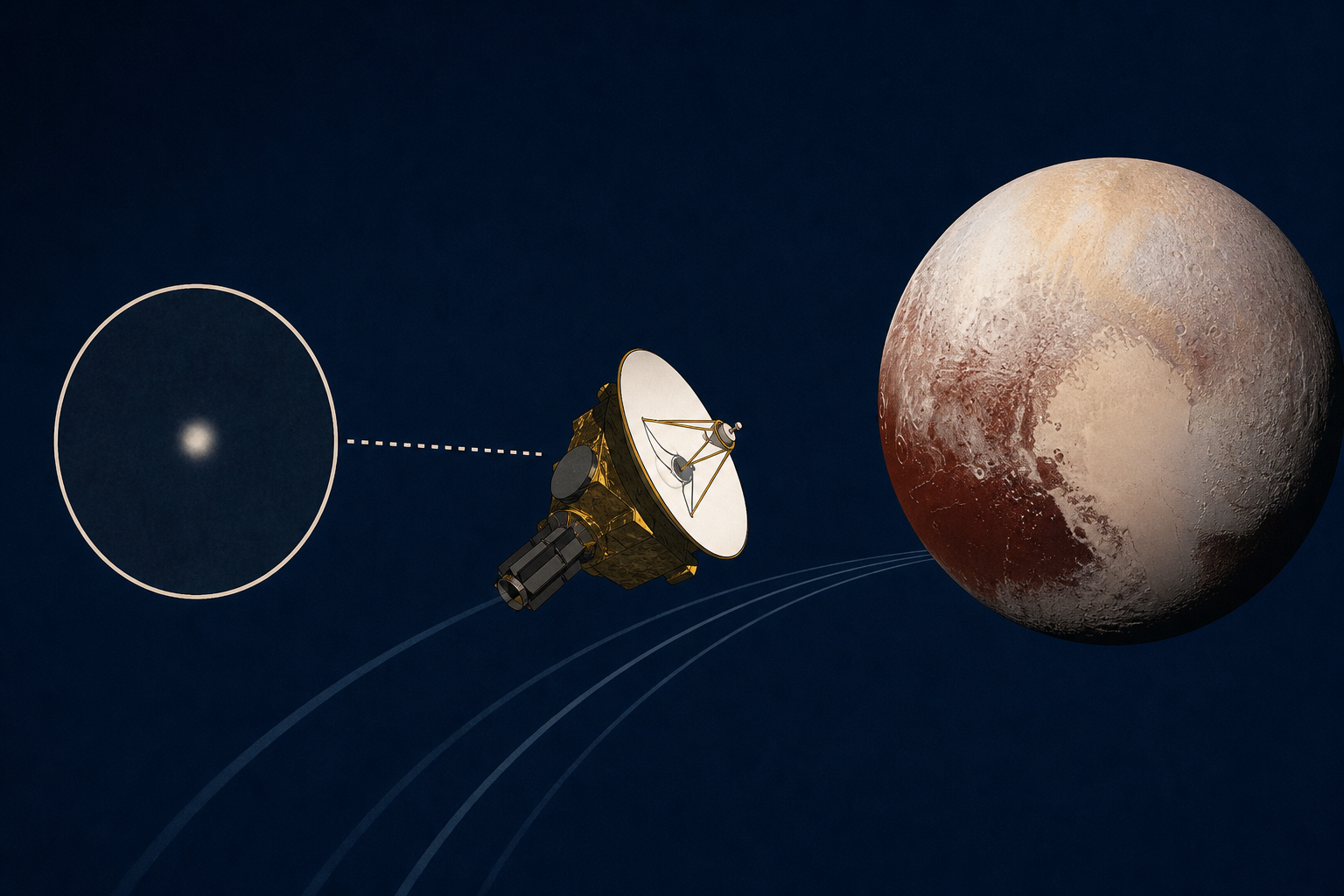
AI Generated Image
For 85 years after its discovery, Pluto was little more than a dot in a telescope — until 2015, when a piano-sized NASA spacecraft that had traveled more than three billion miles flew past and reveale
19FortyFive • • science
Key Points:
- NASA’s New Horizons spacecraft, which revolutionized understanding of Pluto during its 2015 flyby, has entered its longest hibernation period as of August 2025 after a software upgrade to enhance its deep-space operations.
- Currently over 5.7 billion miles from Earth and traveling through the Kuiper Belt, New Horizons is in a low-power state but continues to collect data and send health status updates, with signals taking over eight hours to reach Earth.
- The spacecraft’s wake-up time is uncertain and may not occur until June 2026, pending NASA’s Fiscal Year 2026 budget decisions, though it remains operational in hibernation for data collection.
- Launched in 2006, New Horizons was the first mission to closely study Pluto, revealing unexpected geological activity, atmospheric characteristics, and the formation of Pluto’s moons and the Sputnik Planum glacier.
- Future missions for New Horizons depend on funding, but the probe continues to drift through the Kuiper Belt, contributing valuable scientific data from the outer solar system.


