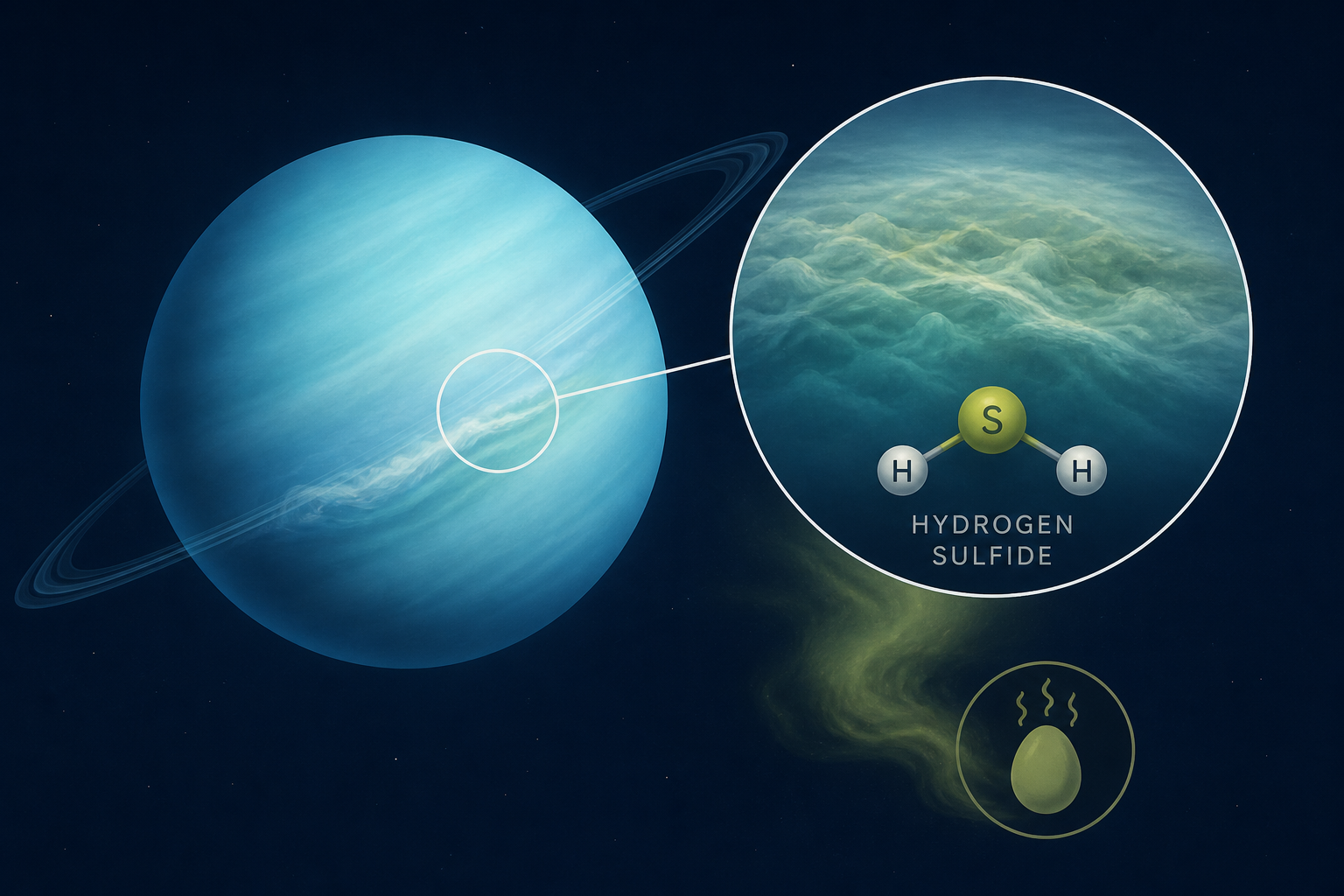
AI Generated Image
For all its serene blue beauty from afar, Uranus hides a detail that would make a visitor recoil: its cloud tops are laced with hydrogen sulfide, the very gas that gives rotten eggs their stench, so U
spacedaily.com • • science
Key Points:
- Uranus appears as a smooth, pale blue-green planet due to methane in its atmosphere absorbing red light and reflecting blue-green wavelengths, giving it a serene but misleadingly calm appearance.
- In 2018, scientists detected hydrogen sulfide gas above Uranus’s main cloud deck, a toxic, colorless gas responsible for the smell of rotten eggs, confirming that Uranus’s clouds are composed mainly of this gas rather than ammonia.
- The discovery was made possible by improved spectral data from the Gemini North telescope, resolving a long-standing question about Uranus’s atmospheric composition and providing insights into the planet’s formation.
- Despite the faint presence of hydrogen sulfide detectable by humans, the extreme cold (around -200°C), lack of breathable air, and harsh atmospheric conditions make Uranus an inhospitable and lethal environment for any visitor.
- While Uranus’s distant appearance is visually appealing and tranquil, its true atmospheric conditions are hostile, toxic, and far from the placid image seen from afar.


