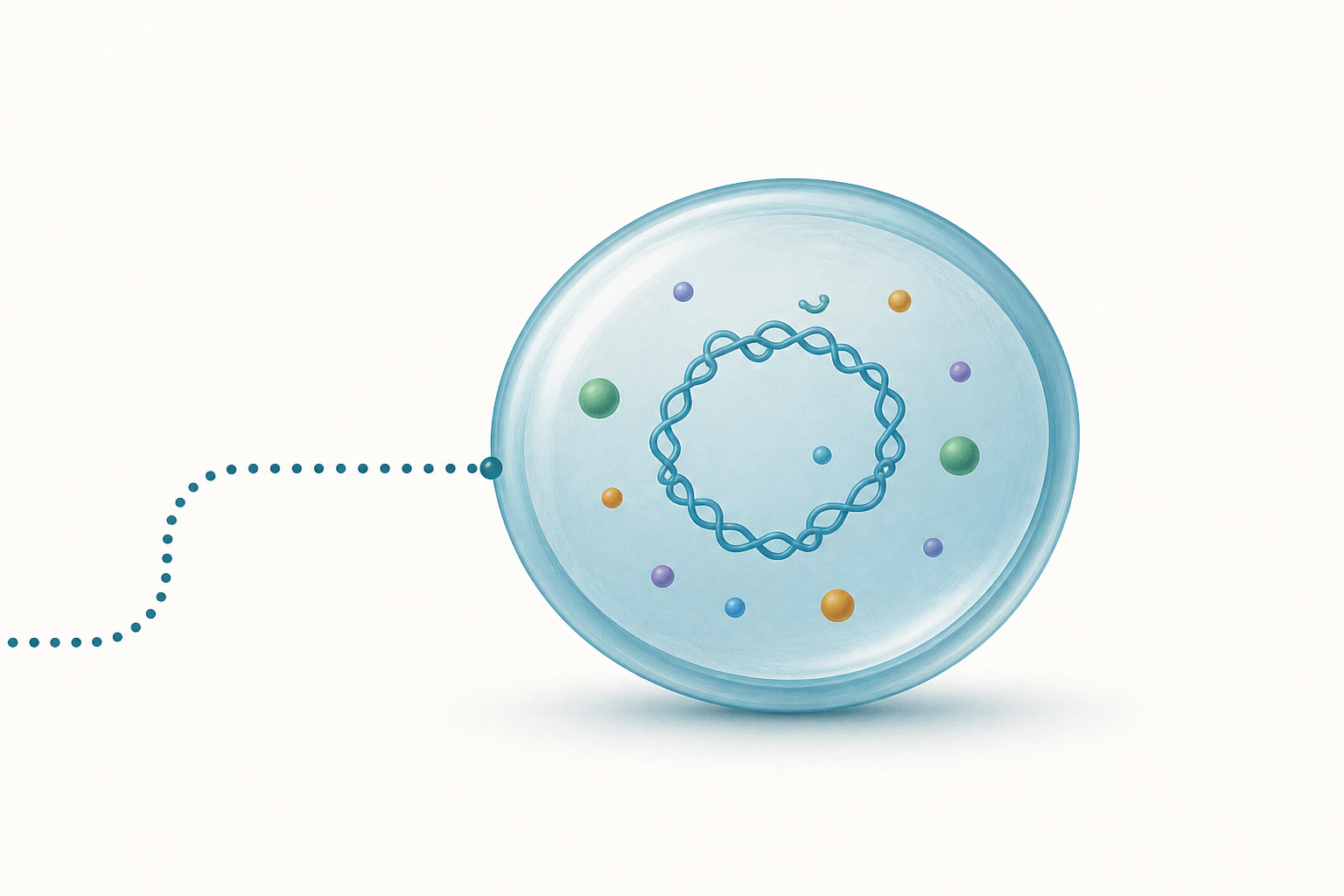
AI Generated Image
For The First Time, Scientists Say They've Built a Synthetic Cell From Scratch
ScienceAlert • • general
Key Points:
- Scientists at the University of Minnesota have created SpudCell, the first synthetic cell built entirely from scratch, capable of growth, genome replication, resource acquisition, and genetically encoded division, although it cannot replicate over many generations or evolve.
- SpudCell's genome is only 90 kilobase pairs, smaller than previously thought necessary for life, challenging assumptions about the minimum genetic requirements for cellular function.
- The synthetic cell consists of a liposome membrane surrounding seven plasmids and includes a protein expression system that enables it to convert nutrients into materials and divide, but it lacks a cytoskeleton and cannot produce its own protein machinery.
- While SpudCell is limited by slow growth, high metabolic demands, and dependence on external components, it serves as a proof of concept for engineering minimal cells and could pave the way for synthetic biology applications such as biological factories producing drugs and biomaterials.
- The research is yet to be peer-reviewed and has faced skepticism from some biologists, but the team hopes others will build on their fully mapped synthetic cell chassis to enhance its capabilities and robustness.


