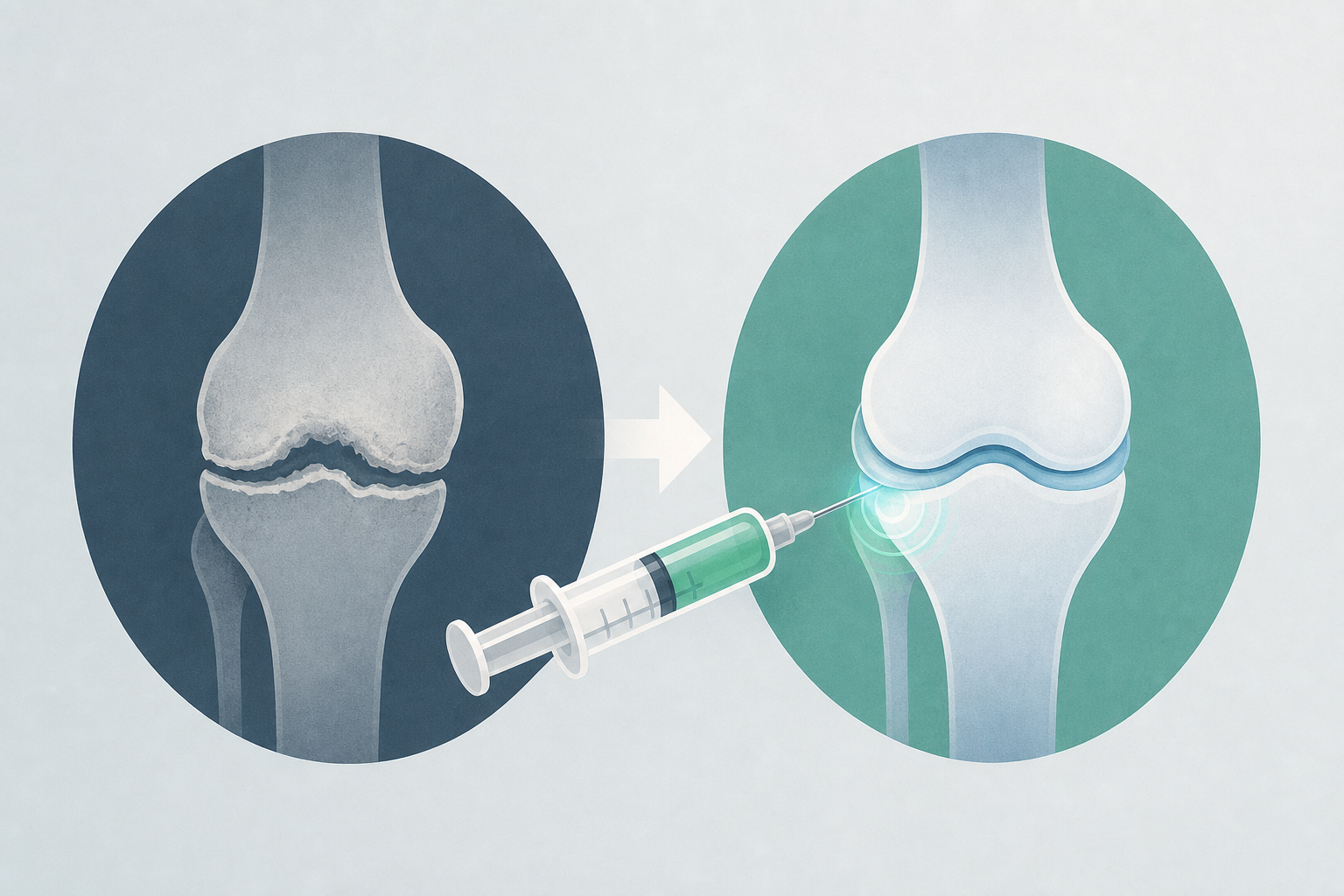
AI Generated Image
For worn-out knees, the usual answer was replacement - until one injection regrew cartilage
Yahoo • • health
Key Points:
- Stanford Medicine researchers discovered that a one-time injection targeting the enzyme 15-PGDH can rebuild damaged cartilage and prevent arthritis in older mice, showing significant cartilage regeneration.
- The enzyme 15-PGDH increases with age and hinders cartilage repair; inhibiting it in human cartilage samples triggered new cartilage production, suggesting potential for human treatment.
- Osteoarthritis affects about 60 million U.S. adults, with current therapies focusing on pain relief rather than cartilage restoration, highlighting the need for disease-modifying treatments.
- The study found that existing cartilage cells reset to a younger state to regenerate tissue, offering a new approach to joint repair without relying on stem cells.
- While not yet available for arthritis patients, the 15-PGDH inhibitor is in Phase 1 trials for muscle weakness, and researchers plan to test its safety and effectiveness for cartilage regeneration in humans.


