AI Image
Forget Mosquitoes in Amber. Scientists May Have Found Dinosaur Blood in a 115 Million-Year-Old Bone.
Yahoo • • science
Key Points:
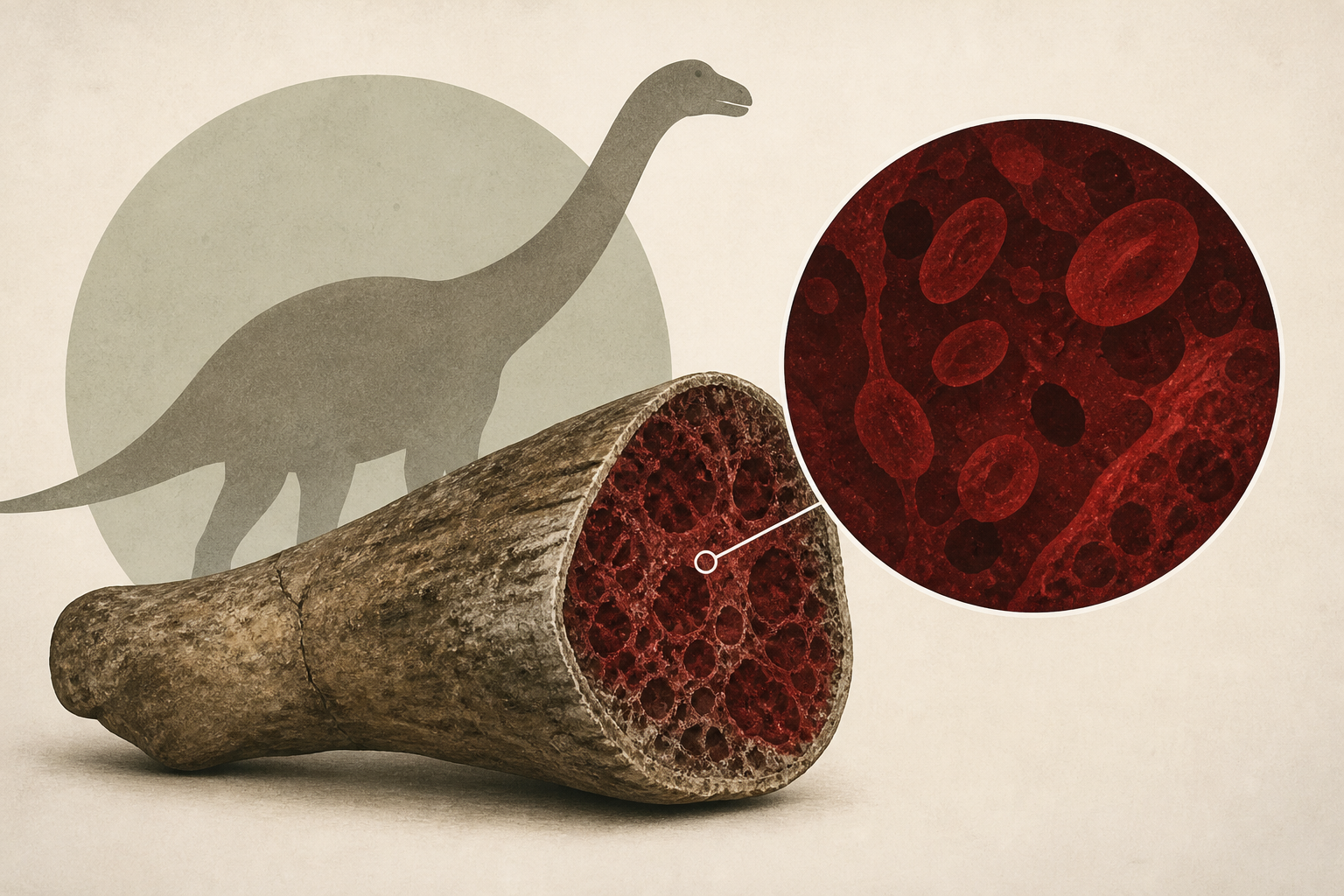
- An international team of scientists reported finding traces of heme, a molecule essential for blood oxygen transport, in the vascular canals of a 115-million-year-old dinosaur bone from Aratasaurus museunacionali, an early Cretaceous relative of Velociraptor.
- The fossil, discovered in Brazil's Romualdo Formation and a survivor of a 2018 fire at the National Museum in Rio de Janeiro, was analyzed using advanced techniques like liquid chromatography–mass spectrometry and Raman spectroscopy, confirming the presence of heme inside the bone but not in surrounding rock.
- This discovery is significant because blood molecules typically degrade quickly after death, and previous claims of fossilized blood have faced challenges due to contamination and misidentification; this study is considered the most comprehensive effort to date to identify authentic dinosaur blood remnants.
- The preservation likely resulted from the dinosaur dying in a low-oxygen, watery environment with microbial mats and the presence of the mineral hausmannite, which may have slowed decay and allowed blood cells to mineralize alongside the bone.
- Despite the findings, some paleontologists remain skeptical due to differences in the shape and features of the purported blood cells compared to modern relatives, indicating further evidence is needed to convince the broader scientific community.


