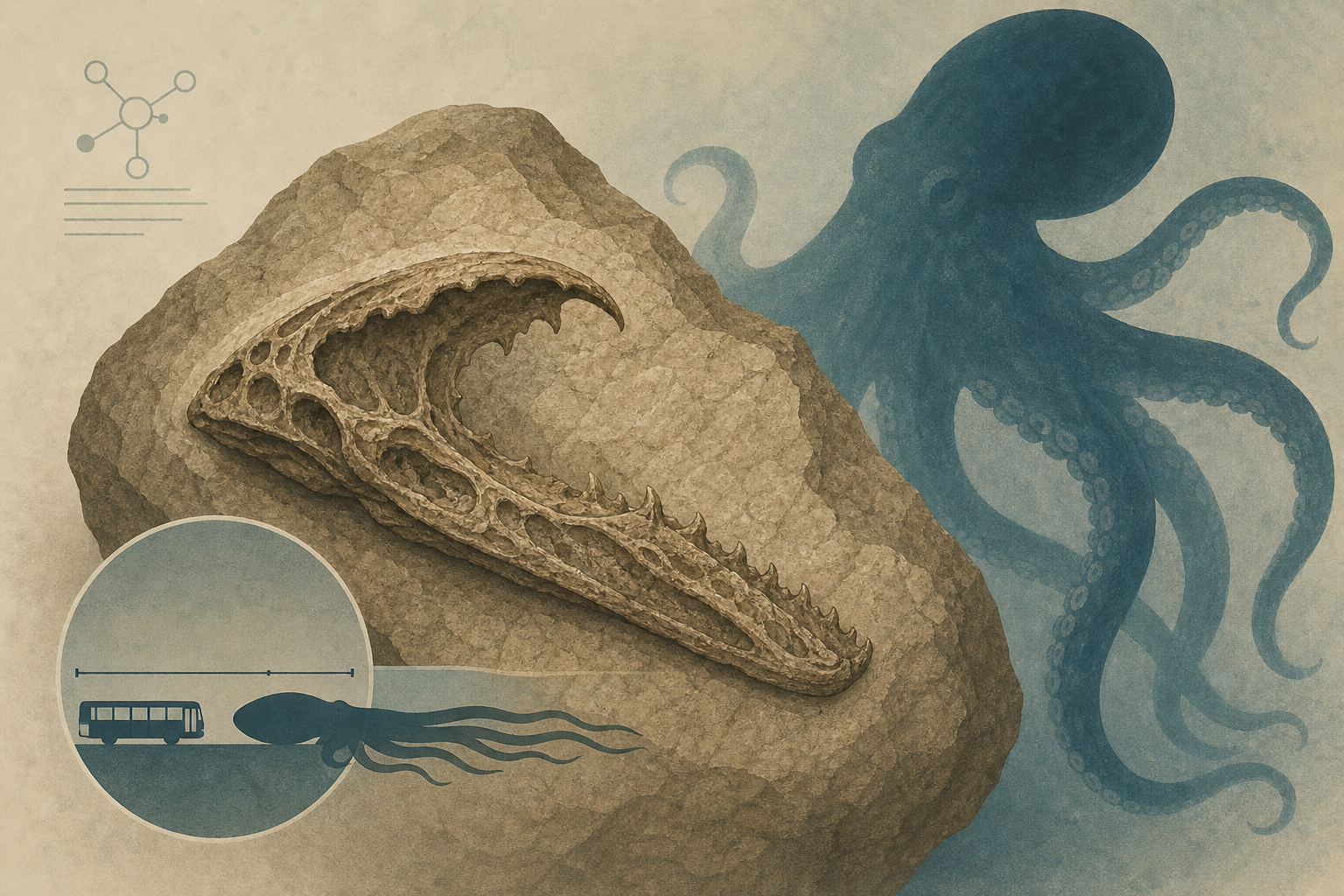
AI Generated Image
Fossil jaws hidden inside Cretaceous rocks have revealed that 100 million years ago, some octopuses grew into giant predators — possibly longer than a bus and more fearsome than any octopus alive toda
Space Daily • • science
Key Points:
- Researchers have discovered fossilized octopus jaws from the Late Cretaceous period, indicating the existence of giant finned octopuses, with the largest species, Nanaimoteuthis haggarti, potentially reaching 7 to 19 meters in length.
- These fossils, made of chitinous beaks, provide rare evidence of soft-bodied octopuses in the fossil record, revealing that these animals were active predators capable of processing hard prey, as shown by wear patterns on the jaws.
- The findings suggest that giant octopuses may have occupied high predatory roles in ancient marine ecosystems, challenging previous views that vertebrates dominated Cretaceous ocean food webs.
- While size estimates are based on jaw comparisons and carry some uncertainty, even conservative estimates point to octopuses larger than any living species, indicating their significant ecological impact.
- The asymmetric wear on some jaws hints at lateralized feeding behavior, suggesting complex, task-specific use of arms and jaws, further supporting the idea of sophisticated predatory behavior in these ancient octopuses.


