Fossilized skin discovery gives intriguing clues about dinosaur color
Earth.com • • science
Key Points:
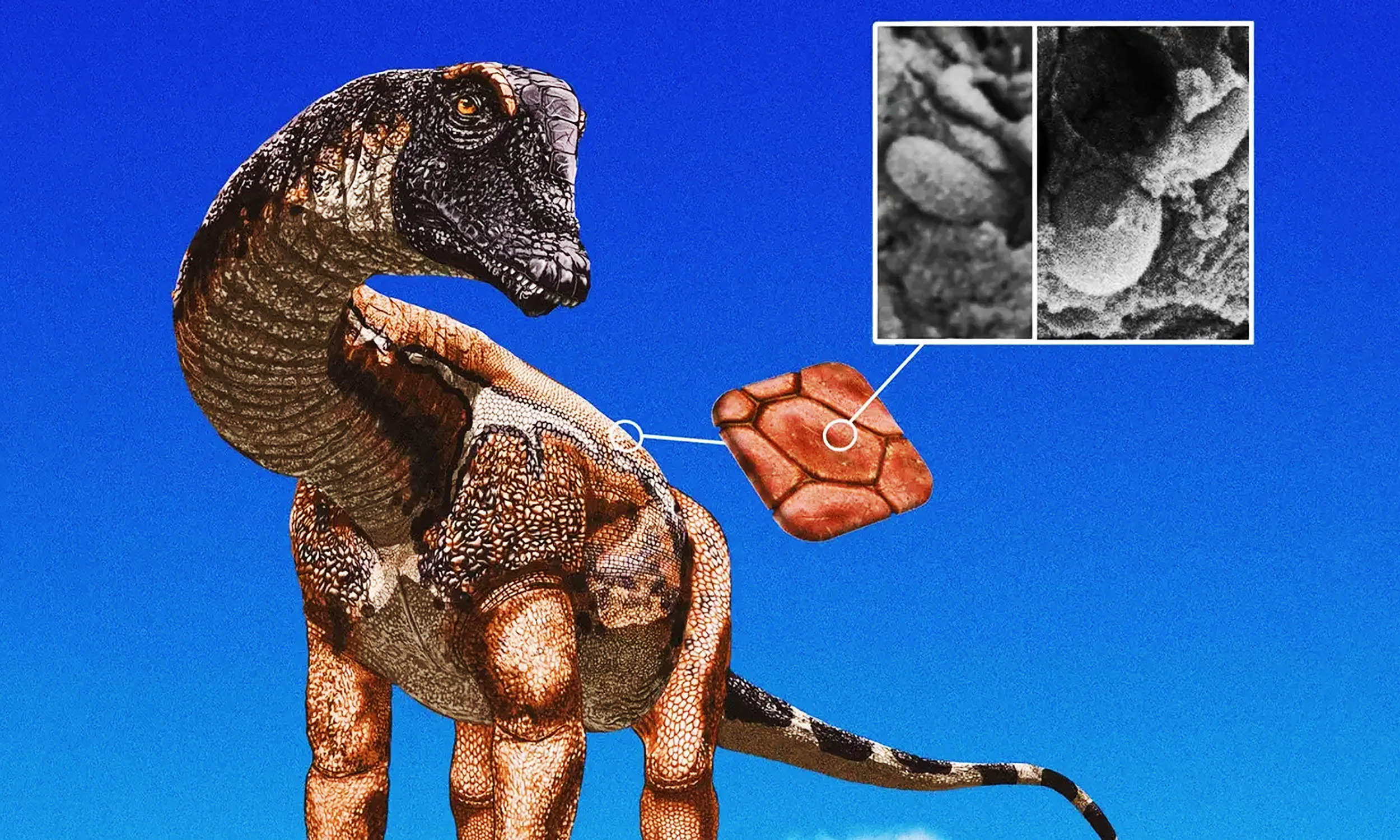
- A recent study of fossilized juvenile Diplodocus skin from Montana reveals microscopic melanosome structures, providing the first physical evidence of color-producing features in sauropod dinosaurs from 150 million years ago.
- Two distinct melanosome shapes were identified: oblong forms linked to dark colors like brown or black, and flat, disc-shaped forms similar to light-reflecting structures in bird feathers, suggesting a speckled or spotted skin pattern.
- The discovery implies that young Diplodocus may have had patterned, textured skin aiding camouflage and survival, challenging the traditional view of these dinosaurs having dull, uniform coloration.
- Preservation at the Mother’s Day Quarry allowed exceptional fossilization of skin layers, with melanosomes hidden beneath mineral deposits, highlighting that color evidence in other dinosaur fossils may also be concealed below the surface.
- This research, published in Royal Society Open Science and conducted by multiple international institutions, enriches understanding of dinosaur appearance, behavior, and evolution through microscopic fossil analysis.


