AI Image
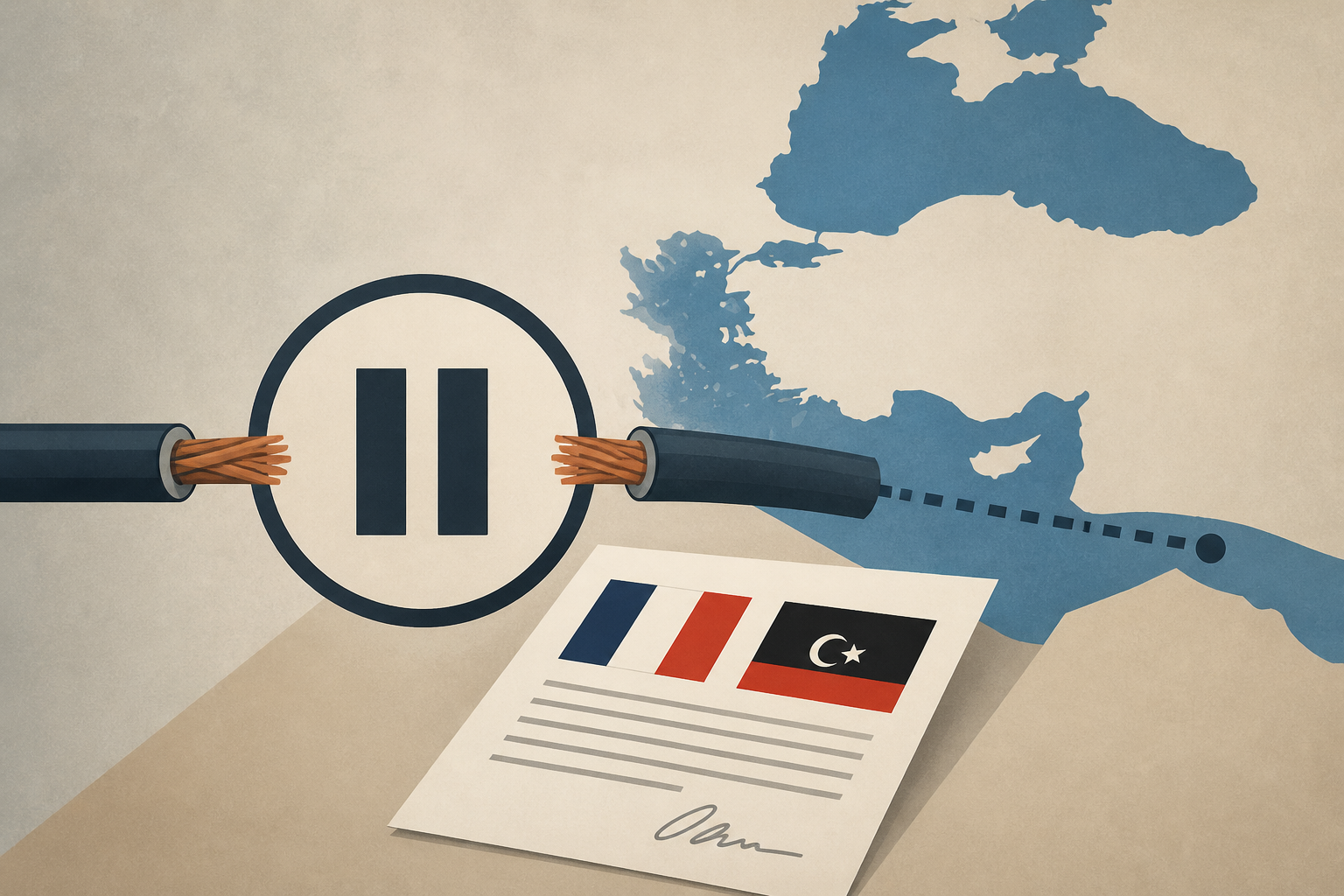
France reportedly mulls postponing Med grid after Türkiye-Libya deal
Daily Sabah • • world
Key Points:
- The Great Sea Interconnector (GSI), a key energy transmission project linking Greece, the Greek Cypriot administration, and Israel, faces potential postponement by France, its main contractor, due to geopolitical tensions following Libya's approval of a maritime deal with Türkiye.
- Libya's ratification of the maritime jurisdiction agreement with Türkiye challenges Greek and Egyptian claims in the Eastern Mediterranean, escalating regional disputes over exclusive economic zones and access to substantial undiscovered gas reserves.
- Türkiye's expanding influence in Libya, including ties with both eastern and western administrations, has strengthened its position in the Mediterranean energy landscape, complicating efforts by Greece, the EU, and others to assert control over maritime rights.
- The Türkiye-Libya deal has drawn criticism from Greece and the EU, as it overlaps with existing agreements and threatens Greece's ambitions for regional dominance, while Ankara continues to advance its own pipeline projects linking Türkiye to the Turkish Republic of Northern Cyprus.
- The unfolding maritime disputes reflect broader geopolitical rivalries fueled by recent significant gas discoveries in the Eastern Mediterranean, with future developments hinging on the ability of involved parties to conduct offshore surveys and advance drilling projects amid ongoing tensions.


