AI Generated Image
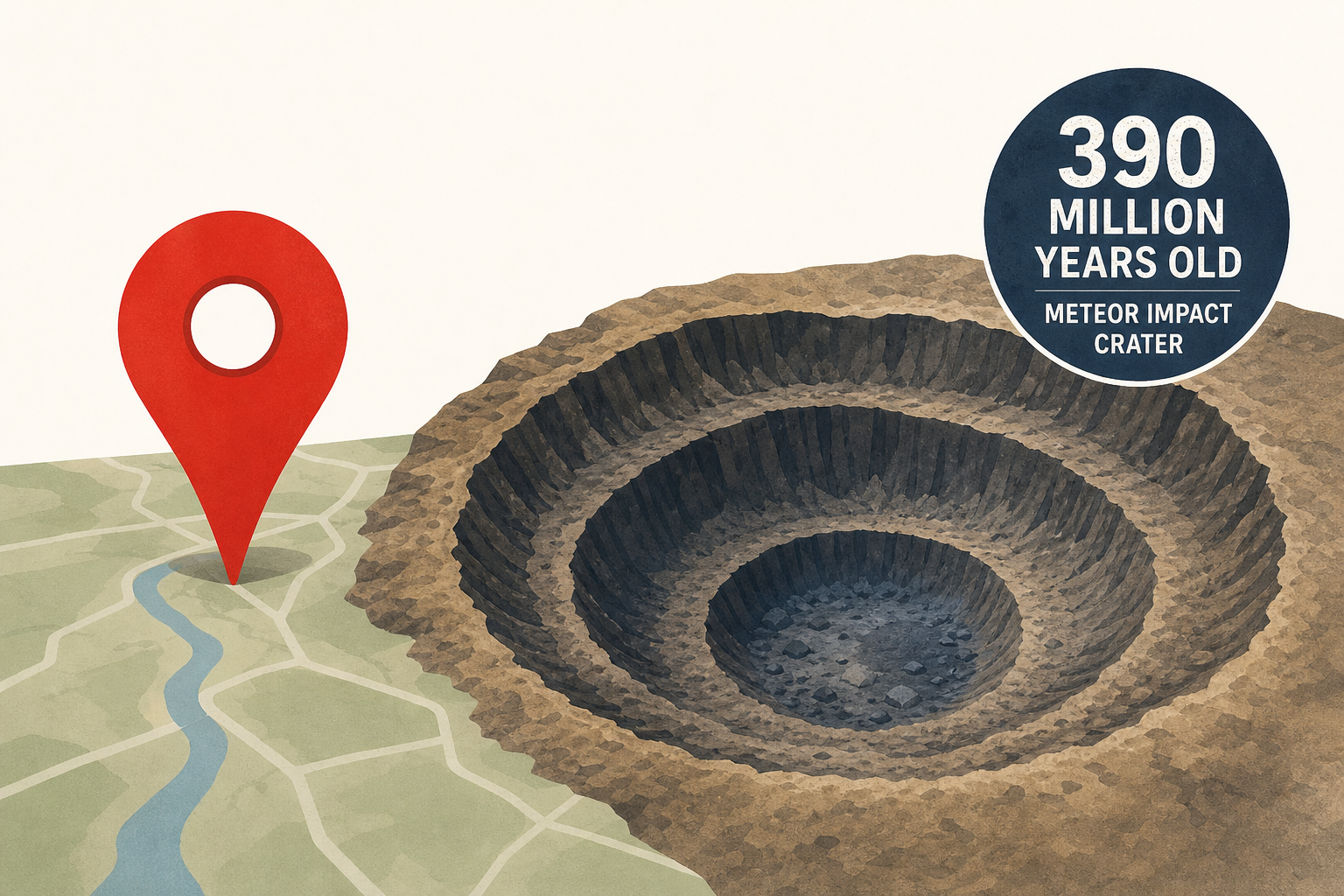
Giant pit discovered by hiker on Google Maps confirmed to be 390 million-year-old meteor impact crater
Yahoo • • general
Key Points:
- A large 25-kilometer-wide pit in Quebec's Côte-Nord region, discovered by amateur astronomer Joël Lapointe via Google Maps, has been confirmed as a 390 million-year-old meteor impact crater by scientists.
- The confirmation came after geologists, led by planetary geologist Gordon Osinski, found shatter cones and impact melt rock at the site, key indicators of meteor impacts formed under immense pressure and heat.
- The crater, now named Uhaachatik Crater in consultation with the local Ekuanitshit Innu council, is a rare find due to its size, as most newly discovered craters tend to be much smaller.
- This discovery adds to the roughly 200 known impact craters on Earth and 31 in Canada, with the last Canadian crater confirmed in 2010, and offers valuable insights into the effects of meteor impacts on Earth's geology and climate.
- The research team plans to present their findings at the upcoming Annual Meeting of the Meteorological Society in Germany and will continue studying the site to deepen understanding of impact processes.


