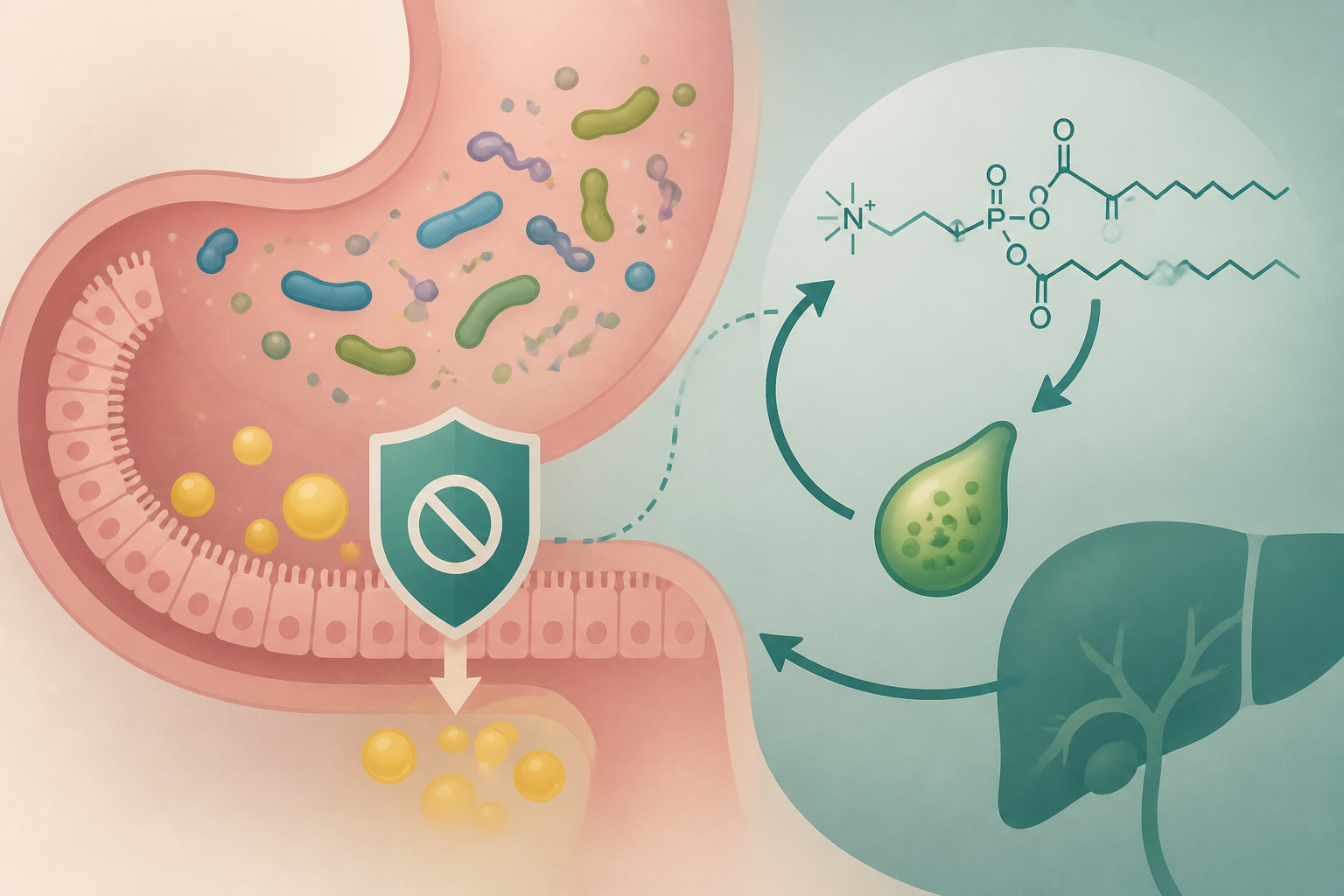
AI Generated Image
Gut microbiota restricts intestinal lipid uptake via modulation of bile phosphatidylcholine metabolism in mice
Nature • • science
Key Points:
- The gut microbiota significantly reduces systemic uptake of dietary fatty acids (FAs) by limiting intestinal absorption, as demonstrated in germ-free (GF), Oligo-MM12 (OMM12), and specific pathogen-free (SPF) mice using stable isotope-labelled lipids and kinetic modeling.
- Microbial colonization alters bile composition, decreasing phosphatidylcholine (PC) and increasing lysophosphatidylcholine (LPC) levels via enhanced phospholipase A1 (PLA1) activity, primarily mediated by carboxyl ester lipase (CEL), which reduces intestinal lipid absorption.
- The gut microbiota modulates bile acid (BA) profiles by downregulating hepatic CYP7B1 expression through MYD88-dependent signaling, shifting BA synthesis toward taurocholic acid (TCA) dominance, which stimulates PLA1 activity and PC-to-LPC conversion in bile.
- Deletion of CEL or MYD88 results in decreased PLA1 activity in bile and increased systemic lipid uptake, confirming their roles in microbiota-mediated regulation of dietary lipid absorption.
- These findings reveal a host-microbiota metabolic interaction controlling systemic lipid uptake via bile composition and enzymatic activity, suggesting potential therapeutic strategies targeting gut microbiota to manage lipid-related metabolic diseases.


