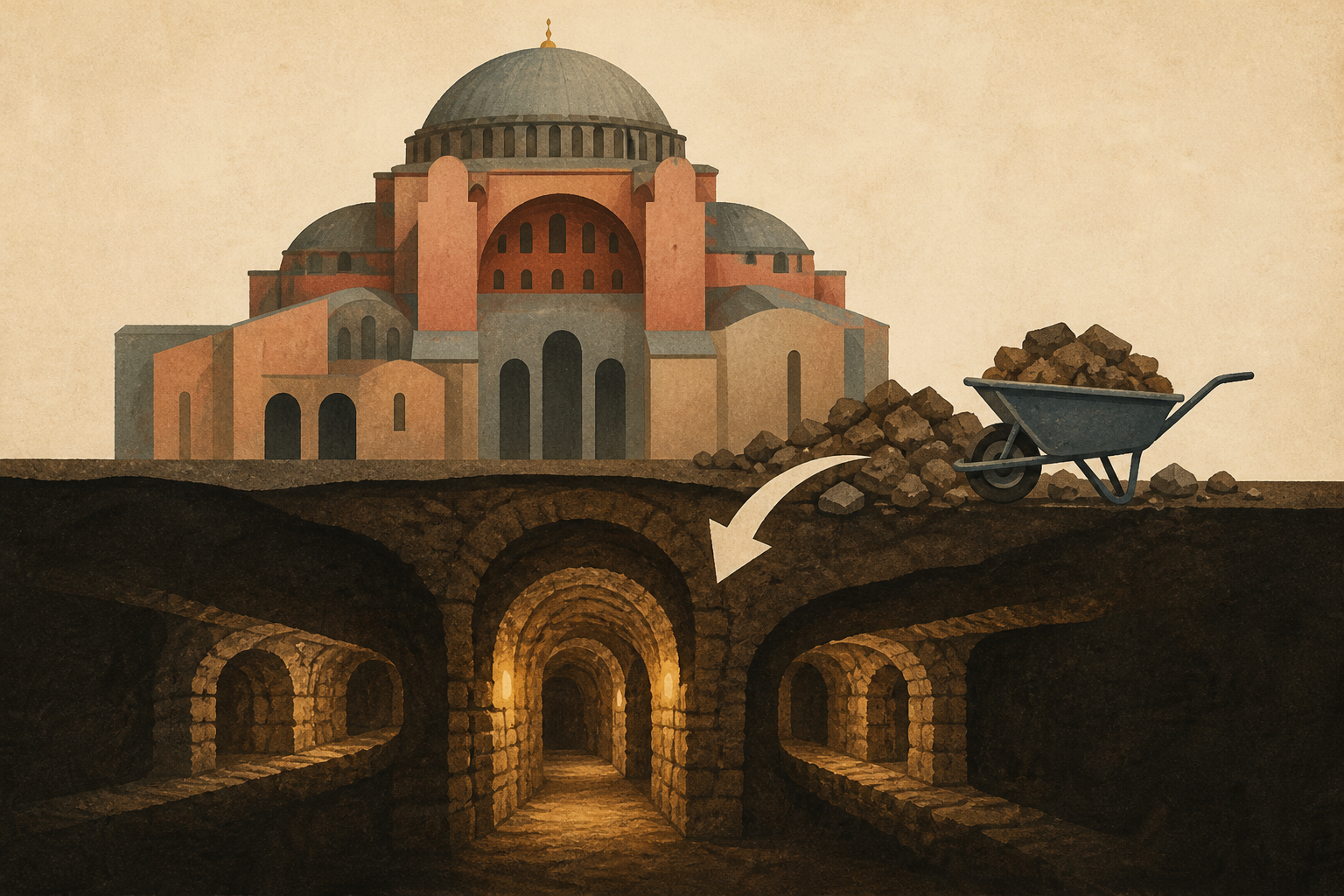
AI Image
Hagia Sophia's ancient underground tunnels revealed after debris removal
Fox News • • world
Key Points:
- Archaeologists have removed about 3,000 tons of debris from a centuries-old underground tunnel network beneath Istanbul's Hagia Sophia, revealing previously inaccessible sections of the historic site.
- The tunnels, built around 1,600 years ago by the Romans, originally served as part of the city's water distribution and drainage system and provided protected underground space.
- Excavations have uncovered nearly 558 feet of an underground route connected to a fifth-century Roman street and an ancient burial complex predating the current Hagia Sophia structure.
- Researchers plan to open more sections of the underground network to visitors and create an exhibition showcasing the archaeological findings.
- Hagia Sophia, a UNESCO World Heritage Site, has served as a church, mosque, and museum, reflecting its significant historical and cultural importance.


