AI Image
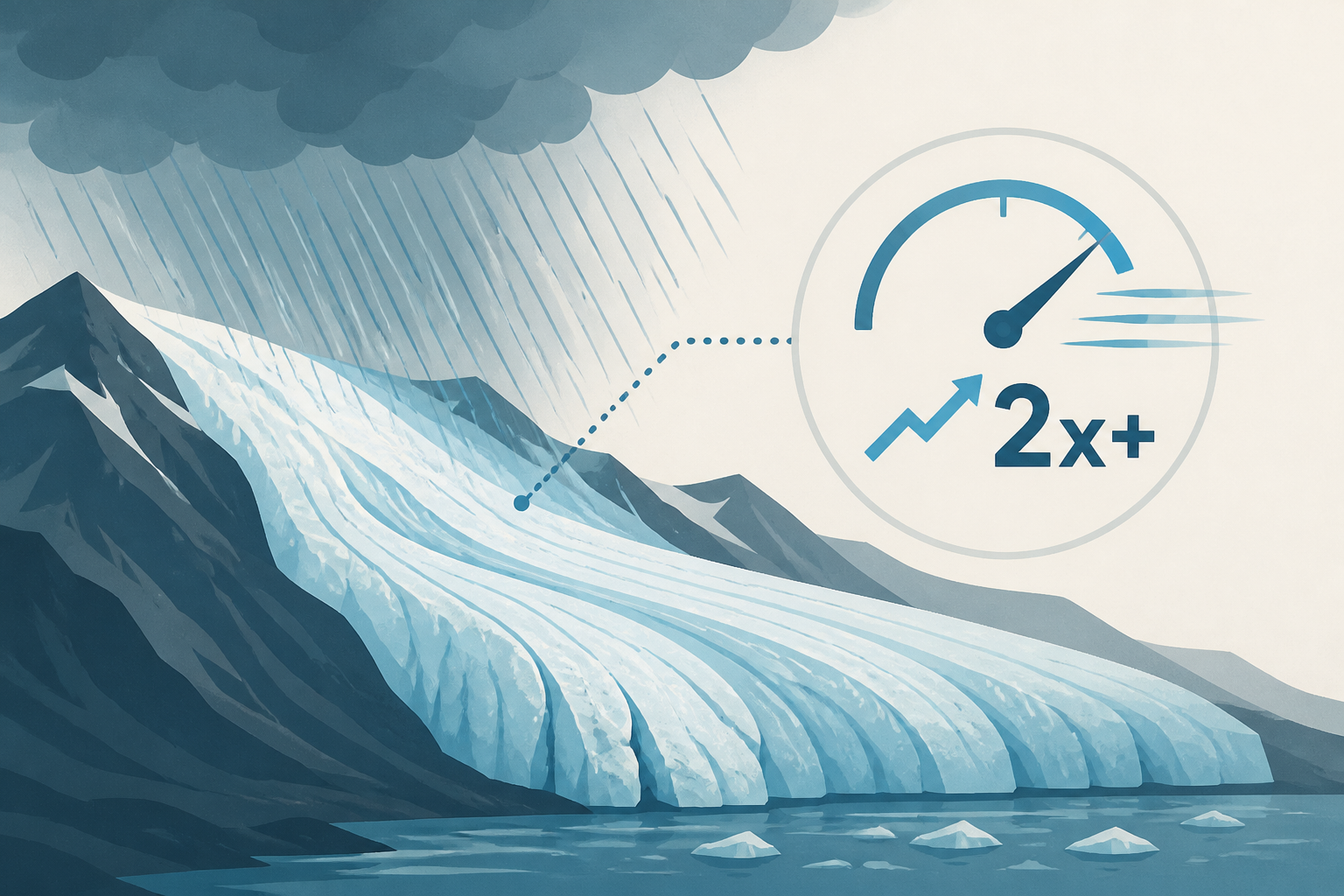
Heavy rain can more than double glacier speeds in Alaska
Phys.org • • science
Key Points:
- Researchers studied the Turner Glacier in Alaska and found that rainfall events can trigger glacier surges, increasing glacier speed by up to 116% in a single day during active surge periods.
- Rain-induced surges tend to start about 12 hours after rainfall exceeding 20 mm and can last up to 66 hours, with glacier acceleration more pronounced in downhill areas due to topography and meltwater effects.
- Glacier surges result from inefficient drainage systems where meltwater and rainwater become trapped beneath the ice, increasing basal water pressure and reducing friction, causing the glacier to slide rapidly over bedrock.
- Understanding these dynamics is critical for improving models of glacier behavior and predicting future ice loss, especially as climate change leads to more rainfall and melting, impacting sea level rise and vulnerable coastal communities.
- Despite advances, predicting glacier surges remains challenging due to the complex and evolving nature of glacier drainage systems, which can change over short timescales and introduce unpredictability in glacier responses to warming.


