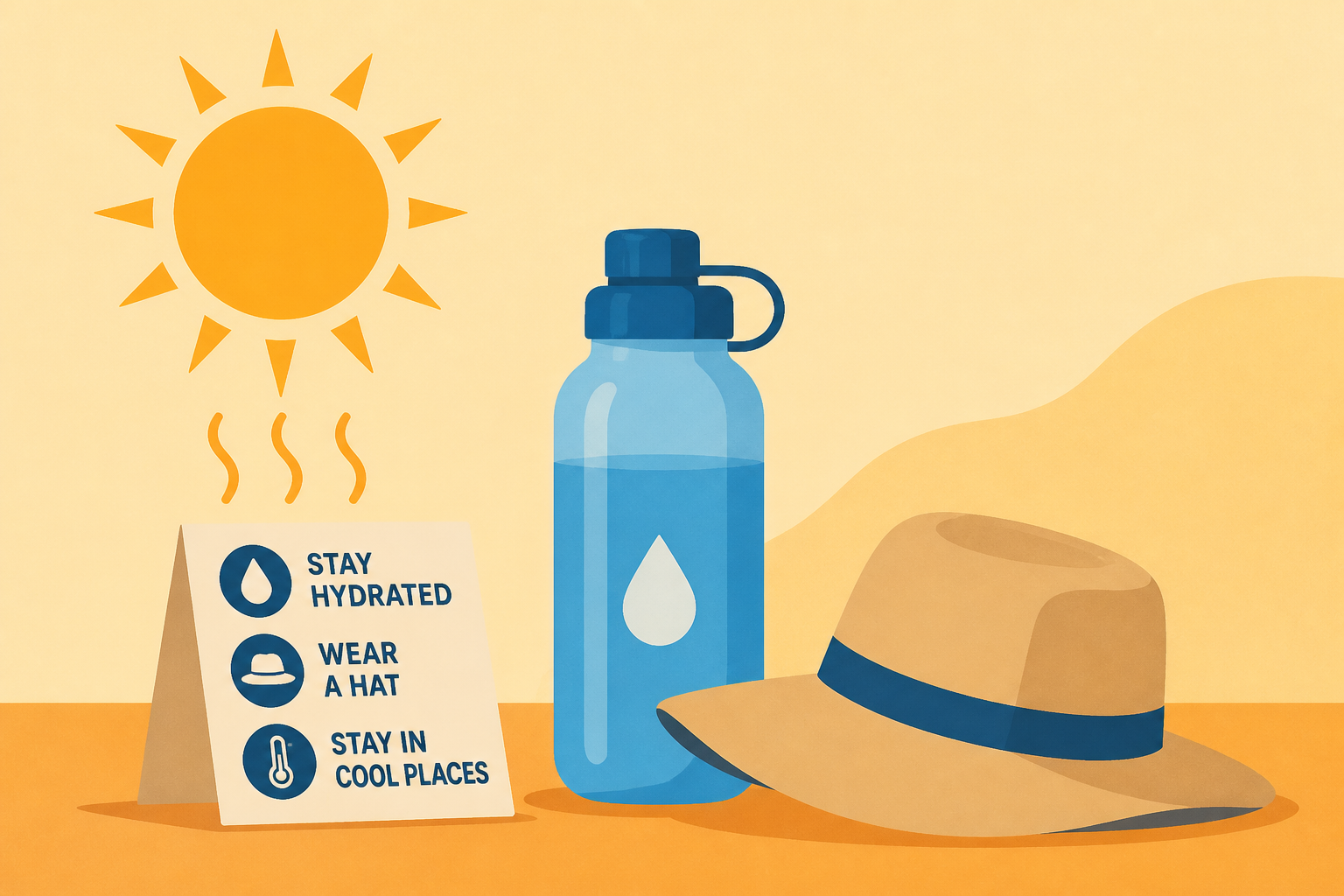
AI Generated Image
Here’s how to avoid heat-related illness : NPR
NPR • • nation
Key Points:
- The U.S. is experiencing its third major heat dome this month, affecting around 70 million people from New Mexico to North Carolina, with daytime temperatures reaching the 100s and high heat indices due to humidity.
- Heat domes are high-pressure systems that trap hot air and humidity, causing prolonged heat waves; the current dome is expected to shift westward, bringing record temperatures near 115 degrees to parts of California and the Four Corners region.
- Many affected states are in severe drought, exacerbating the heat, while meteorologists link the intensity and persistence of these heat waves to El Niño and climate change driven by fossil fuel emissions.
- Health risks from the heat are significant, especially for people with heart conditions, high blood pressure, or higher body mass index, as well as those without access to air conditioning; symptoms of heat stroke require immediate cooling to prevent fatal outcomes.
- Rising nighttime temperatures prevent recovery from daytime heat, increasing dehydration and fatigue risks, and experts emphasize preventive measures such as staying hydrated, avoiding sun exposure, and recognizing heat stroke signs for timely intervention.


