AI Image
High-speed video reveals how honey bee stingers keep pumping venom after detachment
Phys.org • • world
Key Points:
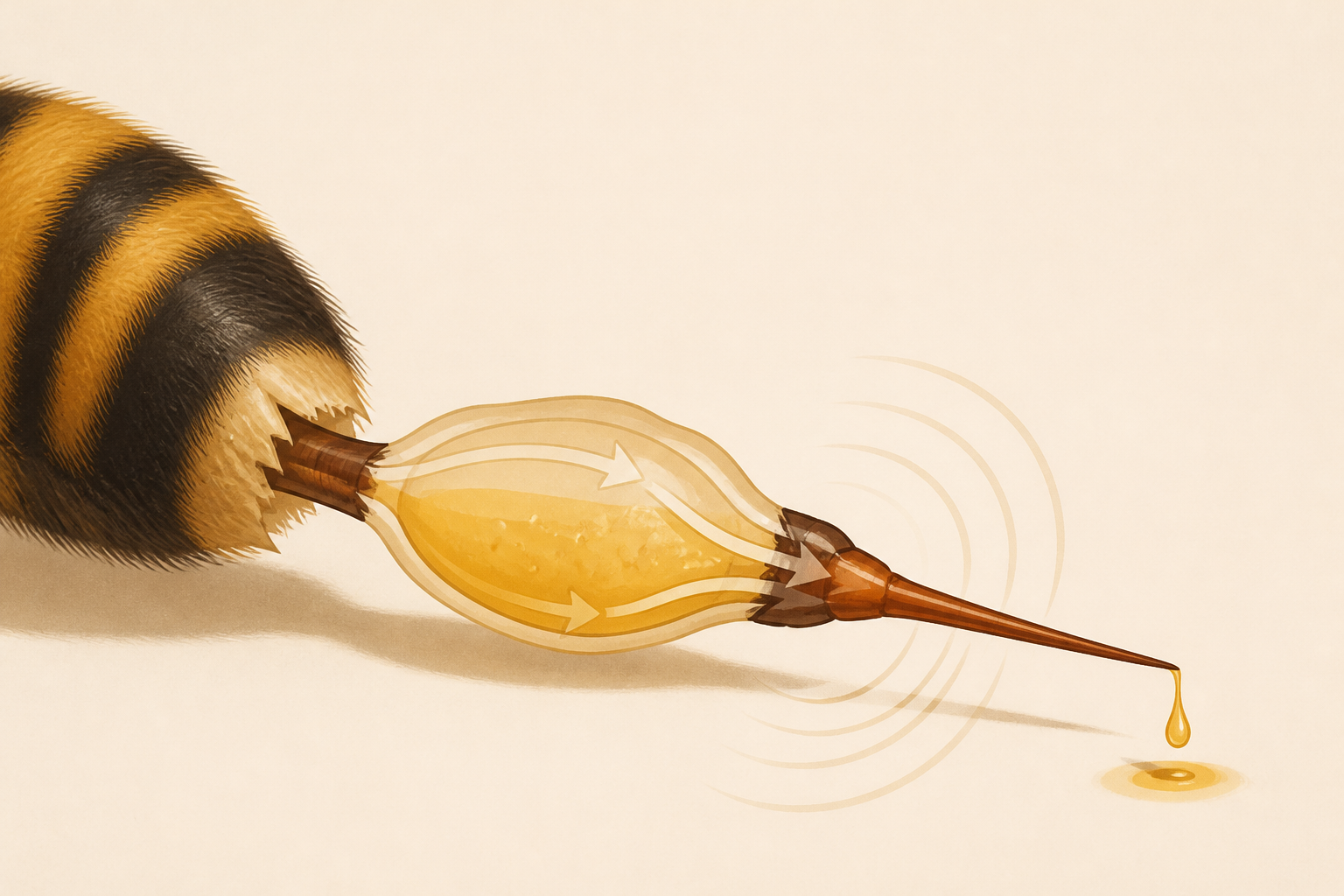
- Australian scientists have discovered that the honey bee's stinger functions as a sophisticated double-piston micropump, allowing it to autonomously continue injecting venom even after detaching from the bee's body.
- Using high-speed video and clear gel mimicking human skin, researchers observed the stinger's lancets moving in a reciprocating saw-like motion, with attached valves dynamically changing shape to pump venom efficiently while preventing backflow.
- The valves act as collapsible pistons that inflate and deflate during the pumping cycle, enabling continuous venom flow by maintaining a seal and pushing past each other in a unique mechanism.
- A 3D-printed scaled-up model of the stinger's pumping chamber and lancets validated the mechanical principles of the double-piston design, highlighting its complexity and effectiveness as an autonomous venom delivery system.
- The study suggests that the honey bee stinger's design could inspire the development of advanced micropumps for minimally invasive medical procedures and microfluidic technologies.


