AI Image
High-speed video reveals how honey bee stingers pump venom
Ars Technica • • world
Key Points:
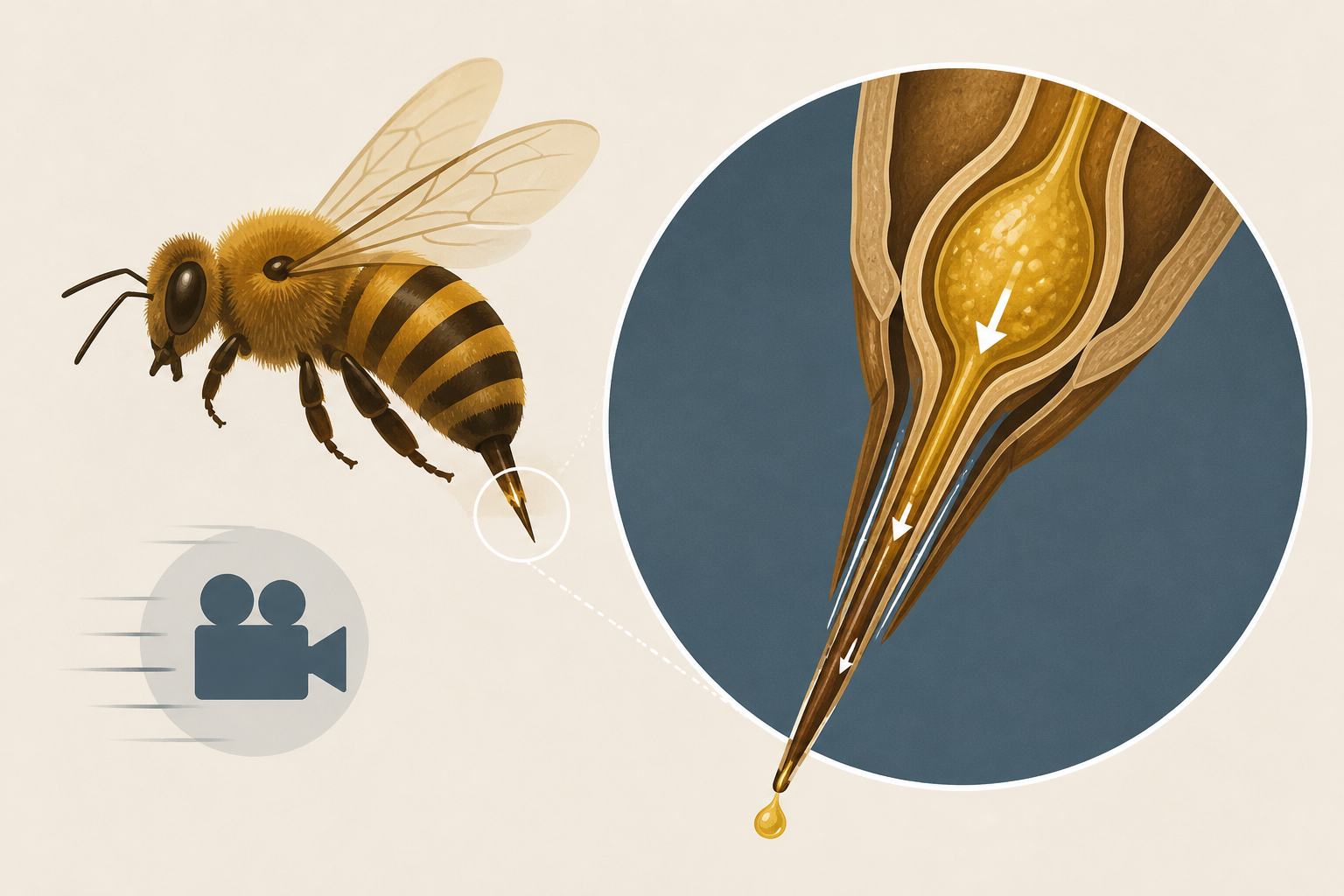
- Scientists have discovered that honey bee stingers continue to pump venom autonomously after detaching from the bee, using a unique double-piston pump mechanism involving two lancet valves that slide and change shape to deliver continuous venom flow.
- High-speed videography and stereomicroscopy revealed that the lancet valves inflate and deflate in opposition, creating a seal and piston-like action that minimizes venom backflow and maintains pumping efficiency within the venom chamber.
- The research team validated their findings by creating a 3D-printed scaled model of the stinger, which replicated the observed pumping kinematics, highlighting the importance of valve elasticity and low friction in the mechanism.
- Future studies aim to explore the material properties of the valves and the potential role of capillary action in venom delivery, which could further inform the design of bio-inspired microfluidic and medical devices.
- This work builds on prior research using bee stinger structures as models for microneedles and tissue transport systems, with potential applications in artificial pumps and microfluidic technologies.


