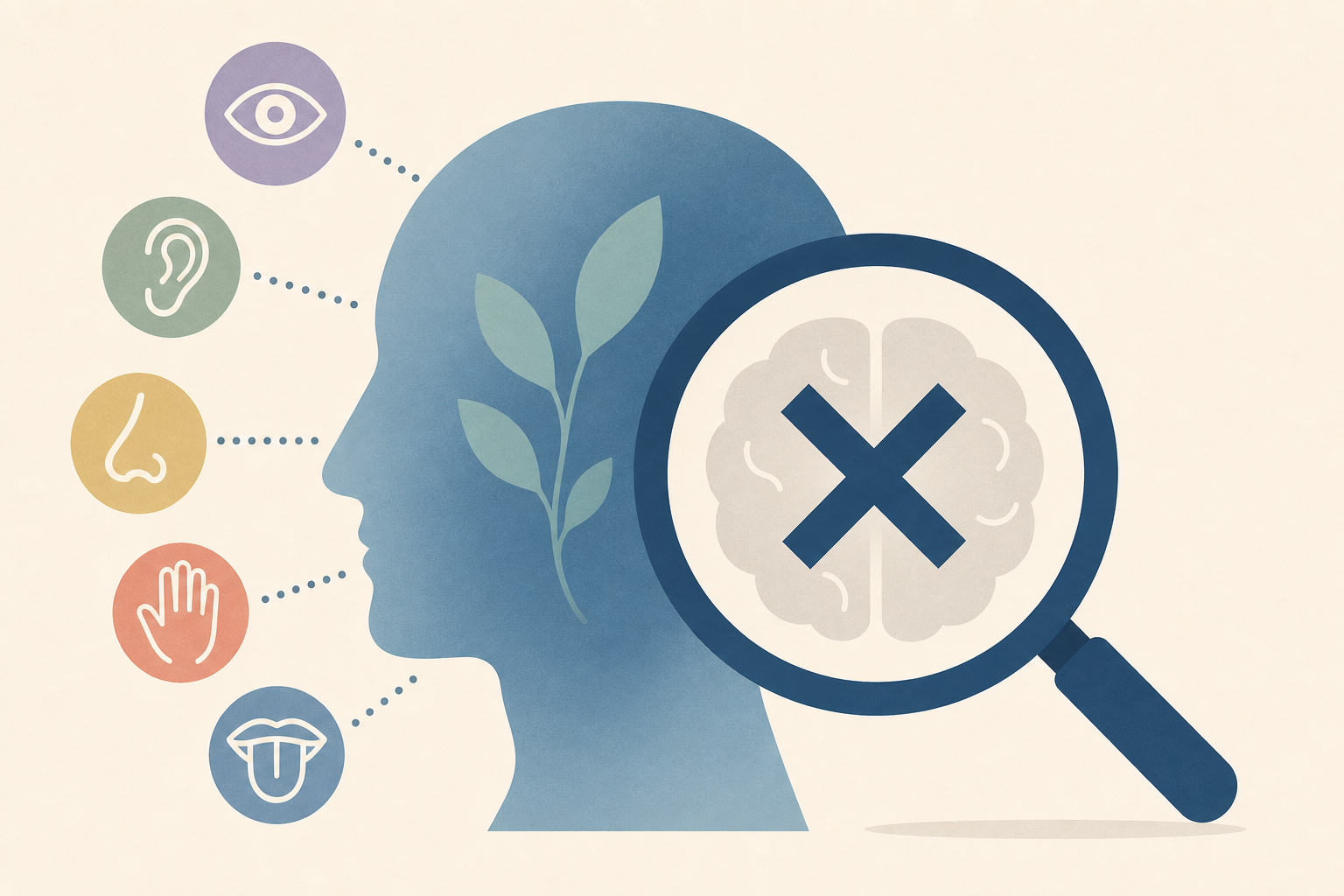
AI Generated Image
Highly sensitive people don't actually have sharper senses, study finds
PsyPost • • health
Key Points:
- New research published in the Journal of Research in Personality finds that people who identify as highly sensitive do not have objectively sharper senses such as hearing, vision, or smell, but rather differ in how they experience and interpret sensory information.
- The study involved 150 young adult women who completed questionnaires on sensory processing sensitivity (SPS) and underwent laboratory tests measuring detection and pain thresholds across multiple sensory modalities, revealing no consistent differences in sensory acuity related to SPS scores.
- Participants with higher SPS scores reported greater subjective sensitivity, especially to pain, but this association weakened significantly after controlling for personality traits like neuroticism and extraversion, suggesting that self-reported sensitivity may reflect emotional tendencies rather than heightened sensory ability.
- The authors conclude that SPS is characterized more by subjective sensory experiences and evaluations than by enhanced sensory detection, challenging the common assumption that highly sensitive individuals possess superior sensory organs.
- Limitations of the study include its exclusive focus on young women, the use of basic sensory threshold tests that may not represent real-life complexity, and the cross-sectional design that does not assess changes in sensitivity over time.


