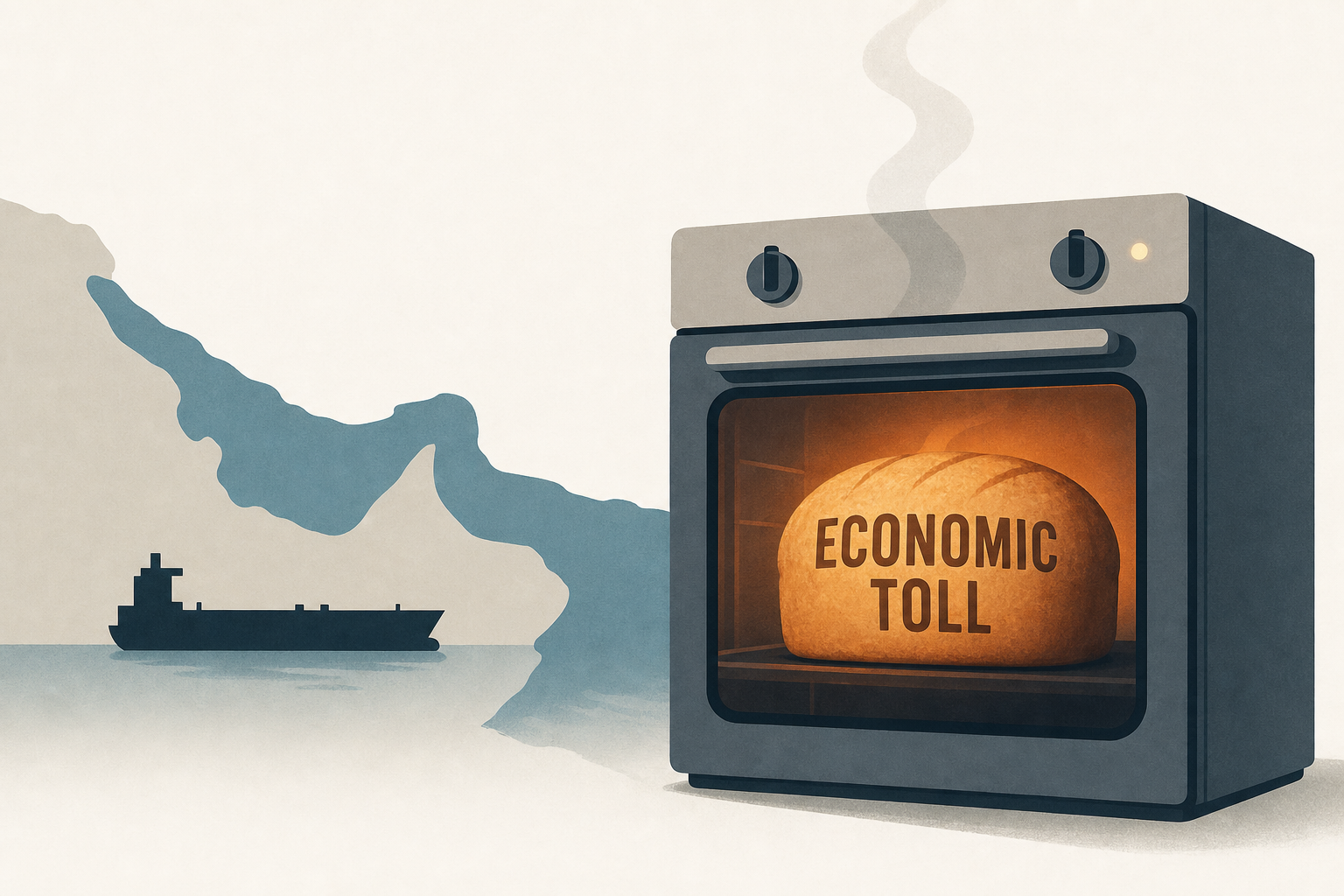
AI Generated Image
Hormuz relief may not ease the economic toll that's already 'baked in,' analysts warn
CNBC • • general
Key Points:
- The U.S. and Iran signed a memorandum to reopen the Strait of Hormuz, easing the immediate threat to global energy supplies after nearly four months of conflict that disrupted supply chains and increased inflation.
- Despite the reopening, analysts warn that economic damages, including elevated inflation and supply chain disruptions, will take months to resolve, with energy and food prices expected to remain high.
- Oil prices have fallen from a March peak of $118 per barrel to around $80, with forecasts predicting sustained lower prices due to a faster recovery in Persian Gulf crude flows.
- The World Bank lowered its global growth forecast to 2.5% and expects inflation to rise to 4% this year, driven by ongoing supply disruptions affecting energy, fertilizer, and food markets.
- Central banks, including the European Central Bank and the U.S. Federal Reserve, are responding cautiously, balancing inflation concerns with slower growth, with some signaling potential interest rate hikes despite recent rate holds.


