AI Generated Image
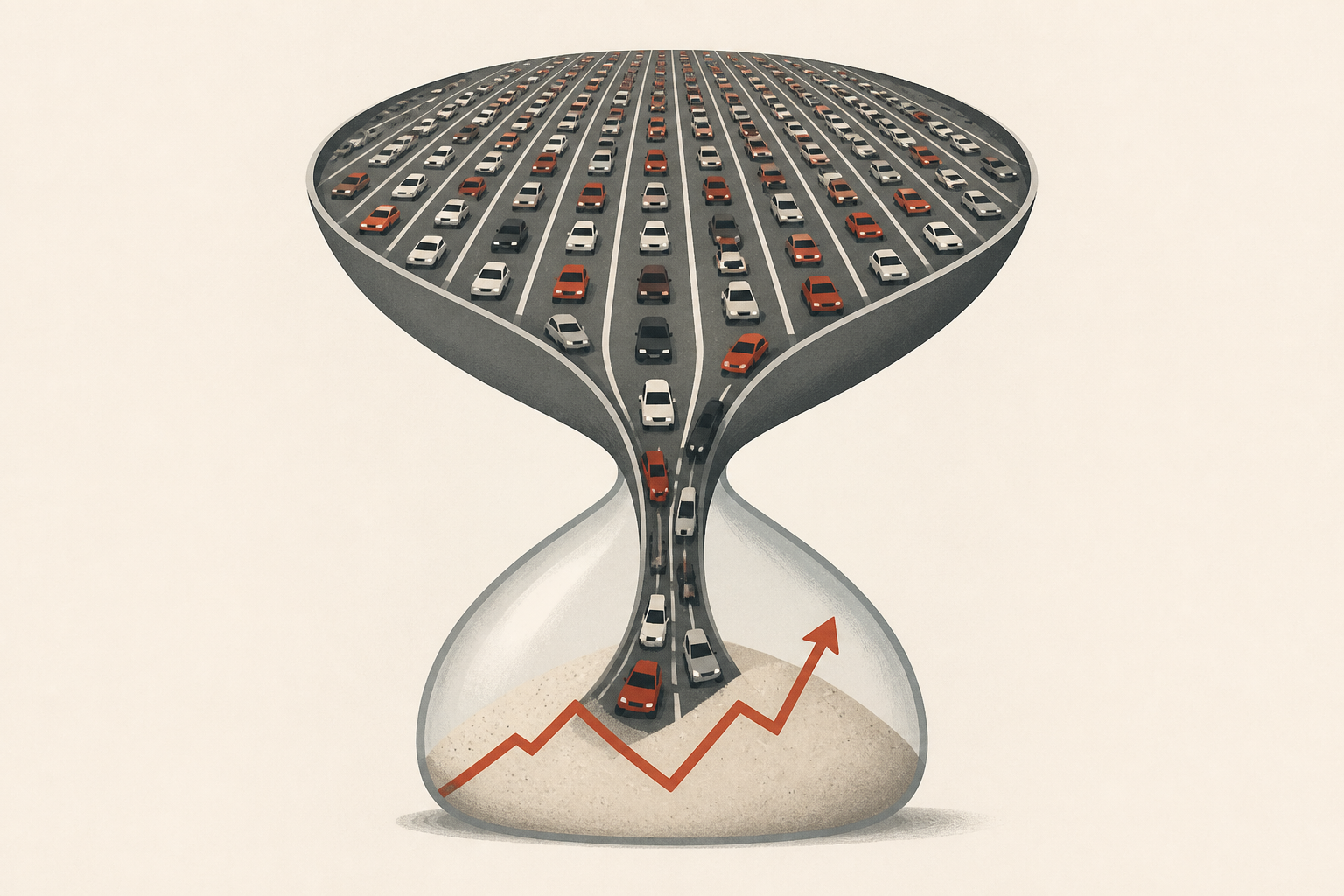
Houston spent nearly 3 billion dollars widening a single freeway to 26 lanes to kill its traffic — and within three years the drive was taking up to 51 per cent longer, proof of a rule planners keep r
Space Daily • • science
Key Points:
- The Katy Freeway in Houston, expanded to 26 lanes at a cost of $2.79 billion between 2003 and 2008, was intended to alleviate severe congestion on Interstate 10 but ended up experiencing increased commute times within a few years due to induced demand.
- Induced demand, where increasing road capacity lowers travel time costs and encourages more driving, has been documented by economists and is considered a fundamental cause of persistent congestion despite highway expansions.
- Although the Katy Freeway now moves more people and includes tolled managed lanes offering reliable trips, the project failed to deliver sustained congestion relief, highlighting the limitations of road widening as a long-term traffic solution.
- Contrastingly, cities like Seoul have demonstrated that reducing road capacity can decrease vehicle traffic and increase public transit use, challenging the assumption that expanding highways is the only way to manage congestion.
- Houston is repeating the costly experiment with a $13 billion expansion of I-45, aiming to reduce congestion despite evidence that such large-scale highway widenings often lead to increased traffic over time.


