AI Generated Image
How a huge fleet of 17 spacecraft discovered something surprising about solar eruptions
Yahoo • • science
Key Points:
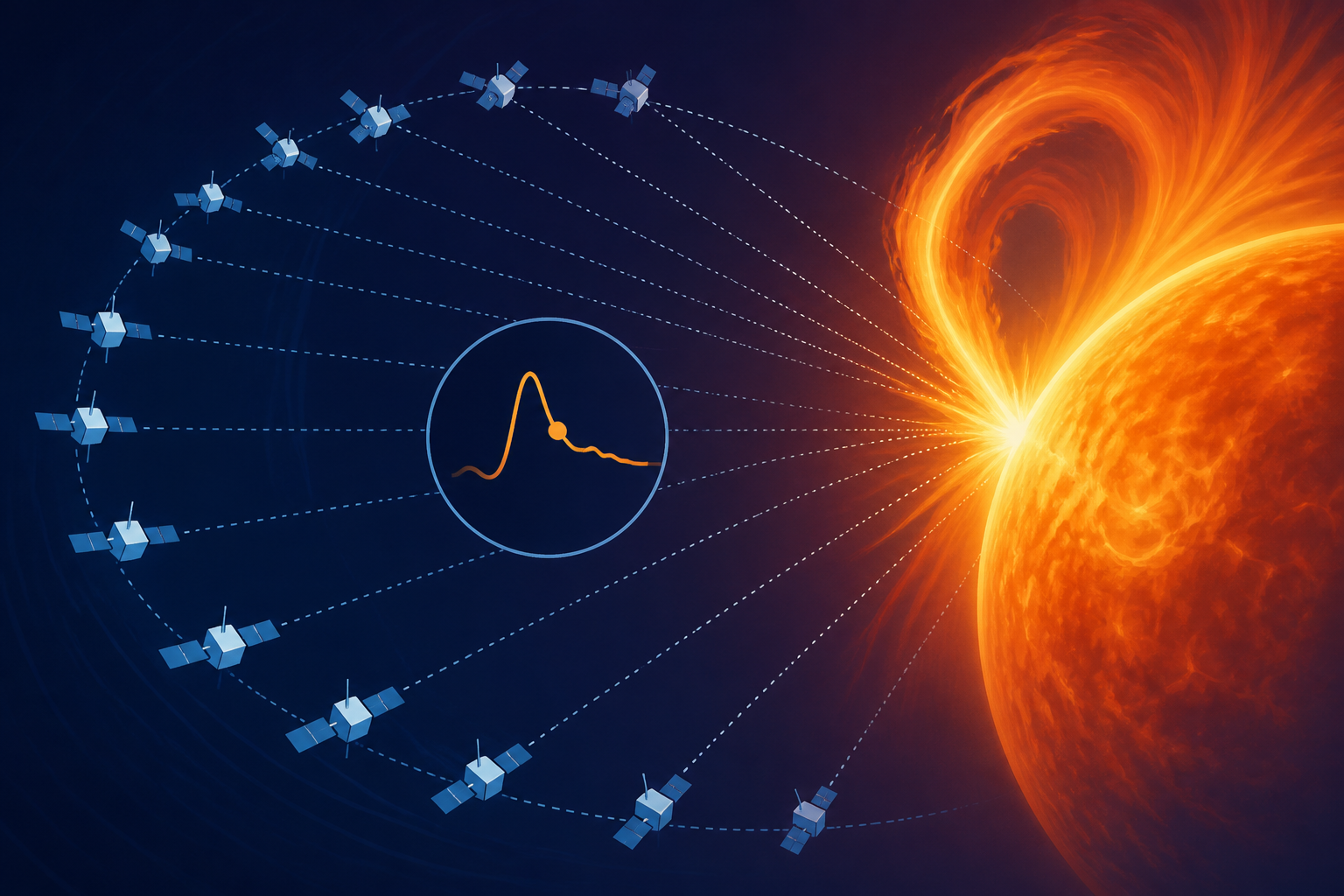
- A coronal mass ejection (CME) on December 15, 2024, was tracked by a record 17 spacecraft spread throughout the solar system, providing an unprecedented multidimensional view of its evolution.
- The CME was found to be asymmetrical, consisting of two lobes moving at different speeds; one fast lobe headed toward Earth and Mars, while a slower, larger lobe moved at an angle, obscuring the faster lobe from some observations.
- This multi-spacecraft tracking revealed that CMEs may not travel as a single unified front but can have complex shapes and velocity profiles, which has important implications for space weather forecasting and astronaut safety.
- The asymmetry of this CME was surprising and remains unexplained, raising questions about how common such asymmetric CMEs are and highlighting the need for broader observational coverage.
- The study underscores the importance of spacecraft positioned away from the Sun–Earth line for early detection and warning of potentially hazardous solar events, especially as human space exploration extends beyond Earth's magnetic protection.


