AI Generated Image
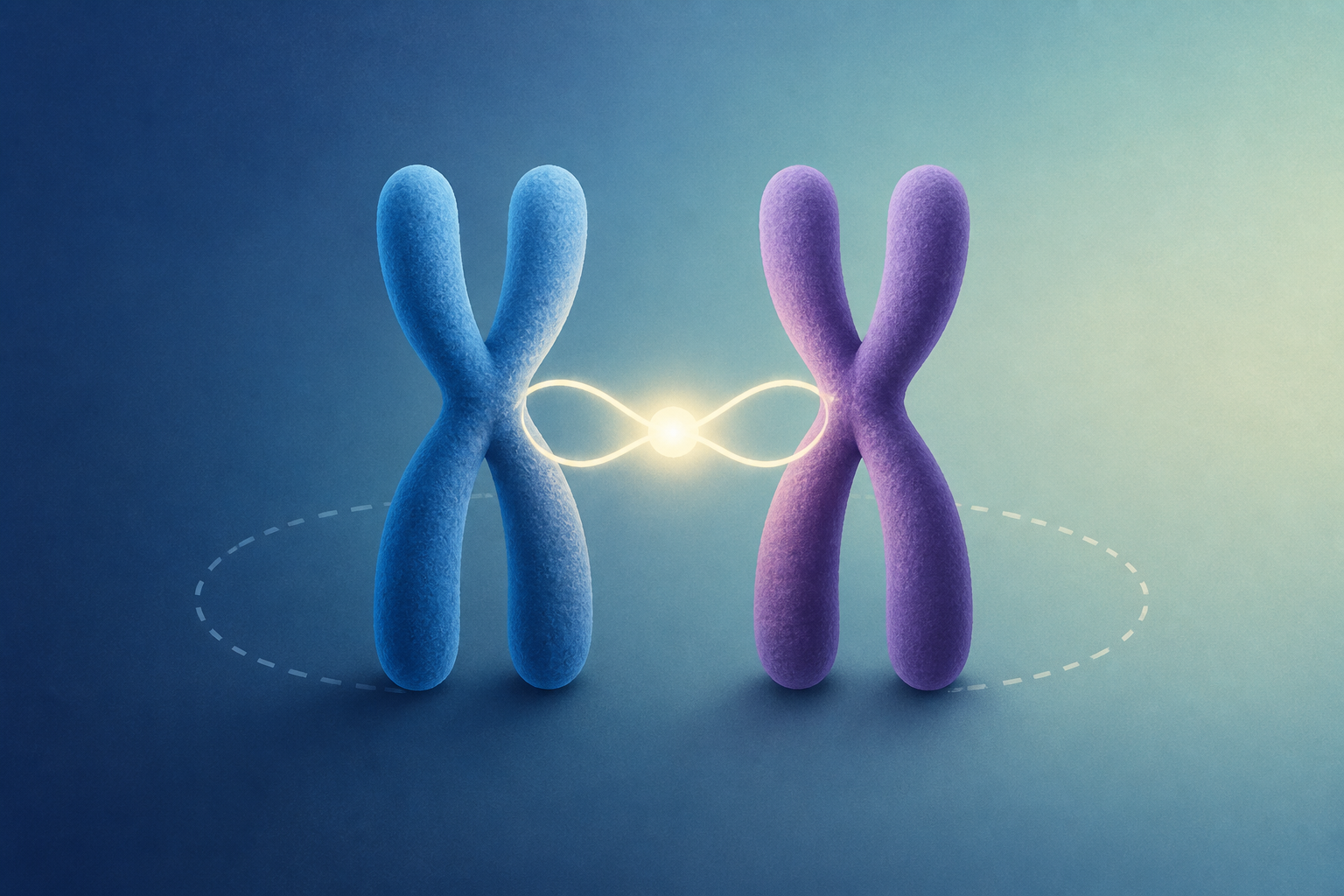
How chromosomes find their partners
Phys.org • • science
Key Points:
- ETH Zurich researchers discovered that satellite DNA, previously considered "junk," acts as a barcode enabling chromosomes to recognize and pair correctly during meiosis in fruit flies.
- The study found that removing satellite DNA barcodes from two chromosomes disrupts their ability to find correct partners, causing pairing errors, while a protein called D1 acts as a molecular glue binding matching chromosomes.
- This mechanism ensures accurate chromosome pairing, critical for halving chromosome sets in germ cells and preventing genetic errors during reproduction.
- The findings challenge the notion of satellite DNA as useless and suggest it plays a vital role in meiosis, with potential implications for understanding chromosome pairing in other species, including humans.
- The research also provides insight into speciation, as changes in satellite DNA barcodes in geographically isolated populations can lead to reproductive isolation and the formation of new species.


