AI Image
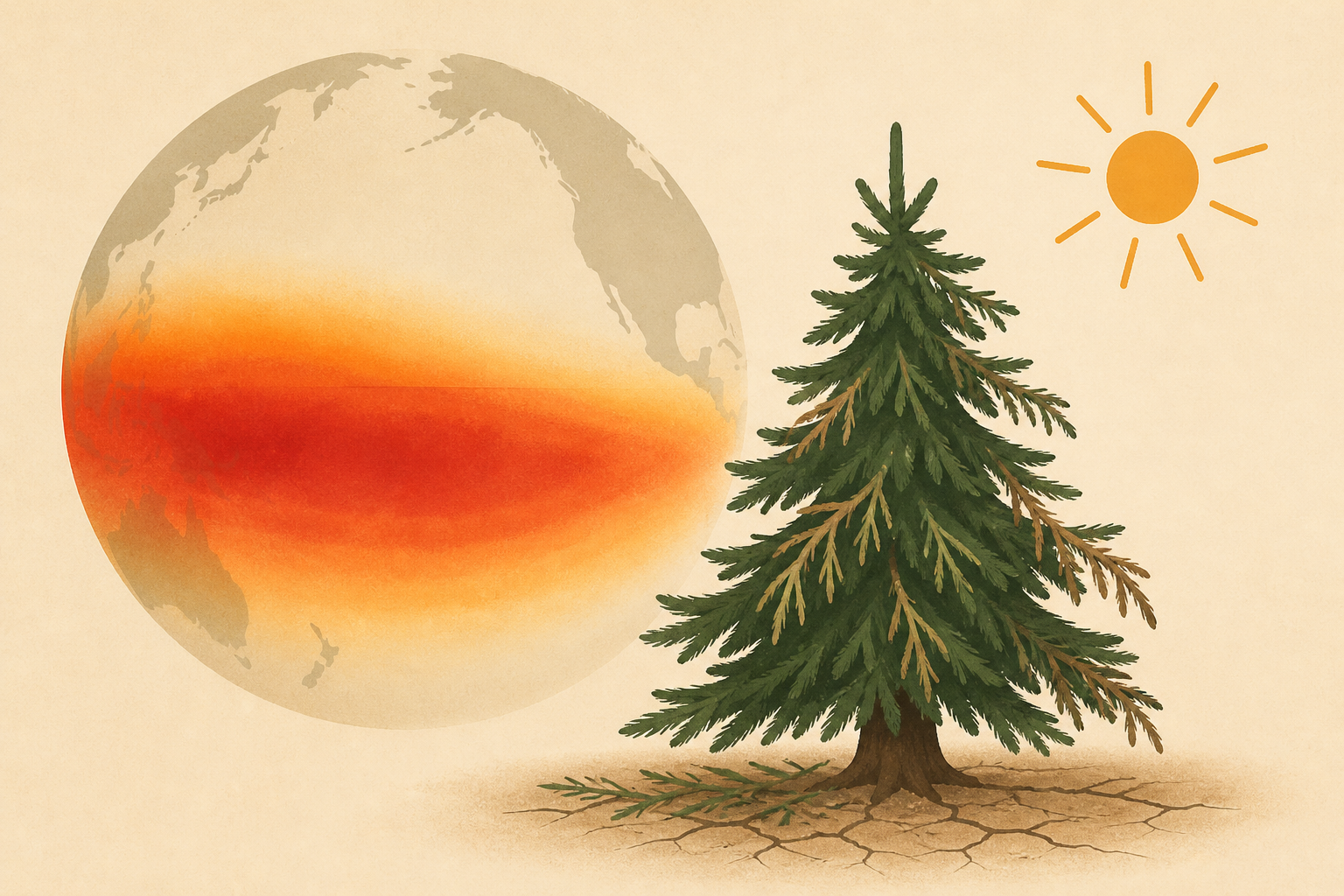
How could Christmas trees suffer during a Super El Niño winter?
FOX Weather • • nation
Key Points:
- The Super El Niño of 2026, forecasted to be one of the strongest ever, may significantly affect Christmas tree harvests due to extreme weather conditions such as drought, flooding, and heat.
- Historically, Super El Niños like those in 1997-98 and 2015-16 caused challenges including warm, dry conditions that hindered tree growth and disrupted harvest and delivery schedules in key production areas like the Pacific Northwest.
- Currently, about 57% of the Pacific Northwest is experiencing drought with warmer-than-average temperatures expected this winter, potentially impacting tree growth and harvest quality for the 2026 Christmas season.
- The Northeast may see a wetter-than-average winter, which could cause excess moisture and root diseases in Christmas tree fields, affecting the 2027 harvest.
- Key Christmas tree producing states include Oregon, Washington, Michigan, Pennsylvania, Wisconsin, and North Carolina, with the Pacific Northwest responsible for about one-third of U.S. real Christmas trees.


