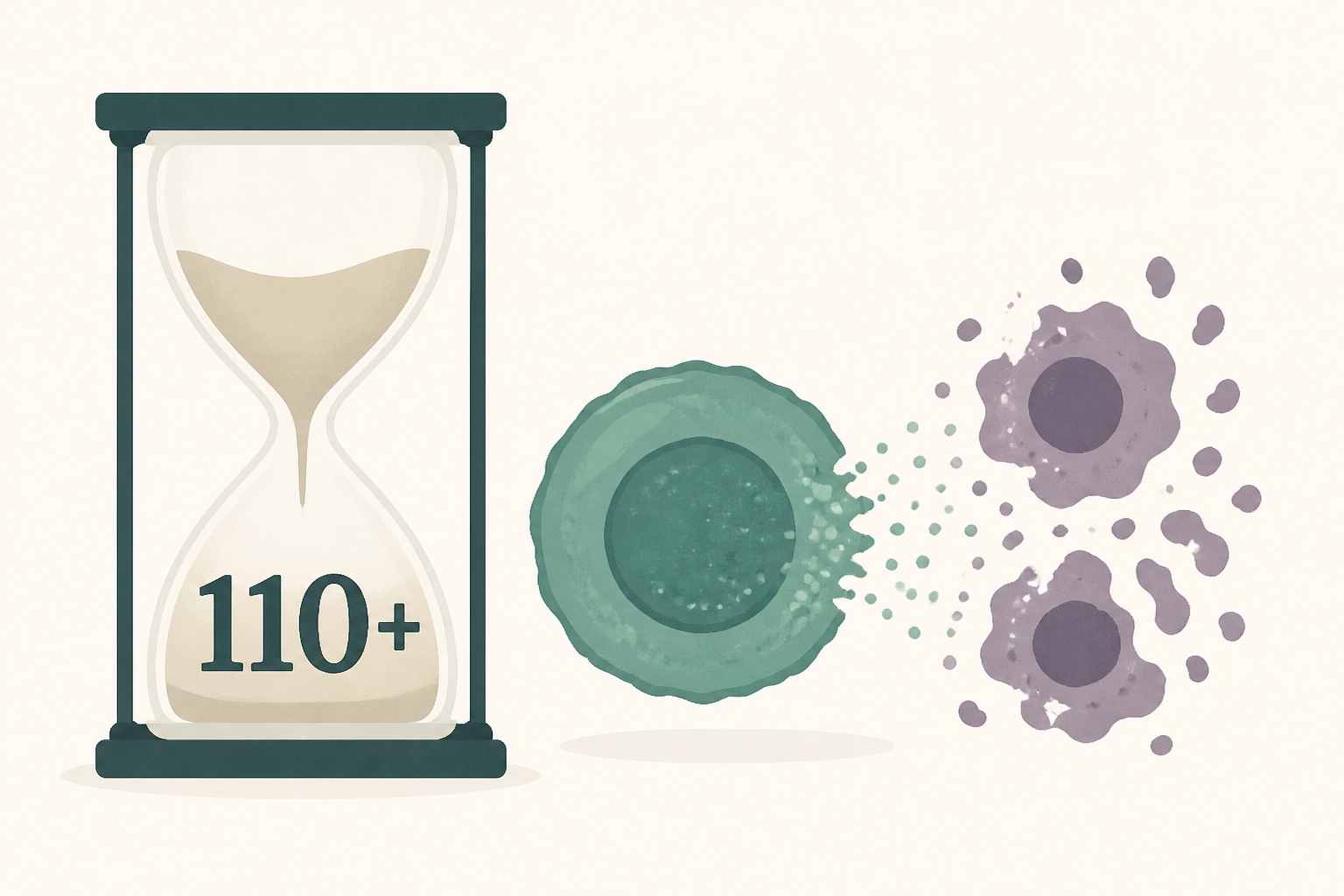
AI Generated Image
How do people live beyond 110? Abundance of cancer-killing cells might be key
Nature • • general
Key Points:
- A study published in Cell Reports found that supercentenarians (aged 110 and older) have large populations of rare killer T cells, which may help them live longer by potentially fighting cancer, though this has not been definitively proven.
- These rare CD4 cytotoxic T lymphocytes (CD4 CTLs), which typically make up less than 5% of T cells, were found in higher proportions—around 10% in centenarians and 18% in supercentenarians—suggesting an adaptive immune response that begins around age 100.
- The study observed that many CD4 CTLs in these individuals were clonal, indicating active immune responses to persistent threats, with receptor sequences matching those found in cancer patients, despite none of the participants having a history of cancer.
- Researchers highlight that the immune system of supercentenarians may selectively adapt even at extreme old age, potentially contributing to their resistance against diseases like cancer, heart disease, and dementia.
- The study involved 28 participants from Japan, including younger elderly individuals, centenarians, and supercentenarians, but the precise role and tissue targets of these killer T cells remain unclear.


