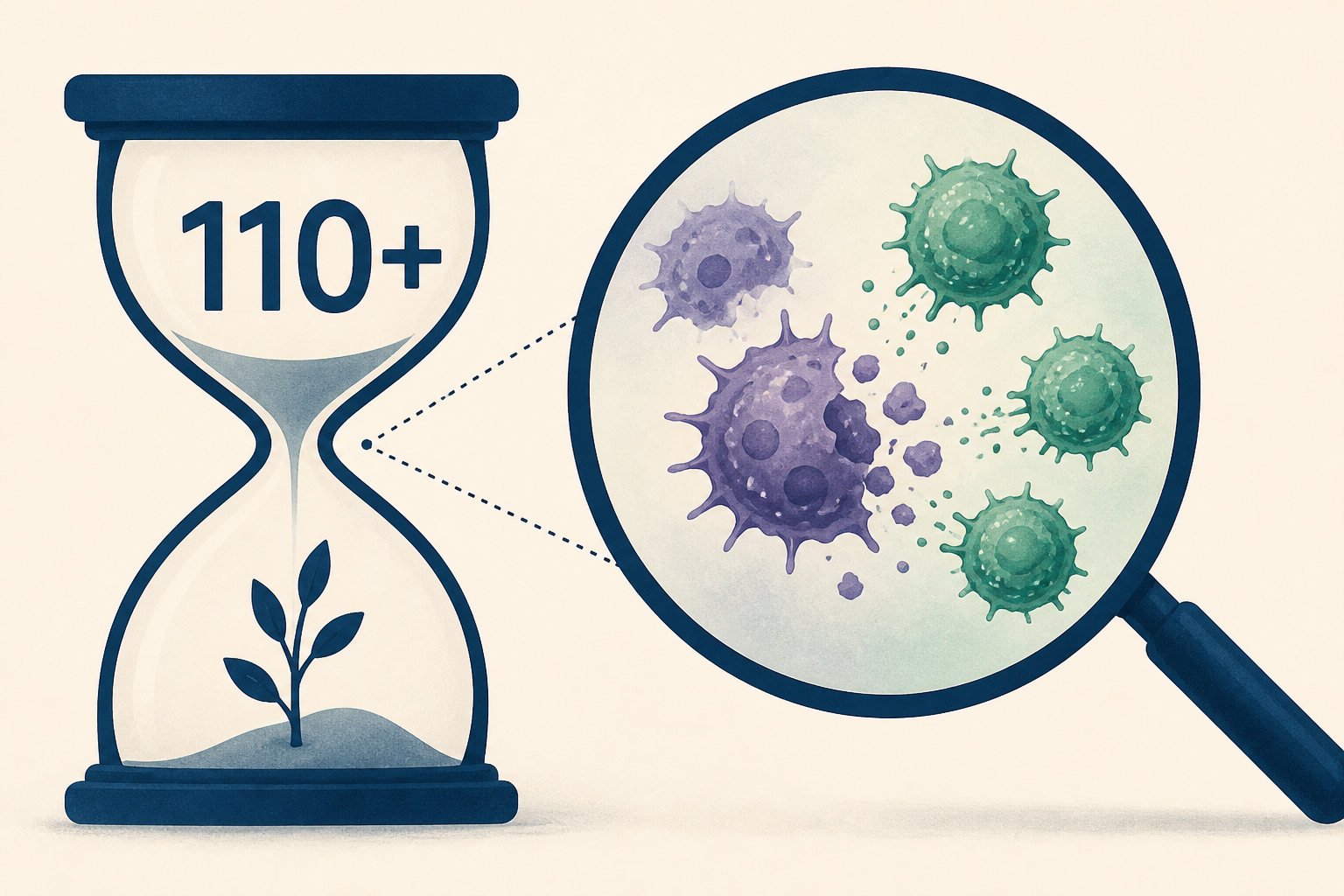
AI Generated Image
How do people live beyond 110? Abundance of cancer-killing cells might be key
nature.com • • health
Key Points:
- A study published in Cell Reports found that supercentenarians (aged 110 and older) have large populations of rare killer T cells (CD4 cytotoxic T lymphocytes) that may help fight cancer and contribute to their extraordinary longevity.
- These killer T cells, which typically make up less than 5% of T cells in younger individuals, were found in much higher proportions in centenarians (around 10%) and supercentenarians (around 18%), suggesting an immune adaptation beginning around age 100.
- The study observed that these T cells often belong to large clonal lines, indicating a targeted immune response to persistent threats, with many receptors matching those found in people with cancer, despite none of the participants having had cancer.
- Researchers note that while these findings suggest a link between killer T cells and longevity, the exact role of these cells in preventing diseases like cancer remains unproven and requires further investigation.
- The study highlights that even at extreme old age, the immune system may selectively adapt rather than simply decline, offering potential insights into promoting healthy aging for the broader population.


