AI Generated Image
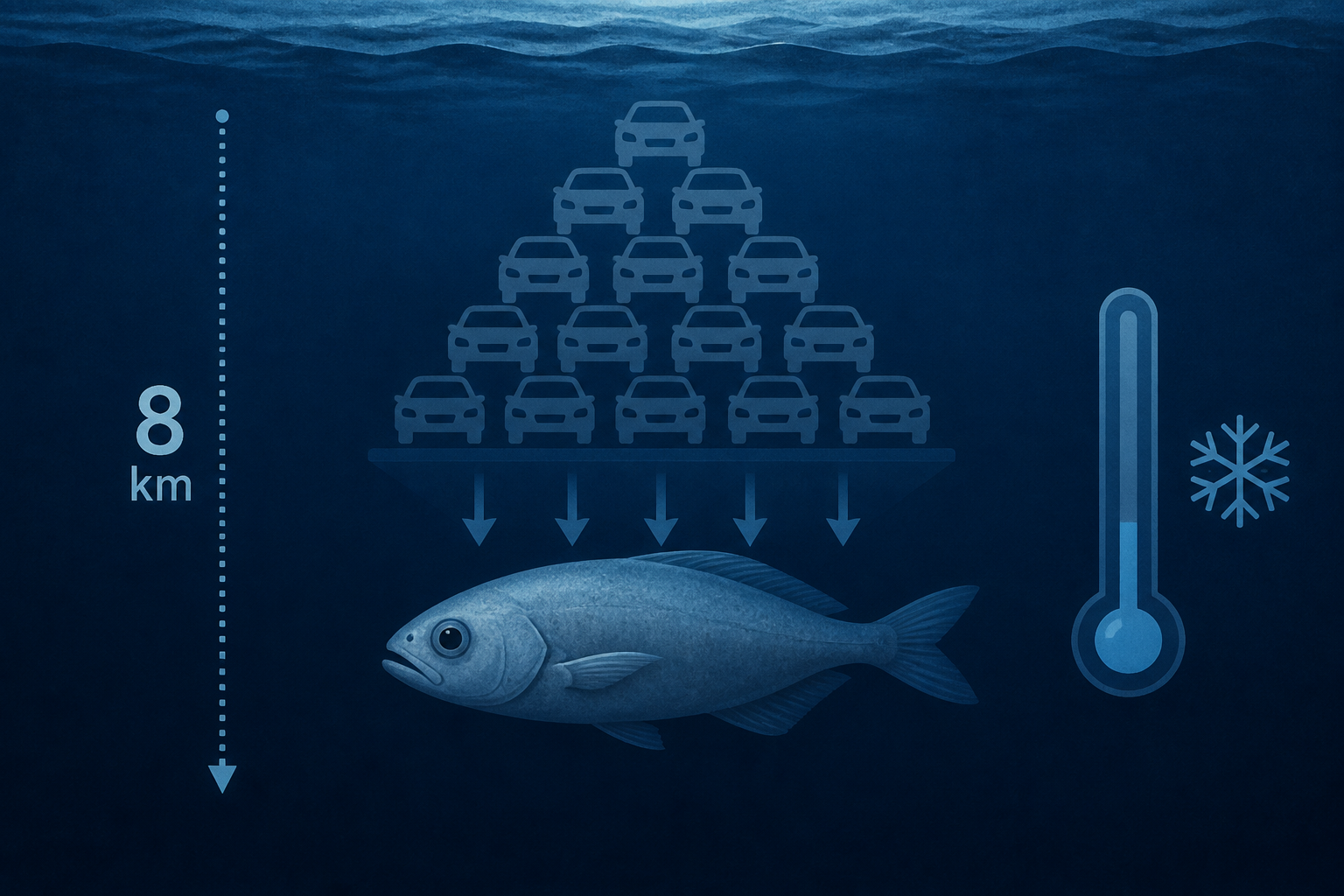
How does a fish live eight kilometres beneath the surface, under pressure equal to a thousand cars stacked on its back, in water so cold and so heavy that the proteins in its body should long since ha
Space Daily • • health
Key Points:
- In August 2022, a juvenile snailfish was recorded at 8,336 meters in the Izu-Ogasawara Trench, marking the deepest confirmed video of a fish, with two others caught at 8,022 meters in the Japan Trench, the first fish physically recovered from beyond eight kilometers depth.
- These hadal snailfish survive extreme pressures (about 840 times atmospheric pressure) not by resisting compression like a submarine, but by having water-rich tissues at equilibrium with surrounding pressure, lacking gas-filled swim bladders, and possessing soft, lightly mineralized skeletons.
- At the molecular level, the fish rely on adaptations such as the accumulation of trimethylamine N-oxide (TMAO), which stabilizes proteins under pressure, and modifications to enzymes and cell membranes to maintain function in cold, high-pressure environments.
- However, TMAO concentration also sets a physiological depth limit because increasing it to counter pressure raises tissue osmolality close to seawater, complicating water balance and possibly explaining why fish are not found beyond about 8,200 meters despite invertebrates thriving deeper.
- The snailfish’s adaptations illustrate how life can persist under extreme physical and chemical conditions by altering internal chemistry, providing insights into the biochemical challenges that would face any complex life in high-pressure extraterrestrial oceans like Europa’s.


