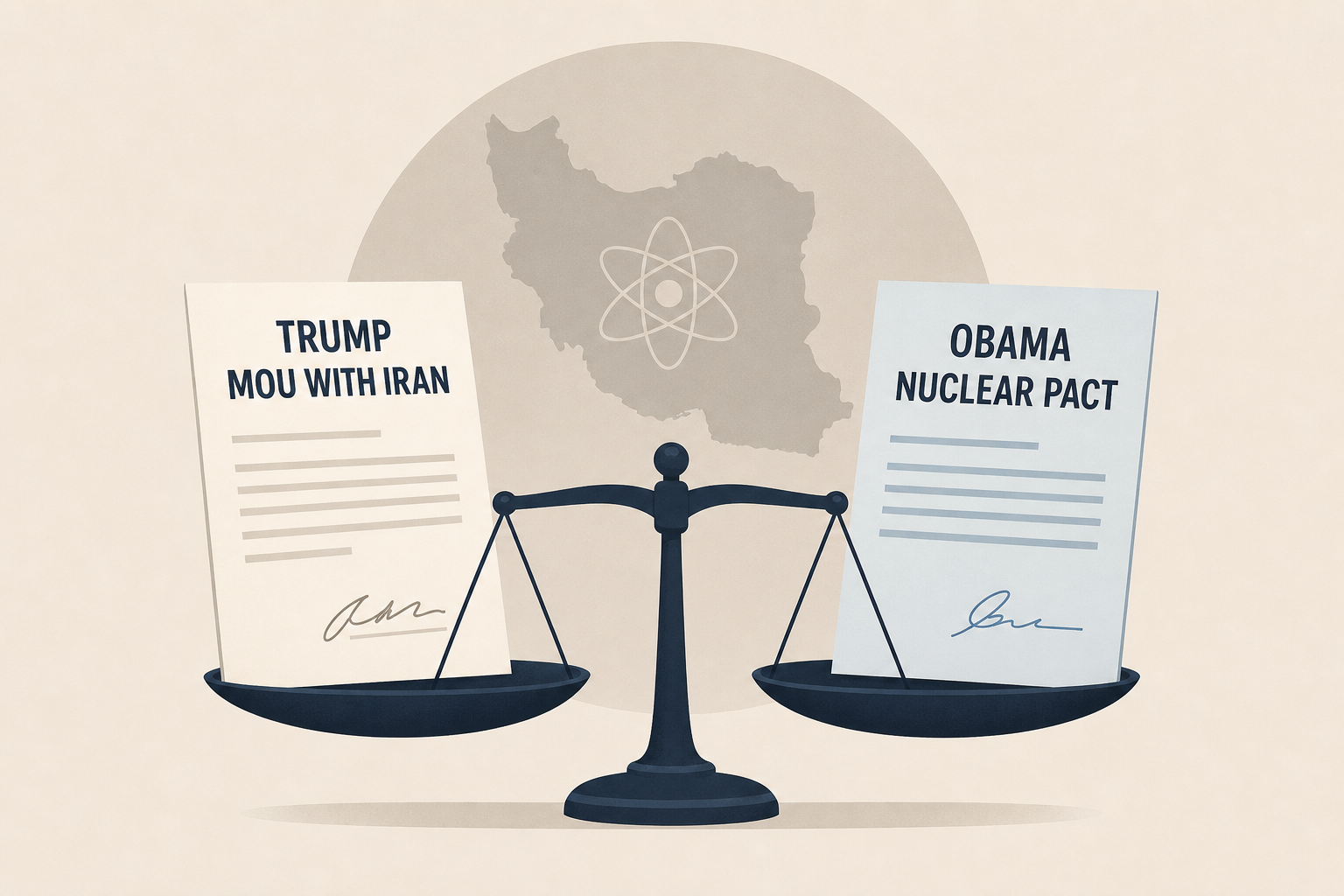
AI Generated Image
How does Trump’s MOU with Iran compare with Obama’s nuclear pact?
Al Jazeera • • nation
Key Points:
- A 14-point memorandum of understanding (MOU) was electronically signed near Paris, aiming to end the US-Iran war by having Iran refrain from developing nuclear weapons in exchange for sanctions relief, a $300 billion reconstruction plan, and reopening the Strait of Hormuz.
- The MOU triggers a 60-day negotiation period but lacks detailed provisions on Iran’s nuclear program, unlike the 2015 JCPOA, and experts caution it mainly extends the ceasefire without addressing substantive nuclear issues or regional military concerns.
- The US commits to lifting all sanctions and enabling a large reconstruction fund for Iran, which could improve regional integration, though some analysts view the unfreezing of Iranian assets as largely symbolic due to jurisdictional limits.
- The agreement includes lifting the US naval blockade of Iranian ports within 30 days and initiating talks between Iran and Oman on managing the Strait of Hormuz, a critical global energy chokepoint that Iran had closed during the conflict.
- The MOU calls for an immediate end to military operations on all fronts, including Lebanon, but does not address Iranian-backed proxies explicitly, drawing criticism that it offers concessions to Iran without resolving broader regional security issues.


