AI Image
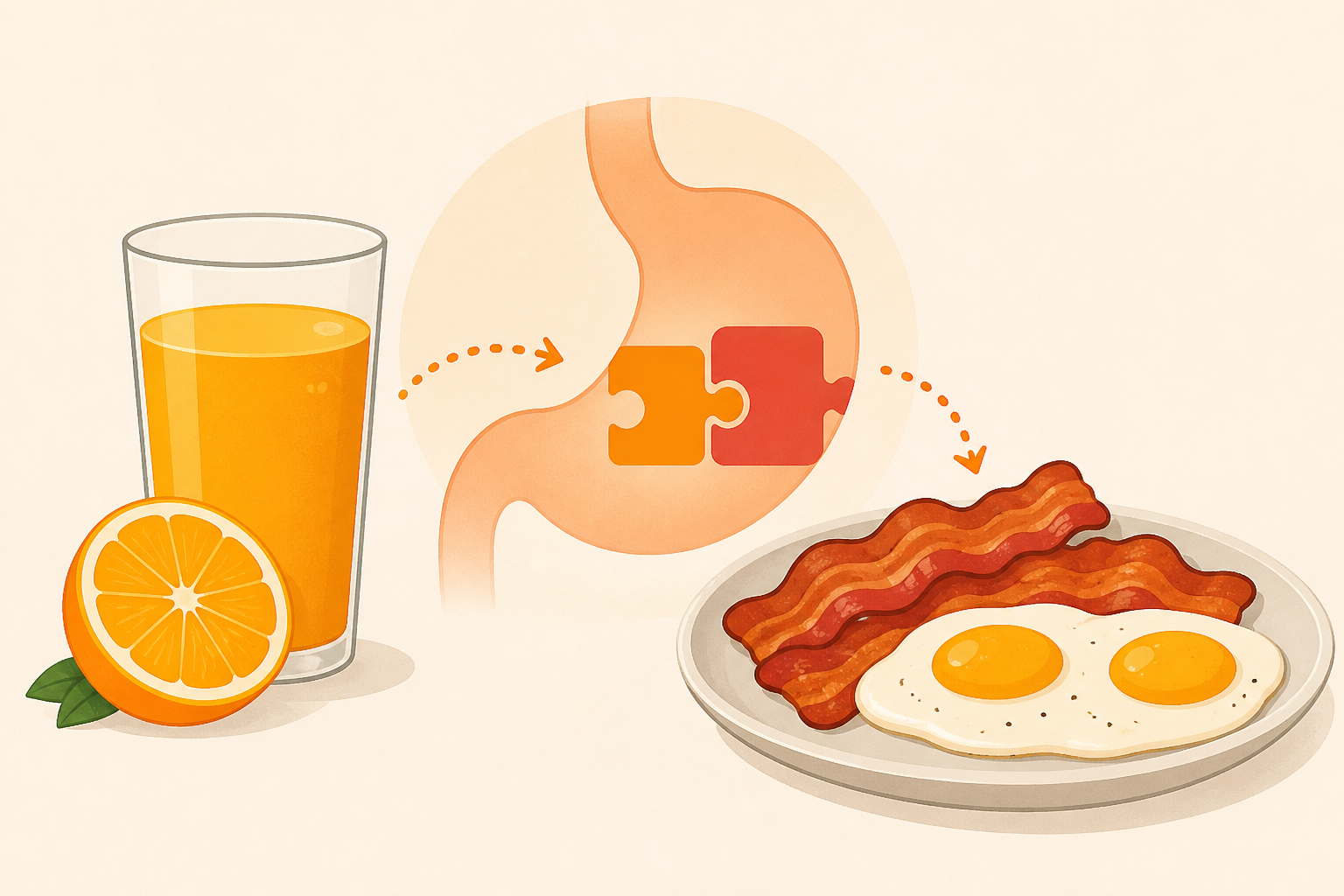
How Morning Orange Juice Could Interact With Your Bacon and Eggs
AOL.com • • health
Key Points:
- University of Waterloo researchers used mathematical modeling to show that vitamin C may inhibit harmful chemical reactions, specifically nitrosation, triggered during digestion of nitrate- and nitrite-containing foods like processed meats.
- The study suggests that vitamin C intake and meal timing could influence the formation of potentially cancer-linked compounds, providing a possible explanation for inconsistent past research on cancer risks associated with nitrates and nitrites.
- Models indicate that taking vitamin C supplements after meals might moderately reduce nitrosation products, but this finding is based on simulations rather than clinical trials, so its practical effectiveness remains unproven.
- Researchers emphasize that this work offers a framework for future experimental studies to better understand the interactions between nitrite exposure, antioxidants, meal timing, and digestive conditions.
- Despite these findings, health experts continue to advise limiting processed meat consumption due to its established link to colorectal cancer, and vitamin C should not be seen as a way to negate those risks.


