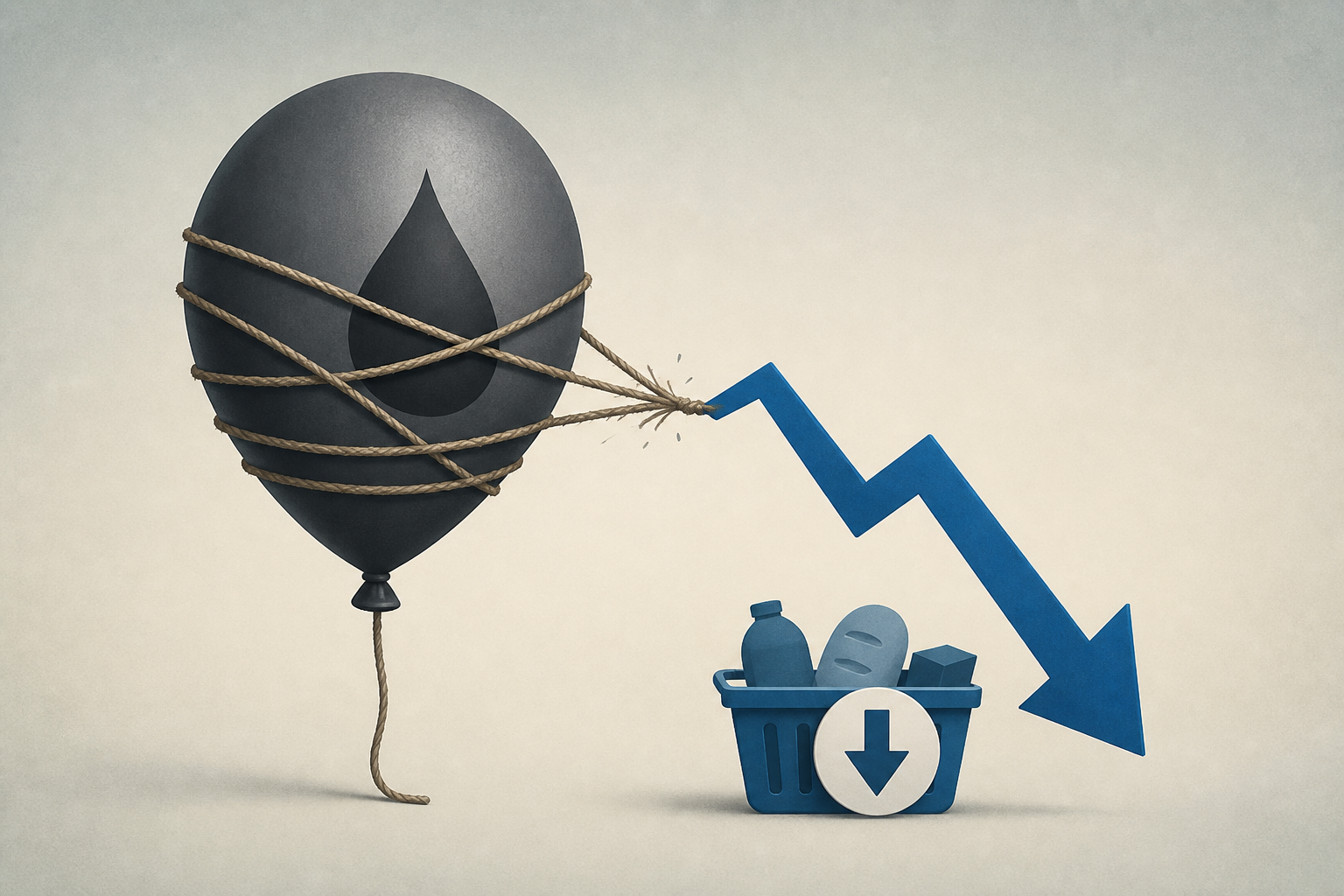
AI Generated Image
How the Iran war could end up causing a burst of deflation
Business Insider • • world
Key Points:
- Marko Papic, chief investment strategist at BCA Research, predicts that by the end of this decade, the U.S. and global economy could experience disinflation or deflation due to over-investment sparked by risks related to the Iran war and the Hormuz Strait crisis.
- Papic suggests that increased capital expenditure (capex) in alternative energy, new transportation corridors, and semiconductor manufacturing could lead to an excess supply capacity, putting downward pressure on prices in the 2030s.
- The shift toward more resilient supply chains, intensified by the pandemic and Russia-Ukraine war, has led to significant government and corporate spending, including $17.5 billion from the U.S. Department of Energy for nuclear supply chains and record AI-related investments from major tech companies.
- While current inflation concerns persist, as reflected by rising bond yields and sticky inflation data like the 3.7% year-over-year rise in July's personal consumption expenditures, Papic warns that excess capacity from over-investment may cause price declines and deflationary pressures in the long term.
- Deflation poses risks distinct from inflation, as it can signal economic stagnation and limits monetary policy effectiveness, exemplified by Japan's prolonged deflationary period since the 1990s.


