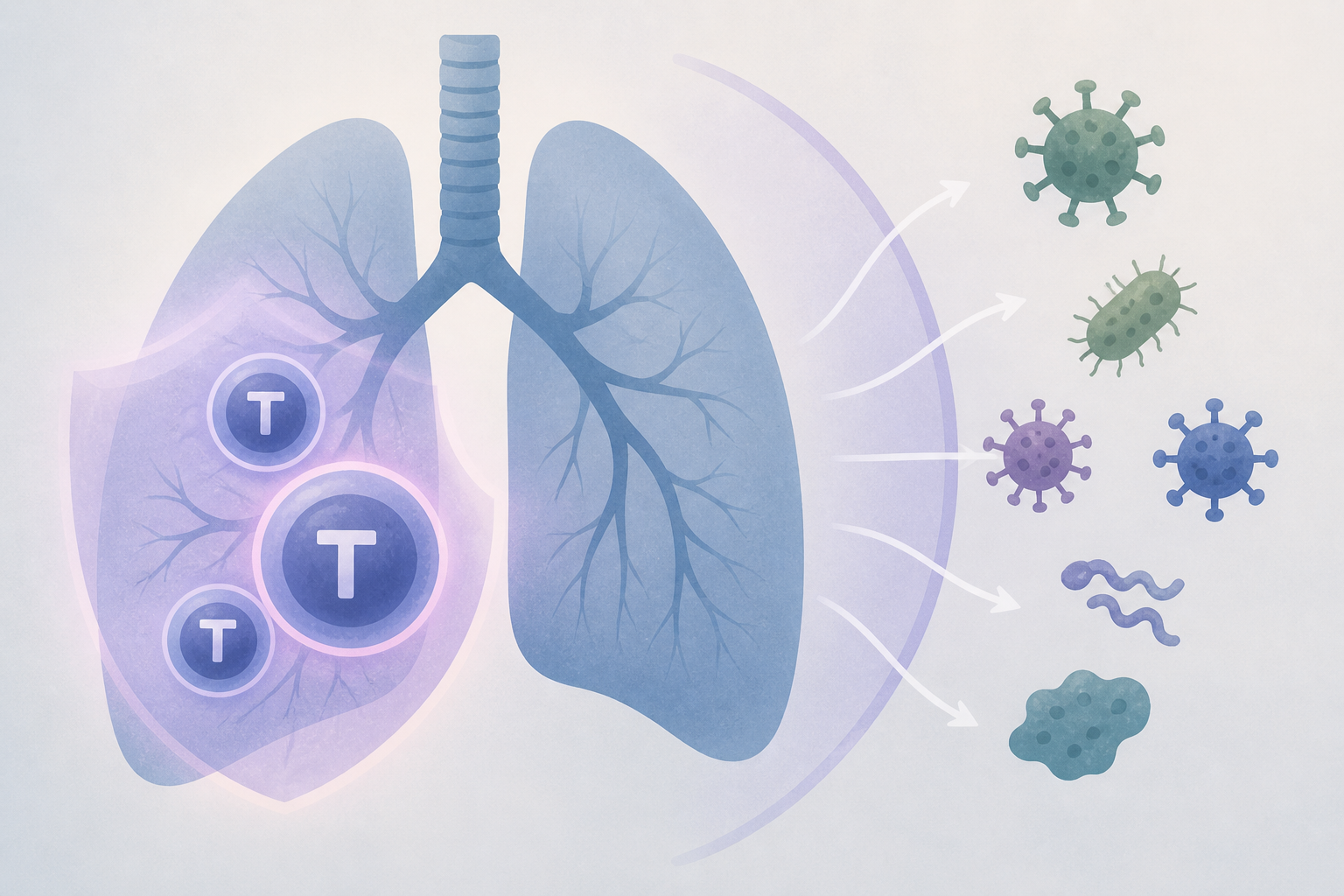
AI Generated Image
Human lungs maintain tissue-resident memory T cells against a broad spectrum of pathogens
Nature • • health
Key Points:
- The study demonstrates that the human lung serves as a long-term reservoir for pathogen-specific tissue-resident memory T (TRM) cells, which exhibit high clonal expansion and persistence over months to years, contrasting with mouse models where lung TRM cells wane.
- Anatomical differences between human and mouse lungs, such as more bronchial/bronchiolar divisions in humans and localization of TRM cells in nongas-exchange compartments, may explain the higher density and persistence of lung TRM cells in humans without impairing lung function.
- The research highlights complexities in defining lung TRM populations, noting that many lung T cells are recirculating rather than tissue-resident, and that persistent viruses like EBV and CMV contribute substantially to the lung TRM pool, affecting interpretations of immune memory.
- The study employed advanced T cell receptor (TCR) sequencing and integrative computational approaches to assign pathogen specificities to lung T cells, revealing intraindividual heterogeneity and underscoring limitations of previous methods relying on single epitope tetramer staining.
- Using lung tissue from 40 donors undergoing lung cancer surgery, along with matched lymph nodes and blood samples, the research provides a comprehensive resource on lung TRM cell properties and establishes a framework for studying tissue-resident immunity relevant to infection, vaccination, and immune diseases in humans.


