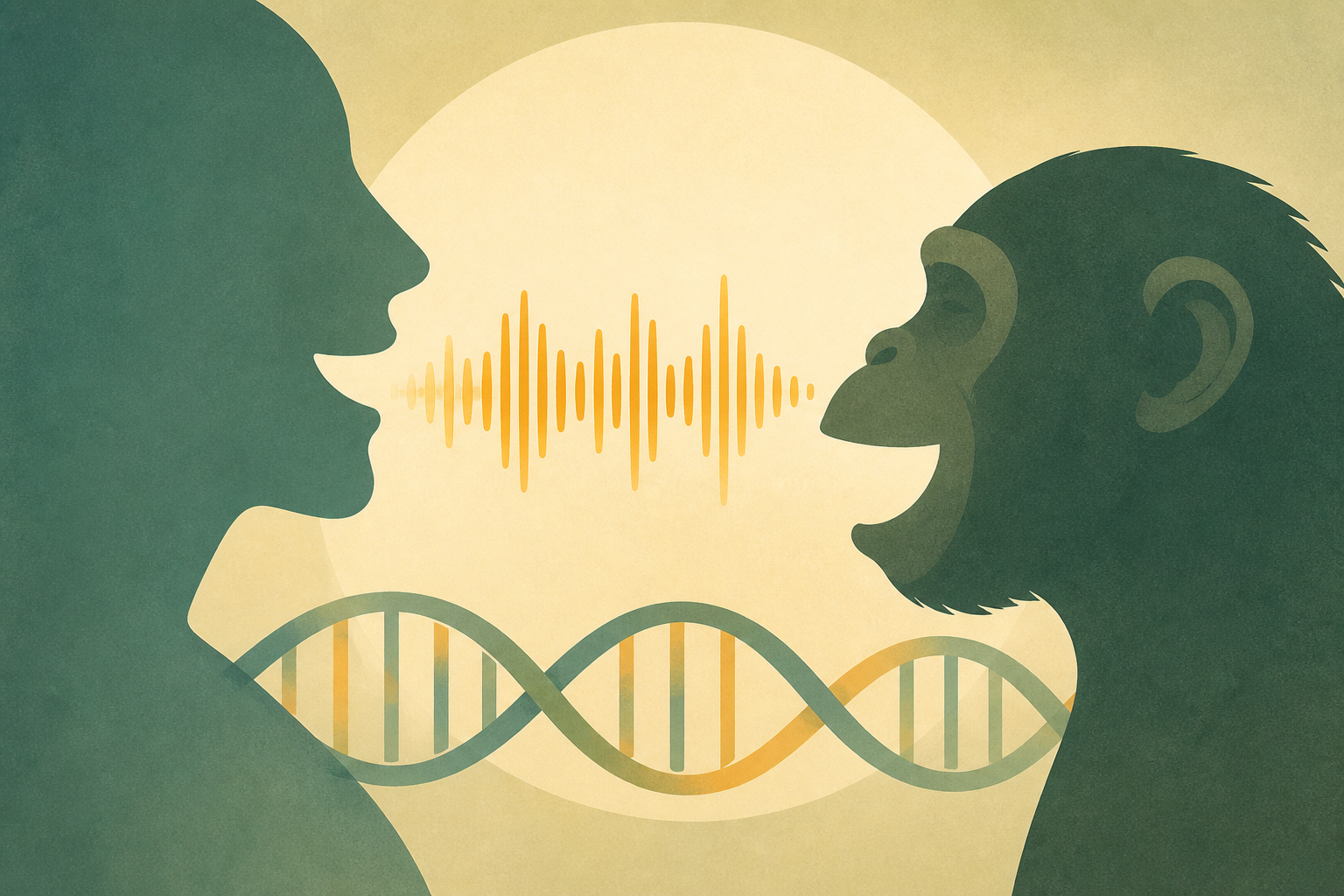
AI Generated Image
Humans and apes laugh in similar ways, study suggests
AP News • • science
Key Points:
- A new study suggests that humans and great apes have shared similar laughter patterns since diverging from a common ancestor around 15 million years ago, based on comparisons of tickling-induced giggles in apes and young children.
- Researchers analyzed decades-old recordings of 13 captive great apes and compared them with new recordings of children’s laughter, finding that both exhibit similar rhythmic timing in their laughs.
- While many animals produce laughter-like sounds, human laughter is more complex and context-dependent, ranging from polite chuckles to hearty guffaws, reflecting advanced social communication.
- Experts note that studying laughter’s evolutionary origins can enhance understanding of human communication and its development, with calls for further research involving other animals like dogs, horses, and cats.
- The findings were published in the journal Communications Biology and highlight laughter as a key aspect of social bonding and communication shared between humans and great apes.


