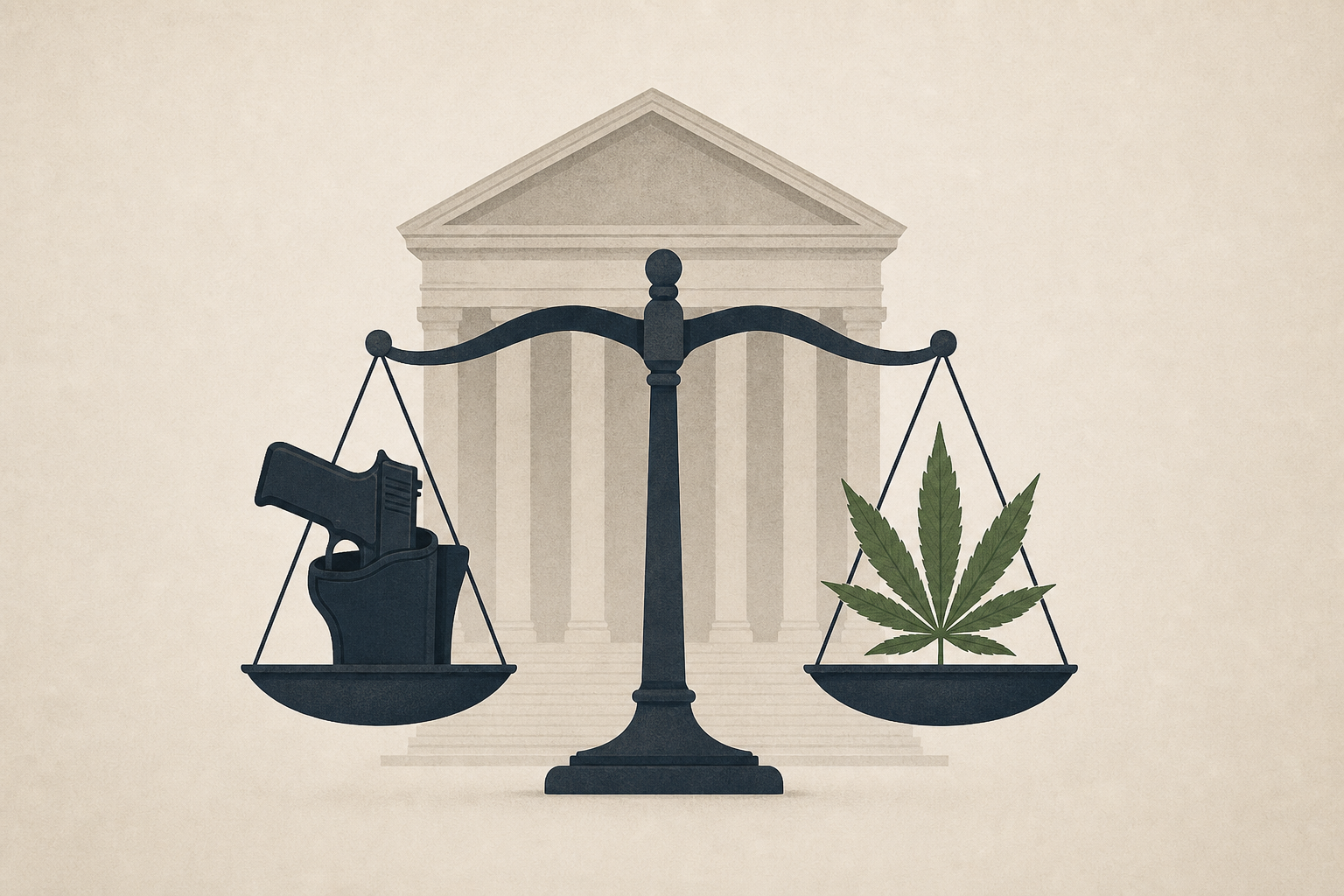
AI Generated Image
In 2 landmark decisions, the Supreme Court expands gun rights for concealed carry holders and casual drug users
The Conversation • • nation
Key Points:
- In June 2026, the Supreme Court issued two key rulings reinforcing broad Second Amendment rights, limiting states' ability to restrict concealed carry and overturning federal bans on gun ownership by drug users.
- In Wolford v. Lopez, the Court blocked Hawaii's law that effectively banned concealed carry by requiring property owners to explicitly allow it, ruling that such restrictions undermine the constitutional right to carry firearms for self-defense.
- In U.S. v. Hemani, the Court unanimously struck down the federal prohibition on gun ownership by users of controlled substances, particularly marijuana, citing the need for firearm regulations to align with historical traditions and noting evolving societal acceptance of cannabis.
- The Court distinguished between historical laws targeting "habitual drunkards" who were incapacitated and modern drug users like Hemani, who used marijuana moderately without evidence of incapacity or danger.
- These rulings signal a judiciary increasingly protective of gun rights, requiring future regulations to have clear historical justification and to focus on groups viewed as less sympathetic, such as domestic abusers, rather than expanding restrictions on marijuana users.


