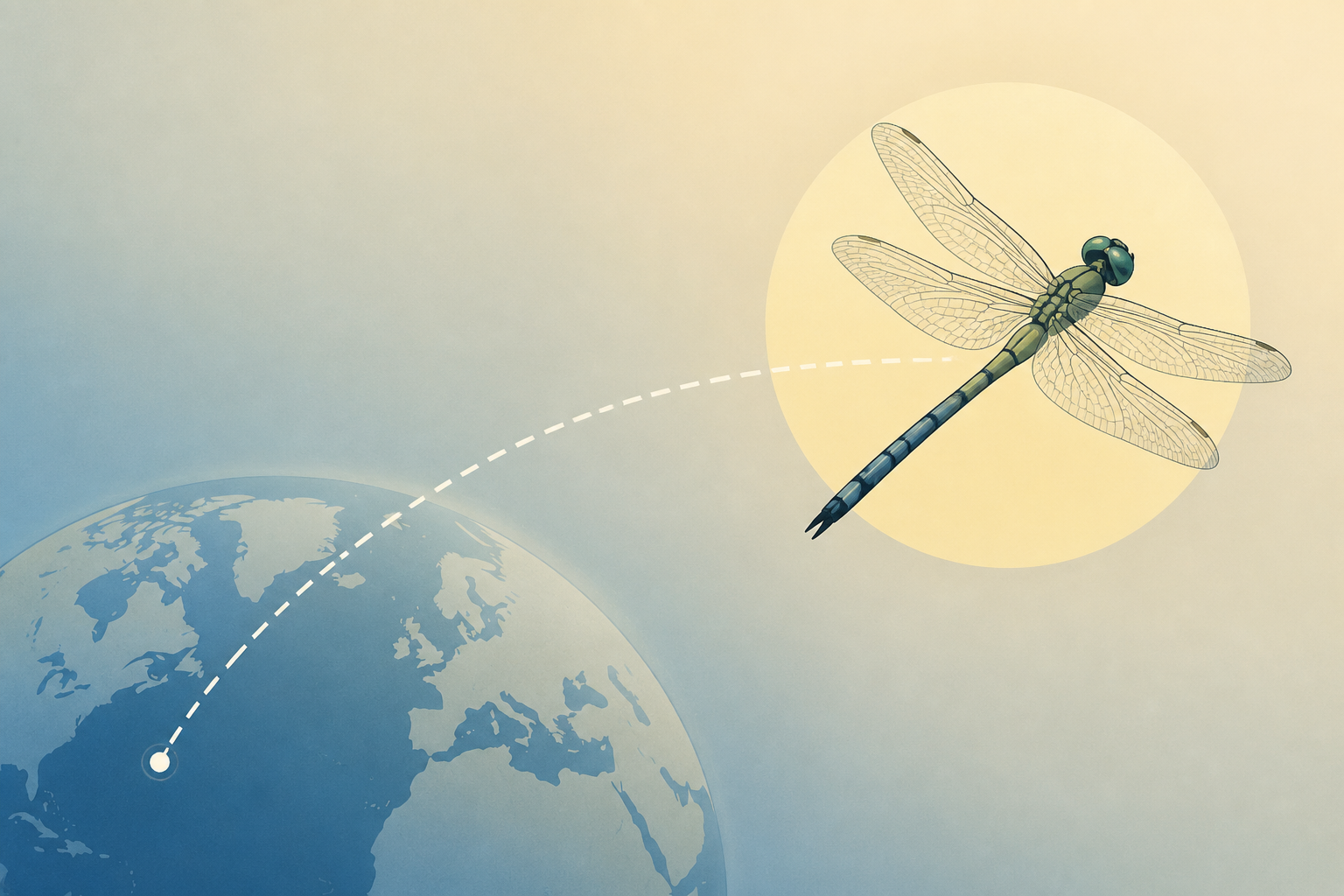
AI Generated Image
In 2016, Biologists at Rutgers University discovered that the globe skimmer dragonfly is the world's longest-distance flying insect
The Times of India • • science
Key Points:
- Researchers at Rutgers University-Newark identified the globe skimmer dragonfly (Pantala flavescens) as the world's longest-distance flying insect, surpassing the monarch butterfly in migratory range with journeys of up to 4,400 miles or more.
- Genetic analysis of dragonfly populations from multiple continents revealed minimal genetic differences, indicating a single global interbreeding population that crosses oceans and continents, a phenomenon known as a global panmictic population.
- The dragonfly's physical adaptations, including increased wing surface area and an enlarged hindwing base, enable it to glide efficiently on wind currents, conserving energy during long migrations that follow seasonal moisture patterns between continents.
- The study highlights the dragonfly's unique transoceanic migration, with individual insects potentially crossing over 3,500 kilometers of open ocean, a feat unmatched by any other known insect species.
- Despite these findings, the precise migratory routes remain unclear due to the challenges of tracking small insects, and further research with larger sample sizes and additional genetic markers is needed to better understand the species' migration and population structure.


