AI Generated Image
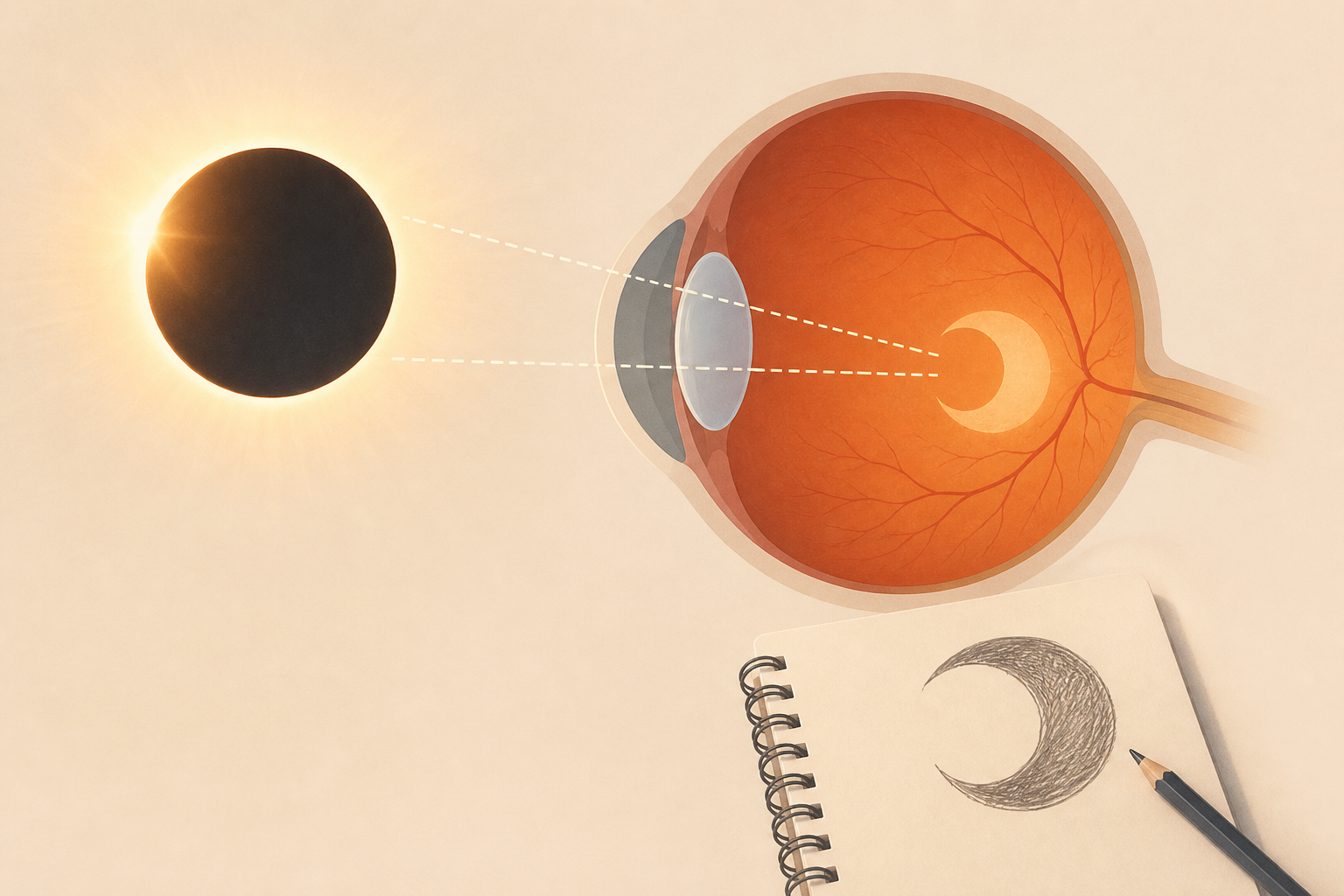
In 2017, a young woman glanced at a solar eclipse for only a handful of seconds, and days later doctors found the exact shape of the eclipse burned into the back of her eye. What she began drawing to
spacedaily.com • • health
Key Points:
- The 2017 solar eclipse, while astronomically ordinary, drew extraordinary public interest, leading many to view the sun without proper eye protection, resulting in cases of solar retinopathy.
- Nia Payne, a 26-year-old woman from Staten Island, suffered permanent retinal damage after looking at the partially eclipsed sun without certified protective glasses, causing a crescent-shaped blind spot in her central vision.
- Ophthalmologists at Mount Sinai used advanced imaging techniques, including adaptive optics scanning light ophthalmoscopy, to confirm that the shape and location of Payne’s retinal damage corresponded exactly to the crescent of the eclipse she had viewed.
- Solar retinopathy results from thermal and photochemical damage to the retina’s photoreceptors, which do not regenerate, leaving patients with permanent vision impairment and no available treatment.
- Payne’s case highlights the lasting consequences of inadequate eye protection during solar eclipses, with her condition remaining stable but irreversible years later, affecting daily activities like reading and screen use.


