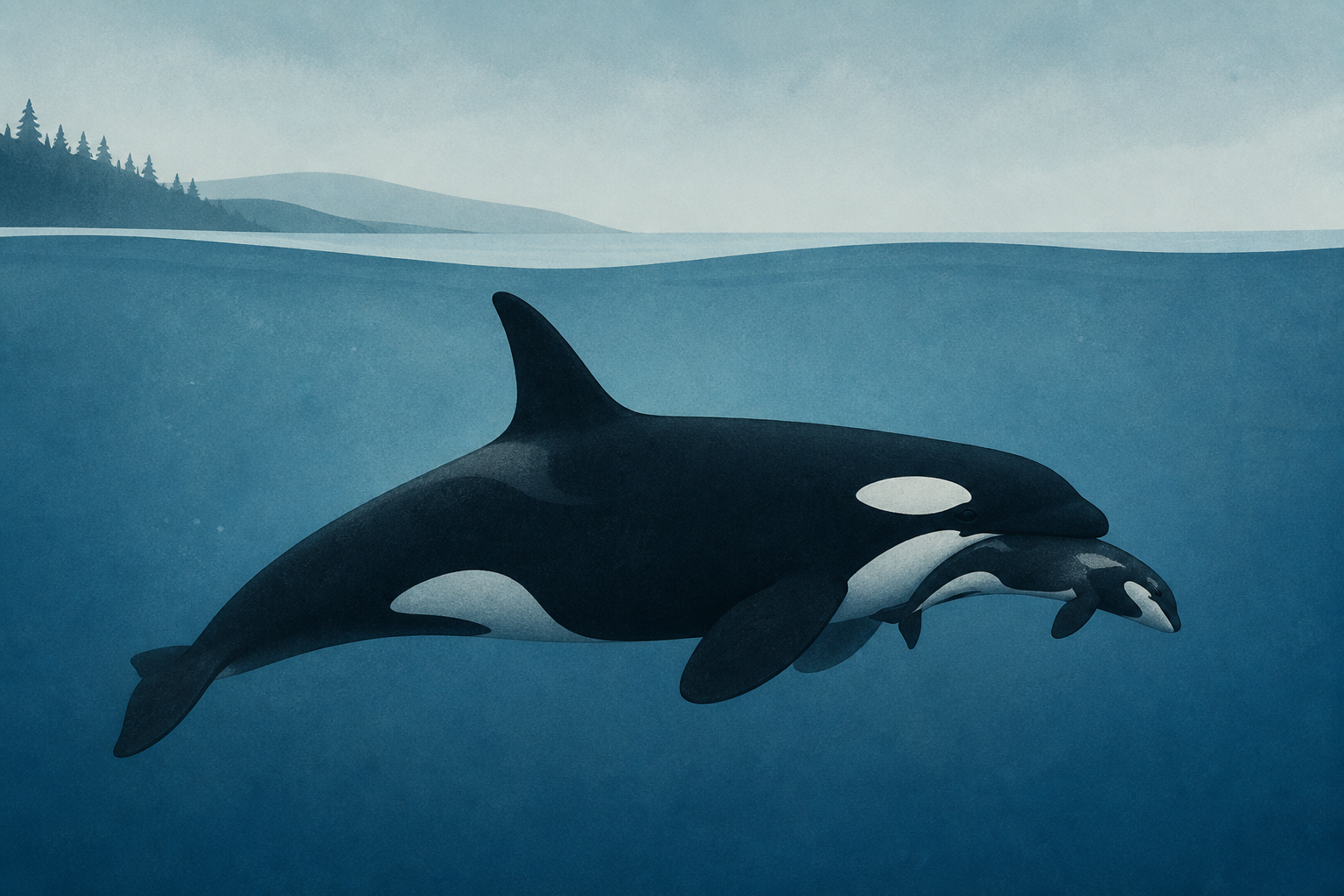
AI Generated Image
In 2018 a female orca off the coast of Washington gave birth to a calf that died within half an hour, and rather than let the body sink she carried it with her, pushing it through the water on her hea
Space Daily • • science
Key Points:
- Tahlequah (J35), a Southern Resident killer whale, carried her dead calf for an extended period twice—once in 2018 for 17 days and again in late 2024 to early 2025 for about 16 days—displaying a behavior dubbed the "Tour of Grief."
- In both events, Tahlequah carried her deceased calf's body on her head, repeatedly pushing it to the surface while traveling long distances through the Salish Sea, a rare and prolonged example of post-mortem attentive behavior in cetaceans.
- Scientists describe this behavior as epimeletic or post-mortem attentive behavior, seen in various socially complex mammals, but remain cautious about labeling it as grief in the human sense despite strong emotional and social bonds in killer whales.
- The Southern Resident killer whale population is critically endangered, with only about 74 individuals remaining, facing threats from food scarcity, pollution, and noise, contributing to high calf mortality and making each birth and loss significant.
- Tahlequah's repeated prolonged carrying of deceased calves highlights the depth of social bonds in these whales and resonates with human observers as a poignant display of mourning, even if definitive scientific conclusions on the emotional experience remain elusive.


