AI Image
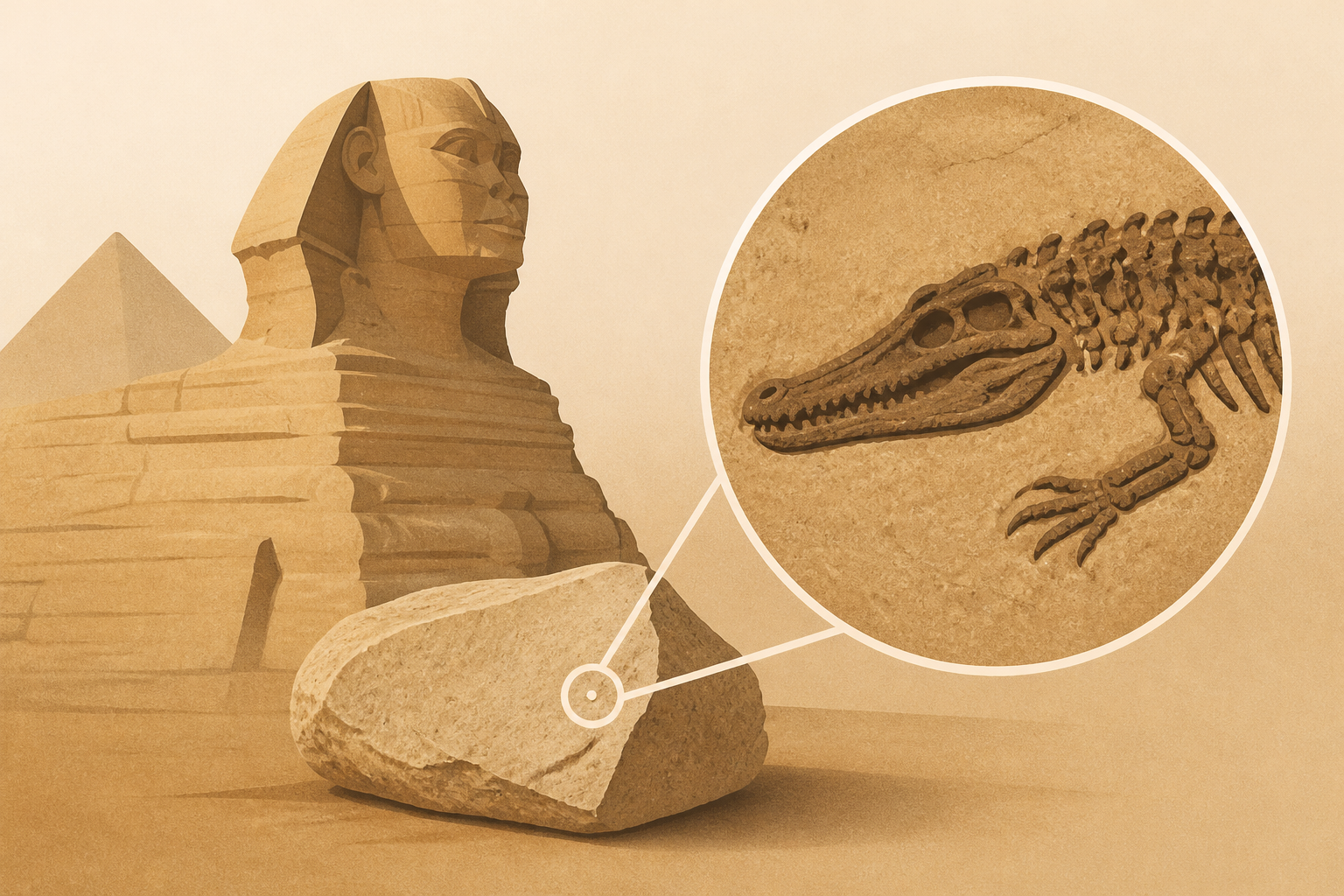
In 2,500 B.C.E., Work on Egypt’s Great Sphinx Began. Now, the Same Rock Used in Construction Has Revealed a New Crocodile Species
Yahoo • • world
Key Points:
- Scientists have identified a previously unknown ancient species of gharial crocodile, named Herugavialis cairensis, from fossils found in the Mokattam Formation in Egypt, the same limestone bedrock used to build the Great Sphinx and Pyramids of Giza.
- The newly discovered gharial species, dating back 66-23 million years, is distinct from other known species and resembles the Sphinx due to the missing tip of its snout, inspiring its name linked to the Egyptian god Horus.
- Only two gharial species exist today—the Indian gharial and the false gharial—both critically endangered or endangered, highlighting the significance of this ancient discovery for understanding crocodilian evolution.
- The fossil was first found in 1927 but only recently classified as a new genus after evolutionary analysis, suggesting that more undiscovered species may exist in the region.
- Researchers believe the Mokattam Formation likely holds additional fossils, including larger prehistoric marine animals, indicating further significant paleontological discoveries may be forthcoming.


