AI Generated Image
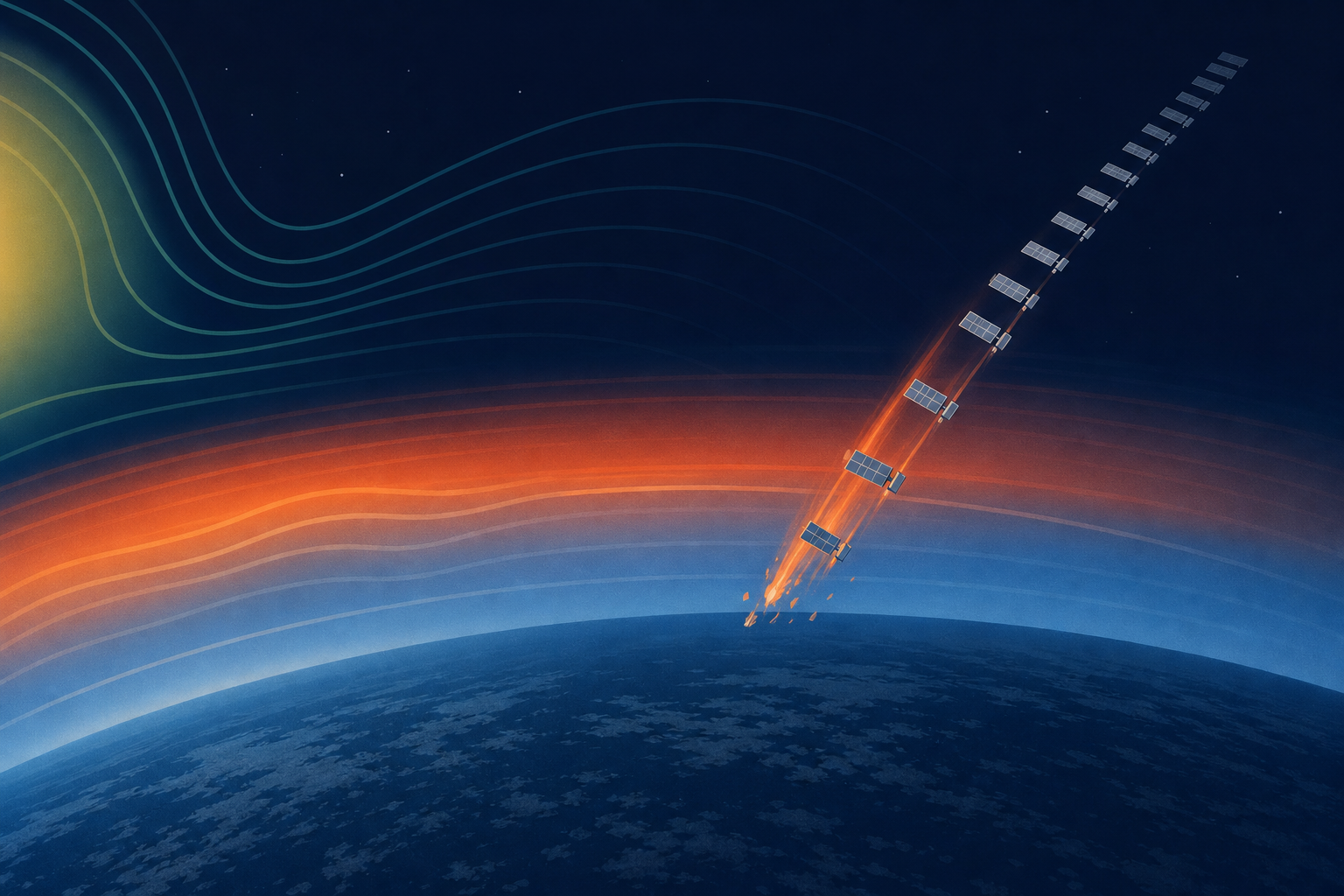
In February 2022, a geomagnetic storm so minor it barely rated a mention thickened the upper atmosphere just enough to drag 40 of SpaceX's freshly launched Starlink satellites back to a fiery death
Space Daily • • science
Key Points:
- On February 3, 2022, SpaceX launched 49 Starlink satellites into a low parking orbit about 210 kilometers above Earth, where they ran diagnostics before ascending to their operational altitude.
- A minor G1 geomagnetic storm the following day caused the thermosphere to expand, increasing atmospheric drag by up to 50%, which led to 40 of the 49 satellites spiraling back and burning up within four days.
- The event exposed a critical gap in space weather forecasting, as existing models and warning scales were designed for ground-based impacts and did not account for atmospheric density changes affecting satellites at low Earth orbit.
- SpaceX has since adjusted deployment procedures and become a major consumer of space weather forecasts, while the broader satellite industry and insurers have begun taking space weather risks more seriously.
- The incident has become a key case study in commercial space weather risk, prompting efforts to improve thermospheric density modeling, forecasting accuracy, and potential mitigation strategies for future solar storms.


